
John R. Seale
British venereologist
About John R. Seale
Lived 1927 – 2020 (aged 92–93). John R. Seale was a British venereologist.
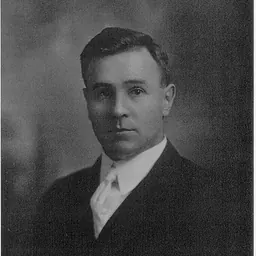
John Richard Seale (7 August 1927 – 19 April 2020) was a British venereologist and advocate in the 1980s of the now-discredited theory that HIV which causes AIDS might have been created in a germ-warfare laboratory by gene-editing. His views and writings were subsequently used to back-up the claims of those that proposed a man-made origin for the virus, and in Soviet propaganda against the United States. A collection of papers relating to Seale's views on HIV are held by the Wellcome Collection.
Early life and education John Richard Seale was born in Exeter on 7 August 1927. He received his BA from St John's College, Cambridge, in 1948 He became a member of the Royal College of Physicians (MRCP) in 1953. Four years later he qualified with an MD. and wrote on the relative spending on medicine in different countries, publishing on the matter in The Lancet in 1960 when he was senior medical registrar at St Mary's Hospital, London, and at the West Middlesex Hospital, Isleworth. He later worked at the Lister Hospital.
Seale was a fellow of the Royal Society of Medicine. He identified migration of British doctors to countries such as Canada due to poor employment conditions in the NHS and migration to Britain of doctors from Asia whose training and English language skills he questioned, adding a racial component to the class-based and economic opposition of some British doctors to the imposition of the NHS system on them by the British government. Much of the migration from Britain was of general practitioners in what was seen in the 1960s as a crisis in general practice. In 1962 he appeared on an ITV television programme Questions in the House with fellow FFM member and member of Parliament Dr Donald McIntosh Johnson to discuss medical migration.
Views on HIV and AIDS In the 1980s, Seale advocated the now-discredited theory that HIV, which causes AIDS, might have been created in a germ-warfare laboratory by gene-editing and released either deliberately or by accident.
Later, he began to consider the possibility that the virus was man-made after reading an article by Valentin Zapevalov, "Panic in the West: or what Hides Behind the Sensationalism of AIDS", and an interview with professor S. Drozdov, "AIDS: Panic Continues", published in the non-scientific Literaturnaya Gazeta in Russia in October and December 1985 respectively. Zapevalov argued that the virus might have been produced by scientists working for the U.S. military at Fort Detrick in Maryland or at the Centers for Disease Control and Prevention in Atlanta, while Drozdov said that the virus was "apparently taken out from the deepest regions of Central Africa" thus raising the possibility that it was deliberately collected. He also stated that the virus could have been man-made.
Seale argued that centres for biological warfare research had known about the Visna virus in sheep since 1949 which he said had a similar structure to HIV, differing by only one gene, and caused a disease with similar symptoms. He believed that HIV could have been produced by gene-editing as "Inserting an extra gene into a virus is a routine procedure in modern genetic engineering". His view that the virus could have been created in a laboratory was reported in Britain's communist Morning Star and on Radio Moscow who stated that it supported the possibility that the virus was made by the United States as a weapon. Jakob Segal, an East German biologist, later revealed to be a KGB agent, wrote to Seale in support of his views about a man-made origin for the virus.
Seale's theories were supported by his friend at St Thomas's, Henry A. Sanford, with whom he had been a medical student, and Sanford wrote in support of them in the medical and general press.
In February 1987, Seale argued in a paper given before the Bristol Medico Chirurgical Society, and later printed in their journal, that the threat from AIDS was so serious that only compulsory government testing and methods to prevent homosexual men infecting each other and non-homosexuals could halt it with an inevitable and justified curtailment of civil rights as occurs when a country faces war. He further argued that the use of condoms would have no effect on the spread of the disease as, in his view, dirty needles, blood, and serum were the most effective methods of transmission. He also blamed homosexuals among AIDS scientists and campaigners for perpetuating, in his view, incorrect ideas about the spread of the disease. In May 1987, Seale and Zhores A. Medvedev argued in an article in the Journal of the Royal Society of Medicine that HIV in Russia was spread primarily through the re-use of poorly sterilised hypodermic needles rather than through sexual activity.
Records relating to Seale's theories and his supporter Henry A. Sanford are held in the Wellcome Collection which received them from Sanford in 2013.
Personal life and death Seale married Elisabeth C. Grillet in Cambridge in 1949.
Seale died at his home in Devon on 19 April 2020, at the age of 92.
Selected publications 1960s "Fixed Costs in the Health Service", The Lancet, Vol. 276, No. 7152 (24 September 1960), pp. 696–698. https://doi.org/10.1016/S0140-6736(60)91767-0 "The Supply of Doctors", British Medical Journal, 2, 9 December 1961, 2, pp. 1554–55. The Supply of Doctors and the Future of the British Medical Profession. Fellowship for Freedom in Medicine, London, 1962. "Medical Emigration from Great Britain and Ireland", British Medical Journal, 1964, No. 1, pp. 1173–78.
1970s "Vaginal discharge" in Geoffrey Chamberlain (Ed.) (1977) Contemporary Obstetrics and Gynaecology. London: Northwood.
1980s
Don’t just read it —
keep it.
Full-length biographies made to live with: read them, listen on the way to work, watch them tonight.
- E-book
- Audio
- Video
Instant download · yours to keep · every purchase keeps this site free
Important facts
People in John R. Seale's life
Named in this biography and alive at the same time






Related people
Same field, nearest in time
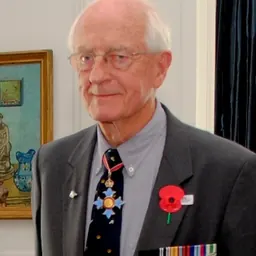




Contemporaries
People whose lives overlapped John R. Seale's
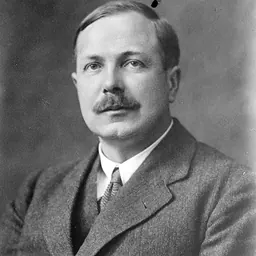
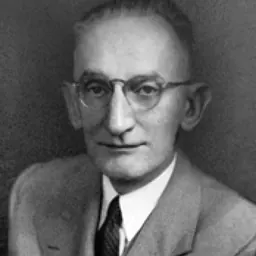

Frequently asked questions
Who was John R. Seale?
British venereologist
When was John R. Seale born?
John R. Seale was born in 1927.
When did John R. Seale die?
John R. Seale died on 19 April 2020.
What was John R. Seale's occupation?
John R. Seale was a venereologist.
What nationality was John R. Seale?
John R. Seale was British.
Sources & further reading
Cite this page
APA: Biography.guide. (2026). John R. Seale. https://biography.guide/john-r-seale/
MLA: "John R. Seale." Biography.guide, https://biography.guide/john-r-seale/.
Chicago: "John R. Seale." Biography.guide. https://biography.guide/john-r-seale/.
Data last updated: 2026-09-20 · Spot an error? Report a correction.
Page generated 2026-09-27 05:05 UTC