
About John O. Simonds
Lived 1913 – 2005 (aged 92). John O. Simonds was an American landscape architect.
John Ormsbee Simonds was born in Jamestown, North Dakota on March 11, 1913. He was a visionary landscape architect, planner, educator, and environmentalist. Simonds was an original modernist landscape architect and one of the most influential and well-known of his time.
Career In 1935 he graduated with a B.S. in Landscape Architecture from Michigan State University. He went on to receive a Master's from Harvard Graduate School of Design. After finishing school, Simonds and his brother Phil established their company, Simonds and Simonds, later known as Environmental Planning and Development Partnership. While continuing his company he published his first book, Landscape Architecture: The Shaping of Man's Natural Environment.
The basis of Simonds' firm was centered on parks, recreational facilities, playgrounds, urban area and space, and many large gardens.
Mellon Square, in Pittsburgh, was built in 1951 and is one of Simonds major designs. The garden was one of the first and few placed on top a parking garage. "Mellon Square was intended by Simonds to be an oasis, a civic movement, and a gathering space in the midst of downtown office towers." The social movement of World War II and the Pittsburgh Renaissance both greatly influenced Simonds' work. During this time Pittsburgh was in the need of deep restoration. The Simonds and Simonds Company became very popular, taking in many new commissions, the Mellon Square being one of the first and most important reconstructions of civic space.
In 1960 the company, now the Environmental Planning and Design Partnership, expanded their work away from Pittsburgh. The Chicago Botanic Garden became well known for its impact on landscape architecture. The botanic garden was built from an unpleasant source of land in Glencoe, Illinois. "The site covers over 300 acres, featuring a series of island gardens with an administration and visitor education center on the largest island." Simonds created a garden that incorporated an area for education of plants and actual touchable exhibits. Like the Mellon Square, the focus of creating relationships between human and plant can be seen within this design.
Simonds was awarded a Doctorate in Science from Michigan State University, in 1968.
In the 1970s, Florida was in the process of creating new communities. During this time, Simonds changed his focus to large scale developments, allowing Florida's new communities to be options of work. Pelican Bay, located in Naples, Florida, became one of Simonds' great large-scale projects. He also established and developed the term PUD, Planned Unit Development, within the bay community. The greatness of this design was the combination of nature and community with nothing overpowering the scene. The design involved the use of nature features, which enabled the area to preserve the ecology of the region. Interstate 66 in Virginia Allegheny Commons
Influences The first most important influence was Simonds' father, Guy Wallace, a Presbyterian minister. Simonds' father helped him to develop a love and appreciation for nature, and the ability to speak to others with great enthusiasm. As his designs developed, the use of incorporating nature with quality and balance became his foremost goal and attribute to design.
Simonds' design was also greatly influenced by his travels to Asia. He began to use aspects of the Zen philosophy and their idea of the garden being harmonious. Simonds wanted the garden to become a way for humans to create a relationship with plants. With his travels to Asia and studies under modern architects Walter Gropius and Marcel Breuer at Harvard, Simonds' designs became the best they could be and remain a part of today's society, influencing rising architects.
Significance to landscape architecture Simonds moved the focus in landscape architecture from plants to the idea of plants and human relationship. He created a movement of change from landscape specialists to landscape environmentalists, urban designers, and regional planners. The style in which he created was no longer just a design, but rather it became a place for people to experience. John Ormsbee Simonds will always have a great impact on Landscape Architecture and will continue to influence many landscape designs.
Don’t just read it —
keep it.
Full-length biographies made to live with: read them, listen on the way to work, watch them tonight.
- E-book
- Audio
- Video
Instant download · yours to keep · every purchase keeps this site free
Important facts
People in John O. Simonds's life
Named in this biography and alive at the same time

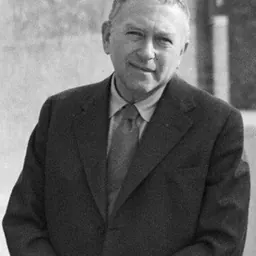

Related people
Same field, nearest in time




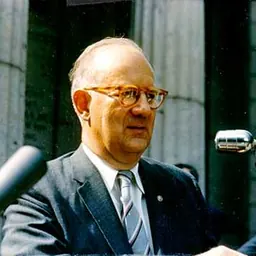
Contemporaries
People whose lives overlapped John O. Simonds's



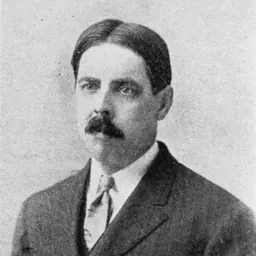

Frequently asked questions
Who was John O. Simonds?
American landscape architect
When was John O. Simonds born?
John O. Simonds was born on 11 March 1913 in Jamestown.
When did John O. Simonds die?
John O. Simonds died on 6 May 2005 in Pittsburgh.
What was John O. Simonds's occupation?
John O. Simonds was a landscape architect.
What nationality was John O. Simonds?
John O. Simonds was American.
Sources & further reading
Cite this page
APA: Biography.guide. (2026). John O. Simonds. https://biography.guide/john-o-simonds/
MLA: "John O. Simonds." Biography.guide, https://biography.guide/john-o-simonds/.
Chicago: "John O. Simonds." Biography.guide. https://biography.guide/john-o-simonds/.
Data last updated: 2026-09-22 · Spot an error? Report a correction.
Page generated 2026-09-27 05:28 UTC