
About John O'Banion
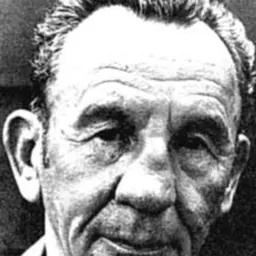
Lived 1947 – 2007 (aged 59). John O'Banion was an American singer and actor.
John O'Banion (February 16, 1947 – February 14, 2007) was an American vocalist and actor.
Early career O'Banion was born in Kokomo, Indiana in 1947 and was performing in theater by the age of 13 as well as in a local Indiana band Hog Honda & the Chain Guards. By age 15, he hosted his own radio show on WIOU and had hosted his own local television show by age 20.
Recording and acting career O'Banion was the lead singer in Doc Severinsen's band, Today's Children. He was managed by Bud Robinson, also Severinsen's manager. They parted ways in early 1974. O'Banion said that Johnny Carson was a big fan and supporter of his career. O'Banion made five appearances on Carson's Tonight Show, and as many on Merv Griffin's and Mike Douglas' shows. He also appeared on American Bandstand, Solid Gold, and was the winning singer of the pilot of Star Search.
His song "Love You Like I Never Loved Before" was a hit single in 1981, making it to No. 24 on the US Billboard Hot 100 chart, No. 32 in Canada and No. 51 in Australia. O'Banion won the prestigious Tokyo Music Festival Award in 1982, with "I Don't Want to Lose Your Love", later sung by Crystal Gayle on her 1983 album Cage the Songbird and achieving the No. 2 spot on Billboard'''s country chart. O'Banion also sang two songs for the Japanese period film Legend of the Eight Samurai; "I Don't Want This Night to End" and "White Light".
He also appeared in the films Borderline with Charles Bronson, TV film Courage with Sophia Loren and Billy Dee Williams and starred in the 1990 independent film The Judas Project''. In 1995, he released an album of jazz cover versions of contemporary hits such as "I'm Not in Love", "What You Won't Do for Love" and the title track "Hearts".
Death In the early 2000s, while touring in New Orleans, O'Banion was reportedly struck by a car or suffered a serious fall, resulting in significant blunt force trauma to the head. The accident caused long-term neurological complications, and O'Banion was subsequently diagnosed with frontotemporal dementia, a progressive brain disease that affects personality, behavior, and language. The trauma he sustained in New Orleans is believed to have triggered or accelerated the disease.
O'Banion battled the effects of frontotemporal dementia for several years before dying at his home in Los Angeles on February 14, 2007, just two days before his 60th birthday. He was surrounded by friends and family at the time of his death.
Discography Studio albums Title Album details Chart USJohn O'Banion Released: 1981 Label: Elektra164 Danger Released: 1982 Label: Elektra—里見八犬伝 Satomi Hakken-Den (Legend of the Eight Samurai) Released: 1983 Label: Elektra—White Light Released: 1985 Label: Bellaphon—Hearts Released: 1995 Label: Sweet Basil/Apollon — "-" denotes a recording that did not chart or was not released in that territory.
Don’t just read it —
keep it.
Full-length biographies made to live with: read them, listen on the way to work, watch them tonight.
- E-book
- Audio
- Video
Instant download · yours to keep · every purchase keeps this site free
Important facts
People in John O'Banion's life
Named in this biography and alive at the same time








Related people
Same field, nearest in time






Contemporaries
People whose lives overlapped John O'Banion's



Frequently asked questions
Who was John O'Banion?
American singer (1947-2007)
When was John O'Banion born?
John O'Banion was born on 16 February 1947.
When did John O'Banion die?
John O'Banion died on 14 February 2007.
What was John O'Banion's occupation?
John O'Banion was a singer and actor.
What nationality was John O'Banion?
John O'Banion was American.
Sources & further reading
Cite this page
APA: Biography.guide. (2026). John O'Banion. https://biography.guide/john-o-banion/
MLA: "John O'Banion." Biography.guide, https://biography.guide/john-o-banion/.
Chicago: "John O'Banion." Biography.guide. https://biography.guide/john-o-banion/.
Data last updated: 2026-09-20 · Spot an error? Report a correction.
Page generated 2026-09-27 05:04 UTC