
John Mortimer
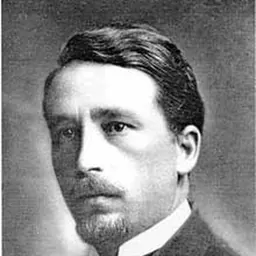
British barrister, dramatist, screenwriter and author
About John Mortimer
Lived 1923 – 2009 (aged 85). John Mortimer was a British screenwriter, barrister, novelist, poet lawyer, film producer and television writer.
Sir John Clifford Mortimer (21 April 1923 – 16 January 2009) was a British barrister, dramatist, screenwriter and author. He is best known for short stories about a barrister named Horace Rumpole, adapted from episodes of the TV series Rumpole of the Bailey also written by Mortimer.
Early life Mortimer was born in Hampstead, London, the only child of Kathleen May (née Smith) and (Herbert) Clifford Mortimer, a divorce and probate barrister who became blind in 1936 when he hit his head on the door frame of a London taxi but still pursued his career.
John Mortimer was educated at the Dragon School in Oxford and Harrow School, where he joined the Communist Party, forming a one-member cell. He first intended to be an actor (his lead role in the Dragon's 1937 production of Richard II gained glowing reviews in The Draconian) In July 1942, at the end of his second year, he was sent down from Oxford by John Lowe, Dean of Christ Church, after romantic letters to a Bradfield College sixth-former, Quentin Edwards, later a QC, were discovered by the young man's housemaster.
Early writing career With weak eyes and doubtful lungs, Mortimer was classified as medically unfit for military service in World War II.
He based his first novel, Charade, on his experiences with the Crown Film Unit.
Mortimer made his radio debut as a dramatist in 1955, adapting his own novel Like Men Betrayed for the BBC Light Programme. His debut as an original playwright came with The Dock Brief starring Michael Hordern as a hapless barrister, first broadcast in 1957 on BBC Radio's Third Programme, and later televised with the same cast. It later appeared in a double bill with What Shall We Tell Caroline? at the Lyric Hammersmith in April 1958, before transferring to the Garrick Theatre. The Dock Brief was revived by Christopher Morahan in 2007 for a touring double bill with Legal Fictions. It won the Prix Italia in 1957, and its success on radio, stage, and television led Mortimer to prefer writing for performance rather than writing novels.
Mortimer's play A Voyage Round My Father, first broadcast on radio in 1963, is autobiographical, recounting his experiences as a young barrister and his relations with his blind father. It was televised by BBC Television in 1969 with Mark Dignam in the title role. In a lengthier version, the play became a stage success – first at Greenwich Theatre with Dignam, then in 1971 at the Theatre Royal Haymarket with Alec Guinness). In 1981 it was remade by Thames Television with Laurence Olivier as the father and Alan Bates as young Mortimer. In 1965, he and his wife wrote the screenplay for the Otto Preminger film Bunny Lake is Missing, which also starred Olivier.
Legal career Mortimer was called to the Bar (Inner Temple) in 1948, at the age of 25. His early career covered testamentary and divorce work, but on taking silk in 1966, he began to undertake criminal law. He did, however, successfully defend publishers John Calder and Marion Boyars in a 1968 appeal against a conviction for publishing Hubert Selby Jr.'s Last Exit to Brooklyn. In 1976, he defended Gay News editor Denis Lemon (Whitehouse v. Lemon) against charges of blasphemous libel for publishing James Kirkup's The Love That Dares to Speak Its Name; Lemon was given a suspended prison sentence, which was overturned on appeal. He successfully defended Virgin Records in a 1977 obscenity hearing for using the word bollocks in the title of the Sex Pistols album Never Mind the Bollocks, Here's the Sex Pistols and the manager of the Nottingham branch of Virgin record shop chain for displaying and selling the record. Mortimer retired from the bar in 1984. whose speciality is defending those accused in London's Old Bailey. Mortimer created Rumpole for a BBC Play For Today in 1975. Although not Mortimer's first choice of actor – in an interview on the DVD set, he said he wanted Alistair Sim "but he turned out to be dead so he couldn't take it on" – Australian-born Leo McKern played Rumpole with gusto and proved popular. The idea was developed into a series, Rumpole of the Bailey, for Thames Television, in which McKern kept the lead role. Mortimer also wrote a series of Rumpole books. In September–October 2003, BBC Radio 4 broadcast four new 45-minute Rumpole plays by Mortimer with Timothy West in the title role. Mortimer also dramatised many real-life cases of the barrister Edward Marshall-Hall in a radio series with former Doctor Who star Tom Baker as protagonist.
In 1975 and 1976, Mortimer adapted eight of Graham Greene’s short stories for episodes of Shades of Greene presented by Thames Television. Mortimer was credited with writing the script for Granada Television's 1981 serialization of Brideshead Revisited, based on the novel by Evelyn Waugh. However, Graham Lord's unofficial biography, John Mortimer: The Devil's Advocate, revealed in 2005 that none of Mortimer's submitted scripts had in fact been used and the screenplay was actually written by the series' producer and director. Mortimer adapted John Fowles's The Ebony Tower starring Laurence Olivier for Granada in 1984. In 1986, his adaptation of his own novel Paradise Postponed was televised. He wrote the script, based on the autobiography of Franco Zeffirelli, for the 1999 film Tea with Mussolini, directed by Zeffirelli and starring Joan Plowright, Cher, Judi Dench, Maggie Smith and Lily Tomlin. From 2004, Mortimer worked as a consultant for the politico-legal US "dramedy" television show Boston Legal.
Mortimer developed his career as a dramatist by rising early to write before attending court. His work in total includes over 50 books, plays and scripts. Besides 13 episodes of Rumpole dramatized for radio in 1980, several others of his works were broadcast on the BBC, including the true crime series John Mortimer Presents: The Trials Of Marshall Hall and Sensational British Trials.
In later life, Mortimer toured in a show of readings and personal anecdotes called "Mortimer's Miscellany", with the actresses Joanna David and Rohan McCullough, with accompanying piano parts and musical interludes provided by Jon Lord, formerly of the rock band, Deep Purple. Mortimer and Lord became near neighbours and close personal friends later in life and Lord composed a six-part movement, To Notice Such Things in memoriam to Mortimer in 2009.
Personal life Penelope Fletcher, better known as Penelope Mortimer, met John Mortimer while still married to Charles Dimont and pregnant with their last child. Fletcher married Mortimer on 27 August 1949, the same day her divorce from Dimont became absolute. Together they went on to have a son, Jeremy Mortimer, and a daughter, Sally Silverman. The unstable marriage inspired work by both writers, of which Penelope's novel, The Pumpkin Eater (1962), later made into a film of the same name, is best known. The couple divorced in 1971 and he married Penelope Gollop in 1972. They had two daughters, Emily Mortimer (1971), and Rosie Mortimer (1984). He and his second wife lived in the Buckinghamshire village of Turville Heath. The split with his first wife had been bitter, but they were on friendly terms by the time of her death in 1999. Awarded a CBE in 1986, he was made a knight bachelor in the 1998 Birthday Honours.
Death
Mortimer suffered a stroke in October 2008 and died on 16 January 2009, aged 85.
Attributes John Mortimer was a member of English PEN. He was patron of the Burma Campaign UK, the London-based group campaigning for human rights and democracy in Burma and president of the Royal Court Theatre, having been the chairman of its board from 1990 to 2000.
Don’t just read it —
keep it.
Full-length biographies made to live with: read them, listen on the way to work, watch them tonight.
- E-book
- Audio
- Video
Instant download · yours to keep · every purchase keeps this site free
Important facts
Family & relationships
People in John Mortimer's life
Named in this biography and alive at the same time





Related people
Same field, nearest in time




Contemporaries
People whose lives overlapped John Mortimer's

Frequently asked questions
Who was John Mortimer?
British barrister, dramatist, screenwriter and author (1923-2009)
When was John Mortimer born?
John Mortimer was born on 21 April 1923 in Hampstead.
When did John Mortimer die?
John Mortimer died on 16 January 2009 in Turville.
What was John Mortimer's occupation?
John Mortimer was a screenwriter, barrister, novelist, poet lawyer, film producer and television writer.
What nationality was John Mortimer?
John Mortimer was British.
Sources & further reading
Cite this page
APA: Biography.guide. (2026). John Mortimer. https://biography.guide/john-mortimer/
MLA: "John Mortimer." Biography.guide, https://biography.guide/john-mortimer/.
Chicago: "John Mortimer." Biography.guide. https://biography.guide/john-mortimer/.
Data last updated: 2026-09-20 · Spot an error? Report a correction.
Page generated 2026-09-27 05:33 UTC