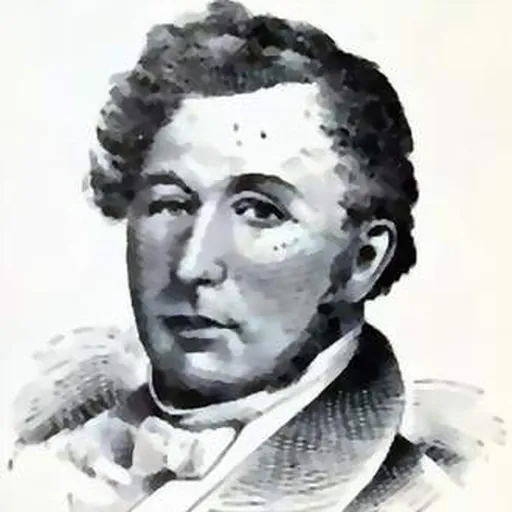
About John Miller
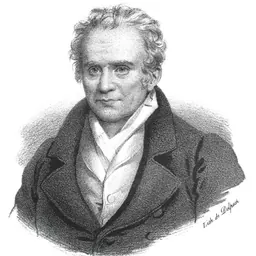
Lived 1781 – 1846 (aged 64). John Miller was an American politician, editor, colonel and governor.
John Miller (November 25, 1781 – March 18, 1846) was an American publisher, War of 1812 veteran, and politician from Missouri. A Democrat, Miller was the fourth governor of Missouri (1826 to 1832) before serving three terms in the United States House of Representatives from 1837 to 1843.
Early life John Miller was born November 25, 1781, near Martinsburg, Virginia (now West Virginia). Little is known of his youth or family history. In 1803 Miller moved to Ohio and began a career in newspapers, serving as publisher of the Western Herald. Miller would later sell his interest in the newspaper to James Wilson, grandfather of U.S. President Woodrow Wilson. Miller was also involved in early Ohio politics through his newspaper and active in the state militia. He was able to use his political influence to be appointed a brigadier general of the Ohio militia.
War of 1812
In March 1812, with the threat of war with Great Britain looming, John Miller joined the regular U.S. Army. His rank reduced to lieutenant colonel, Miller was at first assigned to the 17th Infantry Regiment. Then in July 1812 he was promoted to full colonel and transferred to command the 19th Infantry.
As commander of the 19th Colonel Miller distinguished himself in one of the bigger battles on the western frontier during the war, the siege of Fort Meigs. With the British and their Native American allies laying siege to the fort, General (and future U.S. president) William Henry Harrison ordered units from the fort to attack the British gun positions on the south bank of the Miami River. On May 13, 1813, Colonel Miller led 350 regulars and volunteers in capturing the gun battery and took 41 prisoners. However, British troops and Native American warriors under Captain Richard Bullock, counterattacked and drove Miller's detachment back into the fort with heavy casualties. Miller's actions did however distract the besiegers long enough to let American relief forces reach the fort to reinforce the garrison.
The rest of the war passed relatively uneventful for Miller save for a few small skirmishes with Native Americans. During the last months of the war he was in charge of the entire northern frontier. John Miller remained in the U.S. Army after the war's end, and was assigned to Fort Bellefontaine in the Missouri Territory. In summer, 1815 he commanded the Army troops providing security for the large meeting of Native Americans and U.S. officials as they negotiated the Treaties of Portage des Sioux. Miller served another three years after the event, resigning his commission in 1818.
Political career Using his political connections, John Miller was able to secure an appointment as Registrar of the Howard County United States General Land Office in Franklin, Missouri in 1818. In that special election John Miller edged out Judge David Todd, William C. Carr, and Rufus Easton with 2,380 of the 4,933 votes cast.
Governor Miller was a strong supporter of moving the state capitol from St. Charles to Jefferson City, Missouri. He also advocated establishing a state prison in the town, to further cement its role as the permanent seat of state government. In 1826 Governor Miller was asked to draw on his previous military experience and help locate a replacement for Fort Bellefontaine. After several days of searching the banks of the Mississippi River, Miller, General Edmund P. Gaines (Commander of the Western Department of the Army), Brig. General Henry Atkinson (commanding officer of the sixth infantry regiment), and explorer William Clark selected a site near the city of "Vide Poche" or Carondelet, south of St. Louis. At first named Cantonment Miller in honor of the Governor, the name was changed in October 1826 to Jefferson Barracks.
John Miller ran for a second term as governor in 1828 and ran unopposed. In response Governor Miller sent 2,000 state militia and a dozen companies of U.S. Army troops to Chariton county. Four Missouri militia and several Native Americans were killed in a skirmish at Battle Creek in present-day Schuyler County. Chief Big Neck and many of his party were captured and put on trial in 1830, putting an end to the "Big Neck War". With the outbreak of the Blackhawk War in 1832 fears of attack once again caused Miller to call out the militia, but Missouri remained out of the limited fighting in that war. The Santa Fe Trail was proving to be lucrative, if sometimes dangerous, for Missouri merchants in the late 1820s and early 1830s as well. At Miller's urging, the General Assembly petitioned the federal government to provide U.S. Army escorts to wagon trains as protection from Native Americans and bandits.
In his final term Governor Miller recommended that a state bank be established, backed by the good faith and credit of the government. This was in keeping with his belief in a hard money policy prevalent among Jacksonian Democrats and strong dislike of the Second Bank of the United States.
Legacy He is the namesake of Miller County, Missouri.
Don’t just read it —
keep it.
Full-length biographies made to live with: read them, listen on the way to work, watch them tonight.
- E-book
- Audio
- Video
Instant download · yours to keep · every purchase keeps this site free
Important facts
People in John Miller's life
Named in this biography and alive at the same time

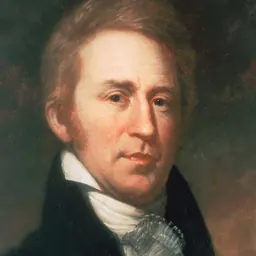

Related people
Same field, nearest in time

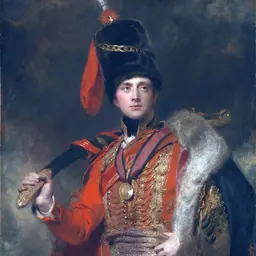

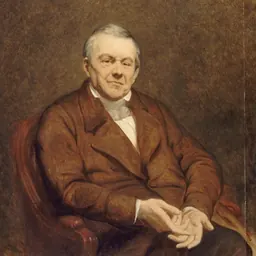

Contemporaries
People whose lives overlapped John Miller's

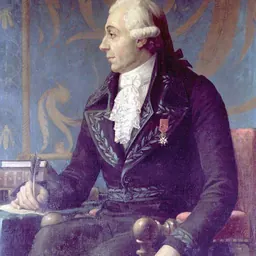
Frequently asked questions
Who was John Miller?
Missouri politician (1781–1846)
When was John Miller born?
John Miller was born on 25 November 1781 in Martinsburg.
When did John Miller die?
John Miller died on 18 March 1846 in Florissant.
What was John Miller's occupation?
John Miller was a politician, editor, colonel and governor.
What nationality was John Miller?
John Miller was American.
Sources & further reading
· DBpedia: John Miller (Missouri politician)
Cite this page
APA: Biography.guide. (2026). John Miller. https://biography.guide/john-miller-politician-1781/
MLA: "John Miller." Biography.guide, https://biography.guide/john-miller-politician-1781/.
Chicago: "John Miller." Biography.guide. https://biography.guide/john-miller-politician-1781/.
Data last updated: 2026-09-23 · Spot an error? Report a correction.
Portrait: Wikimedia Commons · author & licence
Page generated 2026-09-27 05:05 UTC