
About John Maunsell
Lived 1190 – 1265 (aged 74–75). John Maunsell was a British magistrate and judge.
John Mansel (died 1265), Provost of Beverley Minster, was a king's clerk and a judge. He was the leading administrator and councillor to King Henry III.
Life According to Matthew Paris, Mansel's father was a country priest.
John Mansel established the Augustinian priory at Bilsington, near Romney in 1253 prudently reflecting that "the king's favour is not hereditary or worldly prosperity of lasting duration." He is however spoken of disparagingly by the chronicling monk Matthew Paris, of St Albans Abbey, for unfairly denying legal judgment in the Abbey's favour after a monk had been attacked and robbed by his protégé Geoffrey of Childwick.
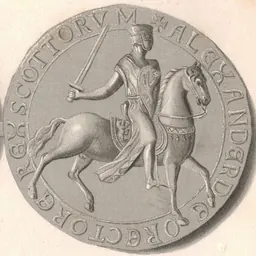
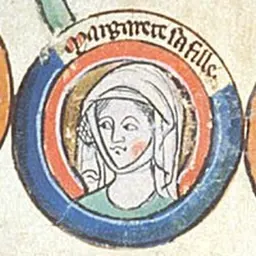
He enjoyed great secular power; the 1258 Provisions of Oxford gave four men the power to elect a council of fifteen to govern the treasury and the chancery. These four men were the Earl Marshal (the Earl of Norfolk), Hugh Bigod, John Mansel, and the Earl of Warwick (John du Plessis). Not only did he arrange the marriage of Henry III daughter, Margaret of England to Alexander III of Scotland in 1249, but he entertained the courts of England and Scotland on King Alexander's visit to London in 1256. Such a feat would not have been possible but for the income from his pluralities. He was named Seneschal of Gascony in 1243 a post later held by Simon de Montfort, 6th Earl of Leicester and subsequently by Prince Edward. Alfonso of Castile had his eyes on Gascony and John Mansel helped to defuse the situation by arranging the marriage of Edward to Alfonso's half-sister, Eleanor in 1254. Sedgwick castle came into his hands in 1249. In 1261 he was named Constable of the Tower of London. He was mediator along with Simon de Montfort in arranging the marriage of Henry's daughter Beatrice with John of Brittany in 1259. John Mansel was in France with Queen Eleanor and Edmund when Simon de Montfort vanquished Henry III at the Battle of Lewes, 14 May 1264. Shortly thereafter, Simon de Montfort took possession of Mansel's estates in August 1264.
In his biography of Henry, the historian David Carpenter commented on the Eleanor's return to England in October 1265: "There was one person who did not return with the queen: John Mansel. With Eleanor throughout her exile, he had died in January 1265. Courageous, wise and moderate, he was the best minister the king ever had. Henry could have done with him now. Mansel's will does not appear to have been carried out, apart from a bequest of Bilsington Priory to King Henry. The rest of his estate was treated as crown escheat.
Don’t just read it —
keep it.
Full-length biographies made to live with: read them, listen on the way to work, watch them tonight.
- E-book
- Audio
- Video
Instant download · yours to keep · every purchase keeps this site free
Important facts
People in John Maunsell's life
Named in this biography and alive at the same time


Related people
Same field, nearest in time




Contemporaries
People whose lives overlapped John Maunsell's




Frequently asked questions
Who was John Maunsell?
Chancellor to King Henry III of England
When was John Maunsell born?
John Maunsell was born in 1190.
When did John Maunsell die?
John Maunsell died in 1265.
What was John Maunsell's occupation?
John Maunsell was a magistrate and judge.
What nationality was John Maunsell?
John Maunsell was British.
Sources & further reading
· DBpedia: John Mansel (administrator)
Cite this page
APA: Biography.guide. (2026). John Maunsell. https://biography.guide/john-maunsell-magistrate/
MLA: "John Maunsell." Biography.guide, https://biography.guide/john-maunsell-magistrate/.
Chicago: "John Maunsell." Biography.guide. https://biography.guide/john-maunsell-magistrate/.
Data last updated: 2026-09-20 · Spot an error? Report a correction.
Page generated 2026-09-27 05:08 UTC