
About Al-Baydawi
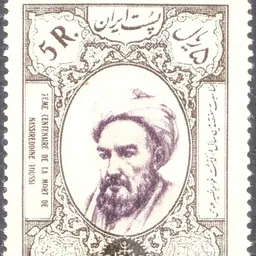
Lived 1201 – 1286 (aged 84–85). Al-Baydawi was a magistrate, theologian, philosopher, qadi, qur'anic exegete and jurist.
Biography Baydawi was a native of Bayda (from which his nisba was derived), a small town in the Fars region of southern Iran. Since 1148, the region had been controlled by the Salghurids, a family of Turkoman origin, who would rule as nominal vassals of the Seljuks, the Khwarazmshahs, and the Mongols until their downfall in 1282. Baydawi's date of birth is unknown, however, assessing his accomplishments throughout his career, it can be deduced that he was born sometime during the reign of the Salghurid atabeg (ruler) Abu Bakr ibn Sa'd . During this period, culture flourished in Fars; Abu Bakr ordered the construction of many hospitals and high-level religious establishments which attracted many scholars.
Like the majority of the population of Fars, Baydawi was a Sunni Muslim of the Shafi'ite madhhab (school). Baydawi's education is obscure. According to the historian al-Yafi'i, Baydawi was tutored by his father Umar, who had been a student of Mujir-ad-Din Mahmud ibn Abi-al-Mubarak al-Baghdadi ash-Shafi'i, a former student of Mui'in-ad-Din Abi-Sa'id Mansur ibn Umar al-Baghdadi, who had studied under the prominent philosopher al-Ghazali (died 1111).
His father, Qazi Imam al-Din Abu al-Qasim 'Umar bin al-Sa'id Fakhr ad-Din Abdullah al-Baydawi was a disciple of Sufi Saint, Abu Talib 'Abd al-Mohsin bin Abi al-'Umaid al-Shafi', al-Khafifi al-Abhari (d. 624/1227) who was well versed in religious laws and was illustrious Muslim scholar in the last 6th and early 7th century A.H.
Baydawi became the disciple of a Sufi Saint in Tabriz, Shaikh Muhammad bin Muhammad al-Kunjani. Once he wanted to become the Qadi of Fars under the rule of Arghun Khan so he requested the saint to help him in the matter, as Arghun Khan had a high opinion of Shaikh and used to pay homage to the Shaikh on every Thursday. One day when Arghun Khan visited him, the Shaikh told him that "a Persian scholar had begged a piece of hell from him equal to a prayer rug". Arghun Khan wanted further explanation regarding the statement. On this, Shaikh explained to him that Qadi Nasir ud-Din Baydawi wanted the office of the Qadi of Fars. Arghun Khan, on Shaikh's recommendation again appointed him as the Qadi.
Baydawi heard of the Shaikh's remarks made and consequently was much disturbed. He took the words as a warning and became penitent, finally giving up the idea to achieve his desired post. Eventually, he lost his interest in the worldly affairs and settled permanently at Tabriz and spent the rest of his life there. While staying at Tabriz, he began to visit his Shaikh regularly till his death at Tabriz.
Imam Baydawi, according to Zarkobe, died at Tabriz and was buried in the Charand-ab graveyard and his grave stood near the shrine of his spiritual guide, Shaikh Muhammad bin Muhammad al-Kunjani. Muhammad Ma'sum Shirazi reports his burial on the east of the shrine of Shaikh Zia ud-Din Yahya in the same graveyard. In addition to drawing heavily from al-Kashshaf, al-Baydawi's tafsir also relied on the tafsirs of Fakhr al-Din al-Razi and al-Raghib al-Isfahani. It has been edited by Heinrich Leberecht Fleischer (2 vols., Leipzig, 1846-1848; indices ed. W. Fell, Leipzig, 1878). A selection with numerous notes was edited by D. S. Margoliouth as Chrestomathia Beidawiana (London, 1894), and his commentary on Sūra 12 was edited and translated by A. F. L. Beeston.
His historical work Nizam al-Tawarikh (The Ordering of Histories) was written in Persian, his native language.
Don’t just read it —
keep it.
Full-length biographies made to live with: read them, listen on the way to work, watch them tonight.
- E-book
- Audio
- Video
Instant download · yours to keep · every purchase keeps this site free
Important facts
People in Al-Baydawi's life
Named in this biography and alive at the same time


Related people
Same field, nearest in time





Contemporaries
People whose lives overlapped Al-Baydawi's




Frequently asked questions
Who was Al-Baydawi?
Persian Islamic scholar (died 1319)
When was Al-Baydawi born?
Al-Baydawi was born in 1201 in Fars Province, Ardakan.
When did Al-Baydawi die?
Al-Baydawi died in 1286 in Tabriz.
What was Al-Baydawi's occupation?
Al-Baydawi was a magistrate, theologian, philosopher, qadi, qur'anic exegete and jurist.
What nationality was Al-Baydawi?
Al-Baydawi's recorded nationality: Ilkhanate.
Sources & further reading
Cite this page
APA: Biography.guide. (2026). Al-Baydawi. https://biography.guide/al-baydawi/
MLA: "Al-Baydawi." Biography.guide, https://biography.guide/al-baydawi/.
Chicago: "Al-Baydawi." Biography.guide. https://biography.guide/al-baydawi/.
Data last updated: 2026-09-20 · Spot an error? Report a correction.
Page generated 2026-09-27 05:18 UTC