
John Löfblad
Swedish trade unionist and politician
About John Löfblad
Lived 1927 – 2016 (aged 88). John Löfblad was a syndicalist.
John Erik Lovblad (14 February 1926 – 17 January 2016), also known as Löfblad, was a Swedish politician, diplomat, and trade unionist who served as Secretary General of the International Federation of Building and Woodworkers (IFBWW) from 1966 to 1989.
A longtime protégé of Swedish Prime Ministers Olof Palme and Tage Erlander, Lovblad was an active member of the Swedish Social Democratic Party and became involved in trade unionism early in his career. In 1962, on the personal recommendation of Prime Minister Tage Erlander, he was appointed by King Gustaf VI Adolf to serve as Labour Attaché at the Swedish Embassy in Washington, D.C. Four years later, in 1966, he was elected General Secretary of the IFBWW, a position he held until his retirement in 1989.
Lovblad was a staunch advocate for improving social conditions through cooperation, firmly opposing strikes as a means of progress. A lifelong anti-communist, he actively fought against labor exploitation, humanitarian crises, and social injustices worldwide.
Early life John Erik Lovblad was born on February 14, 1926, on the farm Backarna, located deep in the forests of Gunnarskog, in Värmland County, Sweden. He was the son of Gustaf Löfblad and Marta Ahs. After completing six years of elementary school, he trained as a lumberjack. The harsh conditions of his early life left a lasting impression on him and helped spark a lifelong drive for societal improvement. He was also involved in local sports, serving as secretary of the Gunnarskog Sports Association from 1948 to 1954.
Military service in Sweden When John Lovblad was called up for his compulsory military service, he achieved exceptionally high scores during the recruitment assessments. During his brief stay in the United States, he was deeply impressed by the academic atmosphere at Columbia and the intellectual rigor of its lectures. Beyond the classroom, he explored New York, particularly Harlem, where he engaged with local residents and witnessed firsthand the racial and social inequalities still prevalent in American society.
Lovblad served as a member of the Swedish National Board of Forestry From 1959 to 1963. One of the major influences on his thinking during this period was Arne Geijer, then head of the Swedish Trade Union Confederation. In this role, he traveled extensively across the United States, both to connect with Swedish immigrant communities and to establish relationships with influential American labor leaders such as Jay Lovestone and the first president of the AFL-CIO, George Meany. Initially, the federation’s headquarters were located at Ewaldsgade in Copenhagen, Denmark.
Under his leadership, the IFBWW evolved into a global union secretariat, growing to represent 3.5 million members worldwide.
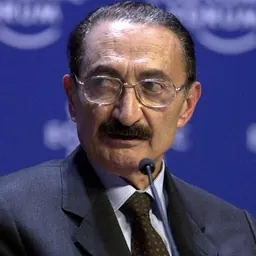
Lovblad played a key role in integrating major trade unions from the U.S, including the International Union of Bricklayers and Allied Craftworkers and the International Union of Operating Engineers, as well as trade unions from Japan, Africa, and Latin America. He traveled extensively in Africa and South America, promoting union education and human rights. Notably, he visited countries like Turkey and Chile multiple times, even meeting Turkish Prime Minister Bülent Ecevit in prison. Visiting incarcerated unionists in authoritarian regimes became one of his personal missions.
In 1968, following the Soviet invasion of Czechoslovakia, Lovblad notably challenged the Soviet chairmanship of the ILO’s 8th Session of the Committee on Building, Civil Engineering, and Public Works. Throughout the final years of his tenure, he remained committed to workers’ rights, focusing increasingly on the health impacts of asbestos. In 1988, he organized the IFBWW’s first environmental conference. However, his leadership was not without internal tensions. Friction grew between representatives of the wood and building trades, especially within Sweden, where some in the construction sector resented a woodworker leading their international federation. Additionally, ideological divides between Scandinavian and American unions created further strain. Though deeply Swedish in values and background, Lovblad remained a strong admirer of the American labor model, which alienated some Scandinavian counterparts.
Lovblad stepped down at the 18th Congress in Singapore (December 4–7, 1989), succeeded by Ulf Asp. By the end of his term, he had established regional offices in Kuala Lumpur (Asia-Pacific), Lomé (Africa), and Panama City (Latin America), transforming the IFBWW from a largely Scandinavian institution into a robust international body. While based in Geneva, Lovblad participated annually in the ILO’s International Labour Conference, maintaining a prominent voice in global labor discussions.
In December 2005, the IFBWW merged with the World Federation of Building and Wood Workers (WFBW) to form a new global federation: Building and Wood Workers’ International (BWI), which today represents over 12 million members worldwide.
International Labour Organization John Lovblad served as Secretary of the Workers’ Group at several key sessions of the International Labour Organization (ILO). He held this position during the first session of the Forestry and Wood Industries Committee, held from September 15 to 18, 1985. He also served in the same role during the 11th Session of the Committee on Building, Civil Engineering, and Public Works in April 1987.
Lovblad represented the International Federation of Building and Wood Workers (IFBWW) at the International Confederation of Free Trade Unions (ICFTU), holding a position on their governing board from 1983 to 1986.
Lovblad served on the governing board of the International Trade Secretariats from 1970 to 1990. Personal life In the early 1970s, Swedish journalist Erik Goland produced a documentary on Lovblad titled Ut i världen vill jag (“I Want Out into the World”), chronicling Lovblad’s journey from an uneducated lumberjack to an international labor diplomat.
After a long and intense career that involved over 200 days of travel per year, Lovblad’s pace changed significantly. The events of September 11, 2001, marked a turning point, after which he largely ceased international travel. Having witnessed the fall of the Berlin Wall, he felt his mission was fulfilled, as the Cold War divisions within the global labor movement had abated.
From 1999 to 2005, Lovblad served on the Board of Directors of the Hassan Fathy Institute, now known as the International Construction Institute.
Lovblad was a member of the Vasa Order of America.
On March 21, 1959, John Lovblad married Ingrid Anna-Lisa Johannesson, whom he had met through his work with the Swedish Social Democratic Youth League (SSU). After retiring, he settled in Geneva, where he lived until his passing on January 17, 2016, following complications from a subdural hematoma. Although he spent much of his later life abroad, he remained a Swedish citizen, often stating, “Whatever I did, I did it for my country.” His wife, Ingrid, passed away shortly afterward, on February 20, 2016, due to cardiac failure.
Don’t just read it —
keep it.
Full-length biographies made to live with: read them, listen on the way to work, watch them tonight.
- E-book
- Audio
- Video
Instant download · yours to keep · every purchase keeps this site free
Important facts
People in John Löfblad's life
Named in this biography and alive at the same time







Related people
Same field, nearest in time


Contemporaries
People whose lives overlapped John Löfblad's


Frequently asked questions
Who was John Löfblad?
Swedish trade unionist and politician
When was John Löfblad born?
John Löfblad was born on 14 February 1927.
When did John Löfblad die?
John Löfblad died on 17 January 2016.
What was John Löfblad's occupation?
John Löfblad was a syndicalist.
Sources & further reading
Cite this page
APA: Biography.guide. (2026). John Löfblad. https://biography.guide/john-lofblad/
MLA: "John Löfblad." Biography.guide, https://biography.guide/john-lofblad/.
Chicago: "John Löfblad." Biography.guide. https://biography.guide/john-lofblad/.
Data last updated: 2026-09-20 · Spot an error? Report a correction.
Page generated 2026-09-27 05:31 UTC