
About John Lee Archer
Lived 1791 – 1852 (aged 61). John Lee Archer was a British architect and van Diemen's Land, known for Convicts in Australia, Georgian architecture and Gothic Revival.
John Lee Archer (26 April 1791 near Chatham, Kent, England – 4 December 1852 in Stanley, Tasmania, Australia) was the Civil Engineer and Colonial Architect in Van Diemen's Land, serving from 1827 to 1838. During his tenure, Archer was responsible for all Tasmanian government buildings including those for penal and military purposes.
His major architectural works include Parliament House, Hobart, the Treasury and the Audit Department buildings in Hobart, the Ordnance Stores in Salamanca Place, several buildings at Anglesea Barracks; St John's Church, New Town; the nave of St George's Church at Battery Point; Old Trinity (the Penitentiary Chapel) in Hobart; St Luke's Presbyterian Church at Bothwell, St Luke's Church of England at Richmond; and parts of the Campbell Street Gaol, Hobart. His major engineering work was the stone bridge, which still carries the Midland Highway over the Macquarie River at Ross.
Personal life John Lee Archer, born 26 April 1791, was a notable architect whose work helped shape the development of the townships of Tasmania during early settlement. He was the only son of John Archer, an Irish engineer from County Tipperary, and his wife Charlotte Lee, formerly of Kent, England.
Upon arrival in Hobart Town on 2 August 1827, Archer immediately commenced work in the role of Civil Engineer and Architect for the colony. Alongside the high demand for prisons and other buildings of a convict nature, the rise in free settlers due to the ongoing depression called for the development of other public works to accommodate the needs of colonial life, such as police offices, public offices, military barracks and churches. For the majority of the 11 years that John Lee Archer served as Civil Engineer and Colonial Architect, he was responsible for all government commissioned buildings, many still notable today.
Archer married Sophia Mattinson of Hobart on 3 September 1833 and the pair established a home in New Town with their many children. Due to a temporary decline in colonial revenue, Archer was retrenched in 1838 and was never reinstated in his role. As others moved in to take over his responsibilities in his absence, Archer became isolated from his profession at the age of 47 with little hope of local employment opportunities.
In October of the same year, Archer moved to north-west Tasmania and took the position of police magistrate for the district of Horton. He stayed with this role for the remainder of his life. In 1843 he produced a map of Stanley, reproduced by Betty Jones in Along the terrace: the owners and occupiers of Stanley 1843 -1922.
John Lee Archer died at the age of 61 on 4 December 1852, and is buried at Circular Head. The chapel was designed to also act as an extension to the already overflowing Barracks. Cruciform in shape, the chapel arms enclosed exercise yards that could hold 500 prisoners on bench seats. Archer was also instructed to construct a cell block beneath the chapel floor to house prisoners in solitary confinement. To support the inclined floors of the chapel above, the cells have varying ceiling heights. Other features of the cells include no ventilation and no sunlight.
Part of the design for the chapel layout included opening up the northern wing to cope with the overflow of people from the nearby St David's Church. As a result of this Archer was free to design the tower for the Brisbane Street entrance to the chapel. The tower has trappings of Renaissance Greek Temples and derived inspiration from the English architect Christopher Wren.
The tower of the chapel has a floor level that is 5 meters above street level to make room for the solitary confinement cells. This allowed an inclusion of a spiralling staircase that ran within the tower. The chapel suffered from time and budget delays and was not in full use until 1833. It was used by the public until 1845 when it was decommissioned and used by police offices, convicts, and their families.
List of works
Military Anglesea Barracks, including the Canteen Building, completed between 1831 and 1834, the Drill Hall, completed in 1828, and the Subalterns' Quarters, completed in 1828 Ordnance Stores, Salamanca Place, Hobart, completed 1829 Powder Magazine, completed 1828 Richmond Barracks, completed between 1833 and 1834
Bridges and harbour work Argyle Street Bridge 1836 Bridgewater Causeway 1835 Harrington Street Bridge 1831 Hobart Rivulet realigned 1828 Jordan River Bridge, repaired 1835 Richmond Bridge, repaired 1826–35 Ross Bridge over the Macquarie River, completed between 1831 and 1836 Entally Chapel, Hadspen 1835 Sullivan's Cove improvements, completed in 1830
Religious Jericho Church 1834 Norfolk Plains Chapel 1829–32 St David's Church, Hobart (new tower) 1828 St George's Church, Battery Point, completed between 1836 and 1838 St John's Anglican Church, New Town, completed between 1834 and 1835 St John's Church, Ross 1838 St Luke's Presbyterian Church, Bothwell, completed between 1828 and 1829 St Luke's Church, Campbell Town 1836 St Luke's Church of England, Richmond, completed between 1834 and 1836 St Paul's Church, Stanley 1843–44 St Peter's Church, Hamilton 1834 Trinity or Penitentiary Chapel, Hobart 1831–34 Westbury Church 1836
Civil Court House Hobart, extended 1835 Court House, Launceston 1837 Court House & Police Offices, New Norfolk 1831 Custom House, Hobart 1835–41 Custom House, Launceston 1836 Government House, Hobart alterations and repairs Offices & Treasures Room, Hobart 1829 Police Offices, Murray Street, Hobart 1833–35 Public Offices, Murray Street, Hobart 1837–40
Dwellings Chaplain's Cottage, Maria Island 1827 Commandant's House, Maria Island 1829 Gaoler's House, Richmond, completed in 1832 'Highfield', Stanley 1843 'Jutland', New Town, (Archer's own house) 1831 Parsonage, Hobart, 1837 Parsonage, St John's Parish, New Town, completed in 1835 Store Keeper's Residence, Circular Head 1851
Gaols Factory, Maria Island 1829 Female Factory, Cascades 1827 Female House of Correction, Launceston, 1832 Hobart Gaol, 1829 Lock-up Houses, New Norfolk 1830 Oatlands Gaol, 1834 Richmond Gaol, 1832–35
Hospitals Hamilton 1836 Norfolk Plains 1836 Oatlands 1836 Willow Court, New Norfolk 1827–1830
Lighthouses Cape Bruny Lighthouse 1835–38 Low Head Lighthouse 1833–38
Others Theatre Royal, Hobart, 1834 Dairy 'Highfield' for the Van Diemen's Land Company 1842 Hot House, Domain Garden, Hobart 1829 Store House, for the Van Diemen's Land Company 1843
Schools Infant School, Hobart 1833 National Day School, Hobart 1835 Orphan Schools, Hobart 1830 Parsonage House, Hobart converted to school 1837 Public School, New Norfolk 1828 Richmond School House, 1834–35
Gallery
Don’t just read it —
keep it.
Full-length biographies made to live with: read them, listen on the way to work, watch them tonight.
- E-book
- Audio
- Video
Instant download · yours to keep · every purchase keeps this site free
Important facts
People in John Lee Archer's life
Named in this biography and alive at the same time
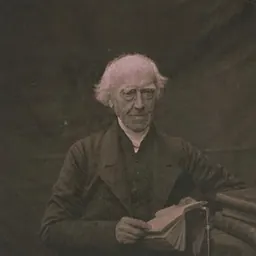

Related people
Same field, nearest in time
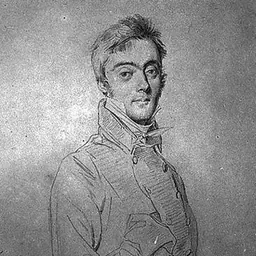



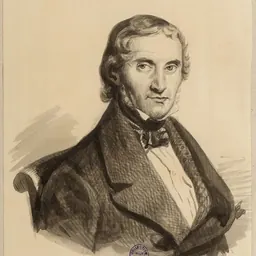
Contemporaries
People whose lives overlapped John Lee Archer's
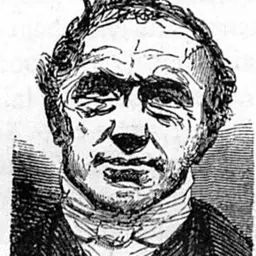



Frequently asked questions
Who was John Lee Archer?
Australian colonial architect
When was John Lee Archer born?
John Lee Archer was born on 26 April 1791 in Chatham.
When did John Lee Archer die?
John Lee Archer died on 4 December 1852 in Stanley.
What was John Lee Archer's occupation?
John Lee Archer was an architect and van Diemen's Land.
What was John Lee Archer known for?
John Lee Archer was known for Convicts in Australia, Georgian architecture, Gothic Revival and Sandstone.
What nationality was John Lee Archer?
John Lee Archer was British.
Sources & further reading
Cite this page
APA: Biography.guide. (2026). John Lee Archer. https://biography.guide/john-lee-archer/
MLA: "John Lee Archer." Biography.guide, https://biography.guide/john-lee-archer/.
Chicago: "John Lee Archer." Biography.guide. https://biography.guide/john-lee-archer/.
Data last updated: 2026-09-22 · Spot an error? Report a correction.
Page generated 2026-09-27 04:59 UTC