
John Laurence
American television correspondent, author, and documentary filmmaker
About John Laurence
Born 1939. John Laurence is an American journalist, film director and film producer.
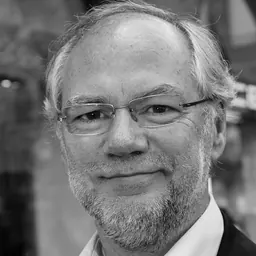
John Laurence (also known as Jack Laurence) (born January 01, 1940) is an American television correspondent, author, print reporter and documentary filmmaker. He is known for his work on the air at CBS News, London correspondent for ABC News, documentary work for PBS and CBS, and his book and magazine writing. He won the George Polk Memorial Award of the Overseas Press Club of America for "best reporting in any medium requiring exceptional courage and enterprise abroad" for his coverage of the Vietnam War in 1970. In 2003, he was described in Esquire Magazine as "the best war correspondent of his generation."
Life and career Laurence attended Fairfield College Preparatory School and then Rensselaer Polytechnic Institute before transferring to the University of Pennsylvania. While at the University of Pennsylvania, he started working at the campus radio station, WXPN which led to his career in broadcast journalism. He worked at WWDC (AM/FM) in Washington D.C. for a year and then at WNEW-AM/FM in New York from 1962 to 1964. He joined CBS News as a radio correspondent in January, 1965. He covered the U.S. intervention in the Dominican Civil War in April–May 1965 where he produced a radio documentary on the revolution.
Vietnam War Laurence volunteered to go to South Vietnam in August 1965 as a radio reporter. An American camera crew, Jim Wilson and Bob Funk, was available, so Laurence started reporting for TV, beginning with an exclusive report on the arrival of the 1st Cavalry Division's advance party in South Vietnam. He covered Operation Piranha, the Battle of An Ninh, the Siege of Plei Me, the aftermath of the Battle of Ia Drang, and Operation Masher among other stories.
In December, 1965, Laurence was promoted from reporter to correspondent by Fred W. Friendly, the president of CBS News. This made him the youngest news correspondent in CBS News history. He had just become 26 years old.
Laurence was initially supportive of U.S. policy in Vietnam and gave favorable if neutral coverage in what was referred to by the U.S. Army public information officers as "being with the program".
On 10 March 1966, following the Battle of A Sau, Laurence interviewed Marine Lieutenant colonel Charles House, commander of HMM-163, the helicopter squadron which had evacuated the survivors of the battle and who had himself been shot down and taken command of U.S. and Vietnamese forces. House stated that CIDG troops had panicked while trying to board the evacuation helicopters and overloaded them. The crews and Special Forces troops opened fire on the Vietnamese soldiers to restore order. The story caused controversy when broadcast and was investigated by Military Assistance Command, Vietnam (MACV) and III MAF, but no further action was taken other than a reprimand of Laurance and newspaper reporter Jim Lucas.
On 22 May 1966, Laurence's friend and Frankie's House regular, Sam Castan, a LOOK magazine correspondent, was killed during a North Vietnamese attack at Landing Zone Hereford, where an American platoon was overrun and all but four of its members killed. Castan was awarded the Army Commendation medal for helping to rescue a few of the U.S. survivors. Later, at a formal ceremony in New York, the medal was handed to Castan's widow by the commander of U.S. forces in Vietnam, General William Westmoreland. It was considered at the time to be the most courageous act of saving American lives by a civilian reporter. Laurence wrote Castan's obituary for LOOK.
Laurence left Vietnam in late May, 1966, returning to the U.S. and working out of CBS bureaus in New York, Chicago, Los Angeles and Atlanta. He covered racial/police violence in Cleveland, Ohio in 1966, the civil rights movement in the South and other domestic stories in the United States.
In February 1968, Laurence and Kay were among the first reporters to reach the city of Huế on the third day of the battle.
Laurence reported the 1968 documentary "Hill 943", an hour-long special report on CBS News, recounting the lives (and death) of Company A, 3rd Battalion, 12th Infantry Regiment, 4th Infantry Division trying to capture Hill 943 during the Battle of Dak To. "The grim and unpublicized routine of the war in Vietnam—the dangerous assignment of an American company to penetrate the jungle and take Hill 943—was related with unusual intimacy in last night's news special of the Columbia Broadcasting System," New York Times TV reviewer Jack Gould wrote.
Laurence's second tour in Vietnam ended in May 1968. Based in New York, he covered racial violence in Chicago, Detroit, Newark, Kansas City and San Francisco.
Sigma Delta Chi, the U.S. professional journalism society, made its television reporting award for Distinguished Service in Journalism to Laurence for his coverage of the Vietnam war in 1967. Laurence received an Emmy Award from the Academy of Television Arts and Sciences for his 1968 series of investigative reports called "Police After Chicago" on the CBS Evening News.
In 1969, Laurence reported a one-hour documentary on what had become known in the United States as the Generation Gap, the difference in attitudes between young people and their parents. "People are so much more interesting than statistics, a fact demonstrated once again last night on the Columbia Broadcasting System's superb television study of the generation gap, "Fathers and Sons" wrote George Gent in the New York Times.
In March, 1970, Laurence returned to Vietnam to produce and report a documentary called The World of Charlie Company.
1970–2006 In 1970, Laurence moved to London to take over as bureau chief from Morley Safer. and in other major U.S. newspapers and magazines. The book received the Cornelius Ryan Award from the Overseas Press Club, its sole annual book award, for "Best Non-Fiction Reporting on International Affairs".
The documentary film Laurence produced and directed, "I am an American Soldier" was shown at film festivals in New York, Orlando and Traverse City, Michigan in 2007. It received a Founder's Award at Traverse City given by Michael Moore, and a Certificate of Appreciation from the 10th Mountain Division at its base in Louisiana for a screening of the film for troops about to embark for a year in Iraq.
Don’t just read it —
keep it.
Full-length biographies made to live with: read them, listen on the way to work, watch them tonight.
- E-book
- Audio
- Video
Instant download · yours to keep · every purchase keeps this site free
Important facts
People in John Laurence's life
Named in this biography and alive at the same time






Related people
Same field, nearest in time



Contemporaries
People whose lives overlapped John Laurence's




Frequently asked questions
Who is John Laurence?
American television correspondent, author, and documentary filmmaker
When was John Laurence born?
John Laurence was born in 1939 in Bridgeport.
What is John Laurence's occupation?
John Laurence is a journalist, film director and film producer.
What nationality is John Laurence?
John Laurence is American.
Sources & further reading
Cite this page
APA: Biography.guide. (2026). John Laurence. https://biography.guide/john-laurence/
MLA: "John Laurence." Biography.guide, https://biography.guide/john-laurence/.
Chicago: "John Laurence." Biography.guide. https://biography.guide/john-laurence/.
Data last updated: 2026-09-25 · Spot an error? Report a correction.
Page generated 2026-09-27 05:12 UTC