
About John La Rose
Lived 1927 – 2006 (aged 78). John La Rose was a writer, poet, trade unionist and publisher.
John La Rose (27 December 1927 – 28 February 2006) was a political and cultural activist, poet, writer, publisher, founder in 1966 of New Beacon Books, the first specialist Caribbean publishing company in Britain, and subsequently Chairman of the George Padmore Institute, founded in 1991. He was originally from Trinidad and Tobago but was involved in the struggle for political independence and cultural and social change in the Caribbean in the 1940s and 1950s and later in Britain, the rest of Europe and the Third World.
Biography
Early life in the Caribbean: 1927–60 John Anthony La Rose was born in Arima, Trinidad and Tobago, in 1927, the younger son of Ferdinand La Rose, a cocoa trader, and his teacher wife Emily. He had four sisters and a brother.
La Rose helped to form the Workers Freedom Movement (WFM) in the 1940s and was editor of the few published copies of their journal Freedom. He became an executive member of the Federated Workers Trade Union (eventually merged in the National Union of Government and Federated Workers), and later General Secretary of the West Indian Independence Party, which was formed out of the merger of the WFM with active trade unionists. He was involved with the struggle within the Oilfields Workers' Trade Union (OWTU) by the "Rebels" for a radical, democratic and more representative trade unions, for one member one vote in regular periodical elections by secret ballot. The "Rebel" candidates won the elections in 1962 and he retained his close links with the OWTU and the international trade union movement, serving as the European representative of the OWTU from the 1960s until his death in 2006. the first specialist Caribbean publishers, booksellers and international bookservice. In December 1966, he was part of a meeting in London with Edward Kamau Brathwaite and Andrew Salkey from which came the formation of the influential Caribbean Artists Movement (CAM). La Rose was chairman of the Institute of Race Relations (IRR) in 1972/73, the period when the IRR was establishing its independence, and was also chairman of Towards Racial Justice, which was the vehicle for publishing the campaigning journal Race Today.
From the mid-1960s La Rose became closely involved in the Black Education Movement, including the fight against Banding, and against the wrongful placing of West Indian children in schools for the Educationally Sub-normal. In 1969, he established the George Padmore Supplementary School, one of the first of its kind, and helped to found the Caribbean Education and Community Workers Association, which published Bernard Coard's How The West Indian Child Is Made Educationally Sub-normal in the British School System (1971). In the 1980s, La Rose helped to set up the National Association of Supplementary Schools and was its chairman for two years.
In 1966, he was a founder member of the Vietnam Solidarity Campaign and a national council member of this important anti-war movement.
He co-produced and scripted the documentary film The Mangrove Nine (1973), about the resistance to police attacks on the popular Mangrove restaurant in the early 1970s, with the film director Franco Rosso. La Rose produced a short film on the Black Church in Britain as part of a Full House BBC 2 television programme on the Caribbean arts in 1973.
In 1975, he co-founded the Black Parents Movement from the core of the parents involved in the George Padmore Supplementary School after an incident in which a young black schoolboy was beaten up by the police outside his school in the London Borough of Haringey.
The Black Parents Movement subsequently formed an alliance with the Black Youth Movement and the Race Today Collective, which had, with the Race Today journal, by then separated from the IRR. Together they established a formidable cultural and political movement, successfully fighting many cases against police oppression and arbitrariness and for better state education. It was the Alliance that formed the New Cross Massacre Action Committee in response to the alleged arson attack which resulted in the death of 14 young blacks, and mobilised 20,000 black people and their supporters on 2 March 1981 – known as the Black People's Day of Action – to protest the death of the young people and the failure of the police to conduct a proper investigation. La Rose was Chairman of the New Cross Massacre Action Committee.
In 1982, he was instrumental in the founding of Africa Solidarity,
Personal life In 1954, La Rose married his first wife Irma La Rose (née Hilaire, who had been born in Maracaibo, Venezuela, in 1930).
Irma La Rose died in 2019.
The John La Rose Short Story Competition took place as part of the international conference "On Whose Terms? Critical Negotiations in Black British Literature and the Arts" organised by Goldsmiths College London in March 2008. Judged by R. Victoria Arana, Margaret Busby, Courttia Newland and Kadija Sesay, the competition was won by Molara Wood with her story "Written in Stone".
In 2011, BBC Radio 4 broadcast the programme What We Leave We Carry: The Legacy of John La Rose, presented by Burt Caesar, with contributions by Sarah White, Linton Kwesi Johnson, Margaret Busby, Susan Craig-Jones and Gus John.
The John La Rose Memorial Lectures comprised a series of three held since 2010, when the first lecture was given by David Abdulah, speaking on "Politics and People's Power after Obama". In 2011, Jayne Cortez spoke on "The Changing Nature of Black Cultural Politics", and Ngugi wa Thiong'o delivered the third lecture in 2013.
In 2013, La Rose was the posthumous recipient, together with Sarah White, of the Henry Swanzy Award for Distinguished Service to Caribbean Letters presented by the NGC Bocas Lit Fest as a "lifetime achievement award to recognise service to Caribbean literature by editors, publishers, critics, broadcasters, and others".
The exhibition Dream to Change the World: The Life & Legacy of John La Rose took place at Islington Museum from 22 May to 29 August 2015. A number of associated public events and workshops for schools were held during the course of the exhibition.
In December 2022, a decision was reached to change the name of Black Boy Lane in West Green, London, to "La Rose Lane", following two years of consultation by Haringey Council with local residents.
Don’t just read it —
keep it.
Full-length biographies made to live with: read them, listen on the way to work, watch them tonight.
- E-book
- Audio
- Video
Instant download · yours to keep · every purchase keeps this site free
Important facts
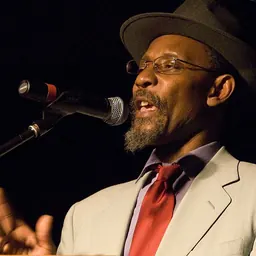
People in John La Rose's life
Named in this biography and alive at the same time






Related people
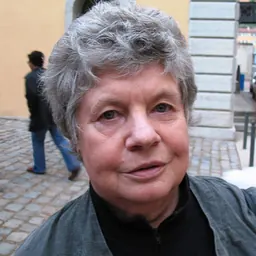
Same field, nearest in time


Contemporaries
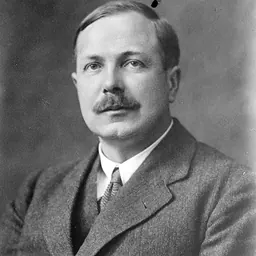
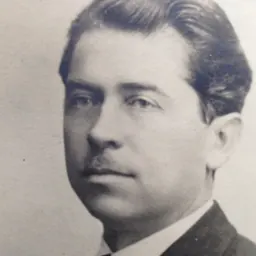
People whose lives overlapped John La Rose's


Frequently asked questions
Who was John La Rose?
Trinidad and Tobago writer and activist (1927–2006)
When was John La Rose born?
John La Rose was born on 27 December 1927 in Trinidad.
When did John La Rose die?
John La Rose died on 28 February 2006 in United Kingdom.
What was John La Rose's occupation?
John La Rose was a writer, poet, trade unionist and publisher.
What nationality was John La Rose?
John La Rose's recorded nationality: Trinidad and Tobago.
Sources & further reading
Cite this page
APA: Biography.guide. (2026). John La Rose. https://biography.guide/john-la-rose/
MLA: "John La Rose." Biography.guide, https://biography.guide/john-la-rose/.
Chicago: "John La Rose." Biography.guide. https://biography.guide/john-la-rose/.
Data last updated: 2026-09-22 · Spot an error? Report a correction.
Page generated 2026-09-27 05:10 UTC