
About John, King of England
Lived 1166 – 1216 (aged 49). John, King of England was an English monarch.
John (Christmastide 1166/7 – 19 October 1216) was King of England from 1199 until his death in 1216. He lost the Duchy of Normandy and most of his other French lands to King Philip II of France, resulting in the collapse of the Angevin Empire and contributing to the subsequent growth in power of the French Capetian dynasty during the 13th century. The baronial revolt at the end of John's reign led to the sealing of Magna Carta, a document considered a foundational milestone in English and later British constitutional history.
John was the youngest son of King Henry II of England and Duchess Eleanor of Aquitaine. He was nicknamed John Lackland because, as a younger son, he was not expected to inherit significant lands. He became Henry's favourite child after Henry faced a failed revolt from John's older brothers, Henry the Young King, Richard, and Geoffrey. Henry II appointed John Lord of Ireland in 1177 and gave him lands in England and on the continent. During the reign of his brother Richard I, John unsuccessfully attempted a rebellion against Richard's administrators while the King was participating in the Third Crusade, but he was proclaimed king after Richard died in 1199. Philip II of France agreed to recognise John's possession of the continental Angevin lands at the peace treaty of Le Goulet in 1200.
When war with France broke out again in 1202, John achieved early victories, but shortages of military resources and his treatment of Norman, Breton, and Anjou nobles resulted in the collapse of his empire in northern France in 1204. He spent much of the next decade attempting to regain these lands, raising huge revenues, reforming his armed forces and rebuilding continental alliances. His judicial reforms had a lasting effect on the English common law system, as well as providing an additional source of revenue. His dispute with Pope Innocent III over the election of Stephen Langton as Archbishop of Canterbury led Innocent to ban church services in England from 1208 until 1214 and excommunicate John from 1209 until 1213. John's attempt to defeat Philip in 1214 failed because of the French victory over John's allies at the Battle of Bouvines. When he returned to England, John faced a rebellion by many of his barons, who were unhappy with his fiscal policies and his treatment of powerful English nobles. John and the barons agreed to Magna Carta as a peace treaty in 1215. However, neither side complied with its conditions. Civil war erupted shortly afterwards, with the barons aided by Philip's son Louis, and soon descended into a stalemate. Amid the civil war, John died of dysentery in eastern England in late 1216; supporters of his son Henry III went on to achieve victory over Louis and the rebel barons the following year.
Contemporary chroniclers were mostly critical of John's performance as king, and his reign has since been the subject of significant debate and periodic revision by historians from the 16th century onwards. Historian Jim Bradbury has summarised the current historical opinion of John's positive qualities, observing that John is today usually considered a "hard-working administrator, an able man, an able general". Nonetheless, modern historians agree that he also had many faults as king, including what historian Ralph Turner describes as "distasteful, even dangerous personality traits", such as pettiness, spitefulness, and cruelty. These negative qualities provided extensive material for fiction writers in the Victorian era, and John remains a recurring character within Western popular culture, primarily as a villain in Robin Hood folklore.
Early life (1166–1189)
Childhood and the Angevin inheritance John was born in England around Christmastide in 1166 or 1167; the precise date is a subject of debate among historians. His father, King Henry II of England, had inherited significant territories along the Atlantic seaboard—Anjou, Normandy and England—and expanded his possessions by exercising his ducal claim over Brittany. John's mother was Eleanor, the powerful duchess of Aquitaine, who had a tenuous claim to Toulouse and Auvergne in southern France and was the former wife of King Louis VII of France. |group=nb The Empire, however, was inherently fragile: although all the lands owed allegiance to Henry, the disparate parts each had their own histories, traditions and governance structures. As one moved south through Anjou and Aquitaine, the extent of Henry's power in the provinces diminished considerably, scarcely resembling the modern concept of an empire at all. Some of the traditional ties between parts of the empire such as Normandy and England were slowly dissolving over time. The future of the empire upon Henry's eventual death was not secure: although the custom of primogeniture, under which an eldest son would inherit all his father's lands, was slowly becoming more widespread across Europe, it was less popular amongst the Norman kings of England. Most believed that Henry would divide the empire, giving each son a substantial portion, and hoping that his children would continue to work together as allies after his death. To complicate matters, much of the Angevin empire was held by Henry only as a vassal of the king of France of the rival line of the House of Capet. Henry had often allied himself with the Holy Roman Emperor against France, making the feudal relationship even more challenging.
Shortly after his birth, John was passed from Eleanor into the care of a wet nurse, a traditional practice for medieval noble families. Eleanor then left for Poitiers, the capital of Aquitaine, and sent John and his sister Joan north to Fontevrault Abbey. This may have been done with the aim of steering her youngest son, with no obvious inheritance, towards a future ecclesiastical career. John spent some time as a member of the household of his eldest living brother, Henry the Young King, where he probably received instruction in hunting and military skills. John enjoyed reading and, unusually for the period, built up a travelling library of books. He enjoyed gambling, in particular at backgammon, and was an enthusiastic hunter, even by medieval standards. He liked music, although not songs. John would become a "connoisseur of jewels", building up a large collection, and became famous for his opulent clothes and also, according to French chroniclers, for his fondness for bad wine. As John grew up, he became known for sometimes being "genial, witty, generous and hospitable"; at other moments, he could be jealous, over-sensitive and prone to fits of rage, "biting and gnawing his fingers" in anger. Refn|Henry II also bit and gnawed his fingers; extreme rage is considered by many historians to be a trait of the Angevin kings. At this time it seemed unlikely that John would ever inherit substantial lands, and he was jokingly nicknamed "Lackland" by his father.
Henry II wanted to secure the southern borders of Aquitaine and decided to betroth his youngest son to Alais, the daughter and heiress of Count Humbert III of Savoy. As part of this agreement John was promised the future inheritance of Savoy, Piedmont, Maurienne, and the other possessions of Count Humbert. Eleanor, irritated by her husband's persistent interference in Aquitaine, encouraged Richard and Geoffrey to join their brother Henry in Paris.
John had spent the conflict travelling alongside his father, and was given widespread possessions across the Angevin empire as part of the Montlouis settlement; from then onwards, most observers regarded John as Henry II's favourite child, although he was the furthest removed in terms of the royal succession. In 1177, at the Council of Oxford, Henry dismissed William FitzAldelm as the Lord of Ireland and replaced him with the ten-year-old John. Henry had tried to have John officially proclaimed King of Ireland, but Pope Lucius III would not agree. John infamously offended the local Irish rulers by making fun of their unfashionable long beards, failed to make allies amongst the Anglo-Norman settlers, began to lose ground militarily against the Irish and finally returned to England later in the year, blaming the viceroy, Hugh de Lacy, for the fiasco. Geoffrey's death brought John slightly closer to the throne of England.
Richard began discussions about a potential alliance with Philip II in Paris during 1187, and the next year Richard gave homage to Philip in exchange for support for a war against Henry. Richard and Philip fought a joint campaign against Henry, and by the summer of 1189 Henry made peace, promising Richard the succession. John initially remained loyal to his father, but changed sides once it appeared that Richard would win. John was made Count of Mortain, was married to the wealthy Isabella of Gloucester, and was given valuable lands in Lancaster and the counties of Cornwall, Derby, Devon, Dorset, Nottingham and Somerset, all with the aim of buying his loyalty to Richard whilst the King was on crusade. Richard retained royal control of key castles in these counties, thereby preventing John from accumulating too much military and political power. The King named his four-year-old nephew Arthur as his heir. In return, John promised not to visit England for the next three years, thereby in theory giving Richard adequate time to conduct a successful crusade and return from the Levant without fear of John seizing power. Richard left political authority in England—the post of justiciar—jointly in the hands of Bishop Hugh de Puiset and William de Mandeville, 3rd Earl of Essex, and made William Longchamp, the Bishop of Ely, his chancellor. Mandeville immediately died, and Longchamp took over as joint justiciar with Puiset, which would prove a less than satisfactory partnership. John exploited this unpopularity to set himself up as an alternative ruler with his own royal court, complete with his own justiciar, chancellor and other royal posts, and was happy to be portrayed as an alternative regent, and possibly the next king. Armed conflict broke out between John and Longchamp, and by October 1191 Longchamp was isolated in the Tower of London with John in control of the city of London, thanks to promises John had made to the citizens in return for recognition as Richard's heir presumptive. At this point Walter of Coutances, the Archbishop of Rouen, returned to England, having been sent by Richard to restore order. John's position was undermined by Walter's relative popularity and by the news that Richard had married whilst in Cyprus, which presented the possibility that Richard would have legitimate children and heirs.
alt=An illuminated picture of King John riding a white horse and accompanied by four hounds. The king is chasing a stag, and several rabbits can be seen at the bottom of the picture. The political turmoil continued. John began to explore an alliance with King Philip II of France, who had returned from the crusade in late 1191. John hoped to acquire Normandy, Anjou and the other lands in France held by Richard in exchange for allying himself with Philip. John intervened, suppressing Longchamp's claims in return for promises of support from the royal administration, including a reaffirmation of his position as heir to the throne. Fighting broke out in England between forces loyal to Richard and those being gathered by John. John retreated to Normandy, where Richard finally found him later that year.
For the remaining years of Richard's reign, John supported his brother on the continent, apparently loyally. Richard's policy on the continent was to attempt to regain through steady, limited campaigns the castles he had lost to Philip II whilst on crusade. He allied himself with the leaders of Flanders, Boulogne and the Holy Roman Empire to apply pressure on Philip from Germany. In 1195 John successfully conducted a sudden attack and siege of Évreux castle, and subsequently managed the defences of Normandy against Philip. Richard appears to have started to recognise John as his heir presumptive in the final years before his death, but the matter was not clear-cut and medieval law gave little guidance as to how the competing claims should be decided. With Norman law favouring John as the only surviving son of Henry II and Angevin law favouring Arthur as the only son of Henry's elder son, the matter rapidly became an open conflict. With Arthur's army pressing up the Loire Valley towards Angers and Philip's forces moving down the valley towards Tours, John's continental empire was in danger of being cut in two.
Warfare in Normandy at the time was shaped by the defensive potential of castles and the increasing costs of conducting campaigns. The Norman frontiers had limited natural defences but were heavily reinforced with castles, such as Château Gaillard, at strategic points, built and maintained at considerable expense. It was difficult for a commander to advance far into fresh territory without having secured his lines of communication by capturing these fortifications, which slowed the progress of any attack. Armies of the period could be formed from either feudal or mercenary forces. Feudal levies could be raised only for a fixed length of time before they returned home, forcing an end to a campaign; mercenary forces, often called Brabançons after the Duchy of Brabant but actually recruited from across northern Europe, could operate all year long and provide a commander with more strategic options to pursue a campaign, but cost much more than equivalent feudal forces. As a result, commanders of the period were increasingly drawing on larger numbers of mercenaries.
After his coronation, John moved south into France with military forces and adopted a defensive posture along the eastern and southern Normandy borders. Both sides paused for desultory negotiations before the war recommenced; John's position was now stronger, thanks to confirmation that Baldwin IX of Flanders and Renaud of Boulogne had renewed the anti-French alliances they had previously agreed to with Richard. Neither side was keen to continue the conflict, and following a papal truce the two leaders met in January 1200 to negotiate possible terms for peace.
The character of John's relationship with his second wife, Isabella of Angoulême, is unclear. John married Isabella whilst she was relatively young—her exact date of birth is uncertain, and estimates place her between at most 15 and more probably towards nine years old at the time of her marriage. John made no efforts to reinvigorate the Treaty of Falaise, though, and William and his son Alexander II of Scotland in turn remained independent kings, supported by, but not owing fealty to, John.
John remained Lord of Ireland throughout his reign. He drew on the country for resources to fight his war with Philip on the continent. Conflict continued in Ireland between the Anglo-Norman settlers and the indigenous Irish chieftains, with John manipulating both groups to expand his wealth and power in the country. In 1210 the King crossed into Ireland with a large army to crush a rebellion by the Anglo-Norman lords; he reasserted his control of the country and used a new charter to order compliance with English laws and customs in Ireland. John stopped short of trying to actively enforce this charter on the native Irish kingdoms, but historian David Carpenter suspects that he might have done so, had the baronial conflict in England not intervened. Simmering tensions remained with the native Irish leaders even after John left for England.
Royal power in Wales was unevenly applied, with the country divided between the marcher lords along the borders, royal territories in Pembrokeshire and the more independent native Welsh lords of North Wales. John took a close interest in Wales and knew the country well, visiting every year between 1204 and 1211 and marrying his illegitimate daughter Joan to the Welsh prince Llywelyn the Great. The King used the marcher lords and the native Welsh to increase his own territory and power, striking a sequence of increasingly precise deals backed by royal military power with the Welsh rulers. A major royal expedition to enforce these agreements occurred in 1211, after Llywelyn attempted to exploit the instability caused by the removal of William de Braose, through the Welsh uprising of 1211. John's invasion, striking into the Welsh heartlands, was a military success. Llywelyn came to terms that included an expansion of John's power across much of Wales, albeit only temporarily. After the 1140s, these principles had been largely accepted within the English Church, albeit with an element of concern about centralising authority in Rome. These changes brought the customary rights of lay rulers such as John over ecclesiastical appointments into question.
John wanted John de Gray, the Bishop of Norwich and one of his own supporters, to be appointed Archbishop of Canterbury, but the cathedral chapter for Canterbury Cathedral claimed the exclusive right to elect the Archbishop. They favoured Reginald, the chapter's sub-prior. To complicate matters, the bishops of the province of Canterbury also claimed the right to appoint the next archbishop. John forced the Canterbury chapter to change their support to John de Gray, and a messenger was sent to Rome to inform the papacy of the new decision. Innocent disavowed both Reginald and John de Gray, and instead appointed his own candidate, Stephen Langton. John refused Innocent's request that he consent to Langton's appointment, but the Pope consecrated Langton anyway in June 1207. He barred Langton from entering England and seized the lands of the archbishopric and other papal possessions. alt=A photograph of a tall stone castle keep; most of the towers are square, but one, rebuilt after a siege, is circular. John treated the interdict as "the equivalent of a papal declaration of war". He responded by attempting to punish Innocent personally and to drive a wedge between the English clergymen who might support John and those allying themselves firmly with the authorities in Rome. By 1209 the situation showed no signs of resolution, and Innocent threatened to excommunicate John if he did not acquiesce to Langton's appointment. When this threat failed, Innocent excommunicated the King in November 1209. Official figures suggest that around 14% of the annual income from the English church was being appropriated by John.
Innocent gave some dispensations as the crisis progressed. Monastic communities were allowed to celebrate Mass in private from 1209 onwards, and late in 1212 the Holy Viaticum for the dying was authorised. The rules on burials and lay access to churches appear to have been steadily circumvented, at least unofficially. Some contemporary chroniclers suggest that in January of that year, Philip II of France had been charged with deposing John on behalf of the papacy, although it appears that the Pope had merely prepared secret letters in case he needed to claim the credit if Philip successfully invaded England.
Under mounting political pressure, John finally negotiated terms for a reconciliation, and the papal terms for submission were accepted in the presence of the papal legate Pandulf Verraccio in May 1213 at the Templar Church at Dover. As part of the deal, John offered to surrender the Kingdom of England to the papacy for a feudal service of 1,000 marks (equivalent to ~£700 at the time) annually; 700 marks (~£500) for England and 300 marks (~£200) for Ireland, as well as compensation to the Church for any revenue lost during the crisis. The agreement was formalised in the , or Golden Bull. This resolution produced mixed responses. Although some chroniclers felt that John had been humiliated by the sequence of events, there was little public reaction. The Pope benefited from the resolution of his long-standing English problem, but John probably gained more, as Innocent became a firm supporter of John for the rest of his reign. Backing him in both domestic and continental policy issues. Innocent immediately turned against Philip, calling upon him to reject plans to invade England and to sue for peace.
Failure in France and the First Barons' War (1215–1216) alt=An illuminated picture of two armies of mounted knights fighting; the French side are on the left, the Imperial on the right. The French victory at the battle of Bouvines doomed John's plan to retake Normandy in 1214 and led to the First Barons' War.
Tensions and discontent Tensions between John and the barons had been growing for several years, as demonstrated by the 1212 plot against the King. Many of the disaffected barons came from the north of England; that faction was often labelled by contemporaries and historians as "the Northerners". The northern barons rarely had any personal stake in the conflict in France, and many of them owed large sums of money to John; the revolt has been characterised as "a rebellion of the king's debtors". Many of John's military household joined the rebels, particularly amongst those that John had appointed to administrative roles across England; their local links and loyalties outweighed their personal loyalty to John. Tension also grew across North Wales, where opposition to the 1211 treaty between John and Llywelyn was turning into open conflict. For some the appointment of Peter des Roches as justiciar was an important factor, as he was considered an "abrasive foreigner" by many of the barons. The failure of John's French military campaign in 1214 was probably the final straw that precipitated the baronial uprising during John's final years as king; James Holt describes the path to civil war as "direct, short and unavoidable" following the defeat at Bouvines.
Failure of the 1214 French campaign In 1214 John began his final campaign to reclaim Normandy from Philip. He was optimistic, as he had successfully built up alliances with Emperor Otto IV, Renaud of Boulogne and Ferdinand of Flanders. Moreover, he was enjoying papal favour and had successfully built up substantial funds to pay for the deployment of his experienced army. Nonetheless, when John left for Poitou in February 1214, many barons refused to provide military service; mercenary knights had to fill the gaps. John's plan was to split Philip's forces by pushing north-east from Poitou towards Paris, whilst Otto, Renaud and Ferdinand, supported by William Longespée, marched south-west from Flanders. John besieged the castle of Roche-au-Moine, a key stronghold, forcing Louis to give battle against John's larger army. The local Angevin nobles refused to advance with John; left at something of a disadvantage, John retreated back to La Rochelle. A peace agreement was signed in which John returned Anjou to Philip and paid him compensation; the truce was intended to last for six years. John held a council in London in January 1215 to discuss potential reforms and sponsored discussions in Oxford between his agents and the rebels during the spring. He appears to have been playing for time until Pope Innocent III could send letters giving him explicit papal support. This was particularly important for John, as a way of pressuring the barons but also as a way of controlling Stephen Langton, the Archbishop of Canterbury. In the meantime, John began to recruit fresh mercenary forces from Poitou, although some were later sent back to avoid giving the impression that John was escalating the conflict.
Letters of support from the Pope arrived in April, but by then the rebel barons had organised. They congregated at Northampton in May and renounced their feudal ties to John, appointing Robert fitz Walter as their military leader. This self-proclaimed "Army of God" marched on London, taking the capital as well as Lincoln and Exeter. John's efforts to appear moderate and conciliatory had been largely successful, but once the rebels held London they attracted a fresh wave of defectors from John's royalist faction. The charter went beyond simply addressing specific baronial complaints, and formed a wider proposal for political reform, albeit one focusing on the rights of free men, not serfs and unfree labour. It promised the protection of church rights, protection from illegal imprisonment, access to swift justice, new taxation only with baronial consent and limitations on scutage and other feudal payments. A council of twenty-five barons would be created to monitor and ensure John's future adherence to the charter, whilst the rebel army would stand down and London would be surrendered to the King.
Neither John nor the rebel barons seriously attempted to implement the peace accord. Despite his promises to the contrary, John appealed to Innocent for help, observing that the charter compromised the Pope's rights under the 1213 agreement that had appointed him John's feudal lord. Innocent obliged; he declared the charter "not only shameful and demeaning, but illegal and unjust" and excommunicated the rebel barons. John was well prepared for a conflict. He had stockpiled money to pay for mercenaries and ensured the support of the powerful marcher lords with their own feudal forces, such as William Marshal and Ranulf de Blondeville, 6th Earl of Chester. The rebels lacked the engineering expertise or heavy equipment necessary to assault the network of royal castles that cut off the northern rebel barons from those in the south. John's strategy was to isolate the rebel barons in London, protect his own supply lines to his key source of mercenaries in Flanders, prevent the French from landing in the south-east, and then win the war through slow attrition.
John's campaign started well. In November John retook Rochester Castle from rebel baron William d'Aubigny in a sophisticated assault. One chronicler had not seen "a siege so hard pressed or so strongly resisted", whilst historian Reginald Brown describes it as "one of the greatest [siege] operations in England up to that time". Having regained the south-east John split his forces, sending William Longespée to retake the north side of London and East Anglia, whilst John himself headed north via Nottingham to attack the estates of the northern barons. Both operations were successful and the majority of the remaining rebels were pinned down in London. John took back Alexander's possessions in northern England in a rapid campaign and pushed up towards Edinburgh over a ten-day period. Philip may have provided his son with private support but refused to openly support Louis, who was excommunicated by Innocent for taking part in the war against John. Once John contained Alexander in Scotland, he marched south to deal with the challenge of the coming invasion. John saw several of his military household desert to the rebels, including his half-brother William Longespée. By the end of the summer the rebels had regained the south-east of England and parts of the north. From there he travelled north to relieve the rebel siege at Lincoln and back east to Lynn, probably to order further supplies from the continent. In Lynn, John contracted dysentery, which would ultimately prove fatal. Tensions between Louis and the English barons began to increase, prompting a wave of desertions, including William Marshal's son William and William Longespée, who both returned to John's faction.
John returned west but is said to have lost much of his baggage train along the way. Roger of Wendover provides the most graphic account of this, suggesting that the King's belongings, including the English Crown Jewels, were lost as he crossed one of the tidal estuaries which empties into the Wash, being sucked in by quicksand and whirlpools. Modern historians assert that by October 1216 John faced a "stalemate", "a military situation uncompromised by defeat".
John's illness grew worse and by the time he reached Newark Castle, Nottinghamshire, he was unable to travel any farther; he died on the night of 18/19 October. Numerous—probably fictitious—accounts circulated soon after his death that he had been killed by poisoned ale, poisoned plums or a "surfeit of peaches". His body was escorted south by a company of mercenaries and he was buried in Worcester Cathedral in front of the altar of St Wulfstan. A new sarcophagus with an effigy was made for him in 1232, in which his remains now rest. His heart was buried in Croxton Abbey.
Legacy Changes in Angevin and Capetian holdings in France. Blue: French royal domains, Yellow: Church lordships, Red: Fiefs held by the king of England in vassalage from the French crown, Green: other fiefs held on behalf of the French crown In the aftermath of John's death, William Marshal was declared the protector of the nine-year-old Henry III. The civil war continued until loyalist victories at the battles of Lincoln and Dover in 1217. Louis gave up his claim to the English throne and signed the Treaty of Lambeth. Henry III continued his attempts to reclaim Normandy and Anjou until 1259, but John's continental losses and the consequent growth of Capetian power in the 13th century proved to mark a "turning point in European history".
John's niece Eleanor of Brittany would remain treated with honours due a princess, but according to his will, she would never be released from prison, for she might have a potential claim to the throne of Henry III.
John's first wife, Isabella of Gloucester, was released from imprisonment in 1214; she remarried twice, and died in 1217. John's second wife, Isabella of Angoulême, left England for Angoulême soon after the King's death; she became a powerful regional leader, but largely abandoned her children by John. Their eldest son, Henry III, ruled as King of England for the majority of the 13th century. Their other son, Richard of Cornwall, became a noted European leader and ultimately the King of the Romans in the Holy Roman Empire. Their daughter Joan became Queen of Scotland on her marriage to Alexander II. The youngest daughter, Eleanor, married William Marshal's son, also called William, and later the famous English rebel Simon de Montfort.
By various mistresses, John had eight, possibly nine, sons—Richard, Oliver, John, Geoffrey, Henry, Osbert Gifford, Eudes, Bartholomew and probably Philip—and two or three daughters—Joan, Maud and probably Isabel. Of these, Joan became the most famous, marrying Prince Llywelyn the Great of Wales.
Historiography alt=A medieval sketch of Matthew Paris, dressed as a monk and on his hands and knees. Historical interpretations of John have been subject to considerable change over the centuries. Medieval chroniclers provided the first contemporary, or near contemporary, histories of John's reign. One group of chroniclers wrote early in John's life, or around the time of his accession, including Richard of Devizes, William of Newburgh, Roger of Hoveden and Ralph de Diceto. These historians were generally unsympathetic to John's behaviour under Richard's rule, but slightly more positive towards the very earliest years of John's reign.
Reliable accounts of the middle and later parts of John's reign are more limited, with Gervase of Canterbury and Ralph of Coggeshall writing the main accounts; neither of them were positive about John's performance as king. Much of John's later, negative reputation was established by two chroniclers writing after his death, Roger of Wendover and Matthew Paris, the latter claiming that John attempted conversion to Islam in exchange for military aid from the Almohad ruler Muhammad al-Nasir—a story modern historians consider untrue.
In the 16th century, political and religious changes altered the attitude of historians towards John. Tudor historians were generally favourably inclined towards the King, focusing on his opposition to the Papacy and his promotion of the special rights and prerogatives of a king. Revisionist histories written by John Foxe, William Tyndale and Robert Barnes portrayed John as an early Protestant hero, and Foxe included the King in his Book of Martyrs. John Speed's Historie of Great Britaine in 1632 praised John's "great renown" as a king; he blamed the bias of medieval chroniclers for the King's poor reputation. alt=A photograph of the wood block print of the Book of Martyrs. The book's title is in the centre and various scenes from the book are depicted around it. By the Victorian period in the 19th century, historians were more inclined to draw on the judgements of the chroniclers and to focus on John's moral personality. Kate Norgate, for example, argued that John's downfall had been due not to his failure in war or strategy, but due to his "almost superhuman wickedness", whilst James Ramsay blamed John's family background and his cruel personality for his downfall. Historians in the "Whiggish" tradition, focusing on documents such as the Domesday Book and Magna Carta, trace a progressive and universalist course of political and economic development in England over the medieval period.
These historians were often inclined to see John's reign, and his signing of Magna Carta in particular, as a positive step in the constitutional development of England, despite the flaws of the King himself.
In the 1940s, new interpretations of John's reign began to be published, based on research into documents dating to his reign, such as pipe rolls, charters, court documents and similar primary records. Notably, an essay by Vivian Galbraith in 1945 proposed a "new approach" to understanding the ruler. The use of recorded evidence was combined with an increased scepticism about two of the most colourful chroniclers of John's reign, Roger of Wendover and Matthew Paris. In many cases, the detail provided by these chroniclers, both writing after John's death, was challenged by modern historians.
Interpretations of Magna Carta and the role of the rebel barons in 1215 have been significantly revised: Although the charter's symbolic, constitutional value for later generations is unquestionable, in the context of John's reign, most historians now consider it a failed peace agreement between "partisan" factions. There has been increasing debate about the nature of John's Irish policies. Specialists in Irish medieval history, such as Sean Duffy, have challenged the conventional narrative established by Lewis Warren, suggesting that Ireland was less stable by 1216 than was previously supposed.
Most historians today, including John's recent biographers Ralph Turner and Lewis Warren, argue that John was an unsuccessful monarch, but note that his failings were exaggerated by 12th- and 13th-century chroniclers. John Gillingham, author of a major biography of Richard I, follows this line too, although he considers John a less effective general than do Turner or Warren, and describes him "one of the worst kings ever to rule England".
Bradbury takes a moderate line, but suggests that in recent years modern historians have been overly lenient towards John's numerous faults. Popular historian Frank McLynn maintains a counter-revisionist perspective on John, arguing that the King's modern reputation amongst historians is "bizarre", and that, as a monarch, John "fails almost all those [tests] that can be legitimately set". According to C. Warren Hollister, "The dramatic ambivalence of his personality, the passions that he stirred among his own contemporaries, the very magnitude of his failures, have made him an object of endless fascination to historians and biographers."
Popular representations
alt=A photograph of the first page of Shakespeare's play "King John", with two columns of text below. Popular representations of John first began to emerge during the Tudor period, mirroring the revisionist histories of the time. By contrast, Shakespeare's King John, a relatively anti-Catholic play that draws on The Troublesome Reign for its source material, offers a more "balanced, dual view of a complex monarch as both a proto-Protestant victim of Rome's machinations and as a weak, selfishly motivated ruler".
Anthony Munday's play The Downfall and The Death of Robert Earl of Huntington portrays many of John's negative traits, but adopts a positive interpretation of the King's stand against the Roman Catholic Church, in line with the contemporary views of the Tudor monarchs. By the middle of the 17th century, plays such as Robert Davenport's King John and Matilda, although based largely on the earlier Elizabethan works, were transferring the role of Protestant champion to the barons and focusing more on the tyrannical aspects of John's behaviour.
Nineteenth-century fictional depictions of John were heavily influenced by Sir Walter Scott's historical romance, Ivanhoe, which presented "an almost totally unfavourable picture" of the King; the work drew on 19th-century histories of the period and on Shakespeare's play. Scott's work influenced the late-19th-century children's writer Howard Pyle's book The Merry Adventures of Robin Hood, which in turn established John as the principal villain within the traditional Robin Hood narrative.
During the 20th century, John was normally depicted in fictional books and films alongside Robin Hood. Sam De Grasse's role as John in the black-and-white 1922 film version shows John committing numerous atrocities and acts of torture. Claude Rains played John in the 1938 colour version alongside Errol Flynn, starting a trend for films to depict John as an "effeminate ... arrogant and cowardly stay-at-home". The character of John acts either to highlight the virtues of King Richard, or contrasts with the Sheriff of Nottingham, who is usually the "swashbuckling villain" opposing Robin. Popular works that depict John beyond the Robin Hood legends, such as James Goldman's play and later film, The Lion in Winter, set in 1183, commonly present him as an "effete weakling", in this instance contrasted with the more masculine Henry II, or as a tyrant, as in A. A. Milne's poem for children, "King John's Christmas".
Issue John and Isabella of Angoulême had five children:
Henry III, King of England (1 October 1207 – 16 November 1272) Richard, King of the Romans (5 January 1209 – 2 April 1272) Joan, Queen of Scotland (22 July 1210 – 4 March 1238) Isabella, Holy Roman Empress (1214 – 1 December 1241) Eleanor, Countess of Pembroke (1215 – 13 April 1275)
John had several mistresses, including one named Suzanne. His known illegitimate children are:
Richard FitzRoy ( – June 1246), Oliver fitz Regis (bef. 1199 – 1218/1219), whose mother was Hawise, sister of Fulk FitzWarin Osbert Gifford
Genealogical table
Don’t just read it —
keep it.
Full-length biographies made to live with: read them, listen on the way to work, watch them tonight.
- E-book
- Audio
- Video
Instant download · yours to keep · every purchase keeps this site free
Important facts
Family & relationships
People in John, King of England's life
Named in this biography and alive at the same time
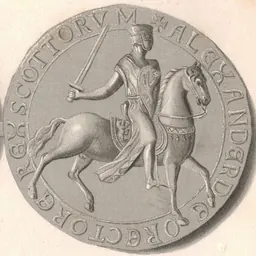





Related people
Same field, nearest in time


Contemporaries
People whose lives overlapped John, King of England's


Frequently asked questions
Who was John, King of England?
King of England from 1199 to 1216
When was John, King of England born?
John, King of England was born on 24 December 1166 in Beaumont Palace.
When did John, King of England die?
John, King of England died on 19 October 1216 in Newark Castle.
What was John, King of England's occupation?
John, King of England was a monarch.
What nationality was John, King of England?
John, King of England was English.
Sources & further reading
· Wikipedia: John, King of England
· DBpedia: John, King of England
Cite this page
APA: Biography.guide. (2026). John, King of England. https://biography.guide/john-king-of-england/
MLA: "John, King of England." Biography.guide, https://biography.guide/john-king-of-england/.
Chicago: "John, King of England." Biography.guide. https://biography.guide/john-king-of-england/.
Data last updated: 2026-09-27 · Spot an error? Report a correction.
Page generated 2026-09-27 05:17 UTC