
John Kinard
American pastor, social activist, museum director
About John Kinard
Lived 1936 – 1989 (aged 52). John Kinard was an American.
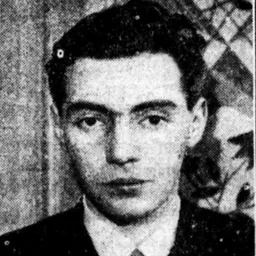
John Robert Edward Kinard (November 22, 1936 – August 5, 1989) was an American social activist, pastor, and museum director. He is best known as the director of the Anacostia Museum, a small community museum founded by the Smithsonian Institution in 1967. Kinard was the museum's first director, and remained in the post until his death. The Washington Post said Kinard was "a passionate believer in the idea that the well-being of black people depends on having a record of their past". Noted British archeologist and museologist Sir Kenneth Hudson said Kinard "developed the Anacostia Museum into one of the small number of museums of influence in the world."
Early life Kinard was born in November 1936 in Southeast, Washington, D.C. to Robert Francis and Jessie Beulah (Covington) Kinard. He had a brother, William.
In 1962, while attending Hood Theological Seminary, he joined Operation Crossroads Africa (a progenitor of the Peace Corps) and spent a summer building student housing and dining facilities in Tanzania. Dr. James Herman Robinson, founder of Operation Crossroads, encouraged him to return to Africa. Kinard did so after graduation, becoming a paid staff member of the organization. He worked in Kenya, Tanzania, and Zanzibar. He was later promoted to coordinator of all Operation Crossroads projects in eastern Africa (a region ranging from Cairo in the north to Zimbabwe in the south).
After leaving Operations Crossroads Africa, Kinard joined the Office of Economic Opportunity,
S. Dillon Ripley, Secretary of the Smithsonian Institution, began pushing in 1966 for a new and innovative kind of Smithsonian museum. Ripley conceived of a neighborhood or "storefront" museum that would be small, interactive, and focused on neighborhood issues. The Greater Anacostia People's Corp. had persuaded Ripley to put the first such neighborhood museum in Anacostia. The abandoned Carver movie theater on Nichols Avenue SE (now Martin Luther King Jr. Avenue SE) was renovated and turned into the new museum. Hope met Kinard through her son, and convinced Kinard to speak with Charles Blitzer, director of the Smithsonian's Office of Education and Training. Blitzer was deeply impressed by Kinard, and asked him to meet with Ripley. When Kinard walked into Ripley's office, Ripley thanked him for taking the job. Shocked, Kinard nonetheless agreed to become the Anacostia Museum's director. Kinard's vision for the Anacostia Museum was that it could not be divorced from the problems of the neighborhood around it. The museum later curated major exhibits on the problems of crime, the illegal drug trade, poor housing conditions, and lack of quality education in African American communities.
In 1978, Kinard helped co-found the African American Museum Association (AAMA), an umbrella group which represented small local African American art, cultural, and history museums across the United States. He was its treasurer in 1982–1983, and its president in 1987–1988. When a National Museum of African American History and Culture was being pushed in Congress during his term as president of the AAMA, Kinard strongly opposed the plan. He argued that a national museum would consume donor dollars and out-bid local museums for artifacts and trained staff. Kinard and the AAMA demanded that Congress establish a $50 million fund to create a national foundation to support local black history museums as a means of mitigating these problems. Kinard would change his mind back and forth several times over the next two years. But shortly before he died, he told The Washington Post that he had come to strongly support the museum effort. "My vision is that the Smithsonian Institution ought to take the lead in developing a national African American museum on the Mall. This is a critical thing. This is a life and death thing. Why do people shoot each other in the head, man? Because they don't have respect for human life. Because they don't have a respect for history that they can know and understand. They don't share a knowledge of history of America for themselves."
In an interview shortly before he died, Kinard delivered his own epitaph. "I believe it's God's will that I'm here. I'm a servant, and I follow. So when I shuffle off this mortal coil, if it can be said of me that 'he was a good servant,' that will be enough. Just to be a good servant is all I aspire to be."
Don’t just read it —
keep it.
Full-length biographies made to live with: read them, listen on the way to work, watch them tonight.
- E-book
- Audio
- Video
Instant download · yours to keep · every purchase keeps this site free
Important facts
People in John Kinard's life
Named in this biography and alive at the same time




Contemporaries
People whose lives overlapped John Kinard's





Frequently asked questions
Who was John Kinard?
American pastor, social activist, museum director
When was John Kinard born?
John Kinard was born on 22 November 1936 in Washington, D.C..
When did John Kinard die?
John Kinard died on 5 August 1989.
What nationality was John Kinard?
John Kinard was American.
Sources & further reading
Cite this page
APA: Biography.guide. (2026). John Kinard. https://biography.guide/john-kinard/
MLA: "John Kinard." Biography.guide, https://biography.guide/john-kinard/.
Chicago: "John Kinard." Biography.guide. https://biography.guide/john-kinard/.
Data last updated: 2026-09-25 · Spot an error? Report a correction.
Page generated 2026-09-27 05:12 UTC