
About John Junor
Lived 1919 – 1997 (aged 78). John Junor was a journalist and autobiographer.
Sir John Donald Brown Junor (15 January 1919 – 3 May 1997) was a Scottish journalist. He was editor-in-chief of the Sunday Express from 1954 to 1986, having previously worked as a columnist there. He moved in 1989 to The Mail on Sunday, where he remained until his death.
Noted for his deliberately provocative views, Junor was described by the Conservative MP Julian Critchley as "possibly the best-known Scotsman in England" during the 1980s and as "an ill-natured populist with a taste for common-or-garden abuse" .
Early life North Kelvinside Secondary School in Maryhill, Glasgow, which Junor attended in the 1930s. Born in Glasgow into a "Scottish Presbyterian, respectable working class" family, Junor was raised in what he later described as "a red-stone tenement in Shannon Street in Maryhill... [in] a two roomed-flat without indoor sanitation", but by his teens he was living with his parents and brothers in a more spacious flat, with three rooms and a kitchen, in Oban Drive. He attended North Kelvinside Secondary School (later merged into Cleveden Secondary School) before proceeding to study English Literature at Glasgow University.
As a student, he was "violently anti-Fascist, anti-Franco, above all anti-Hitler", and in 1938, he became president of the university's Liberal Club. Shortly before graduation, Junor was recruited by the Liberal Party activist Lady Glen-Coats to accompany her on a fact-finding tour of the Third Reich; they reportedly managed to escape Germany only days before the outbreak of the Second World War in September 1939. After the original choice for editor, A. P. Herbert, declined to take up the role, Junor was appointed in his place and named the magazine Flight Deck.
He was often lampooned in Private Eye, which nicknamed him Sir Jonah Junor and called the Daily Express building on Fleet Street the Black Lubyanka.
Contempt of Parliament On 24 January 1957, Junor was called to the Bar of the House of Commons to be reprimanded for contempt of Parliament – the last non-politician to be so called. The matter concerned an article about petrol allocation that appeared in the Sunday Express on 16 December 1956. Junor apologised:
Politics Ambitious for a parliamentary seat, in the 1945 General Election Junor contested Kincardine and Western Aberdeenshire in the Liberal interest, losing to the Conservative candidate by only 642 votes. He then unsuccessfully fought Edinburgh East at a by-election in 1947 and finally was beaten once more at Dundee West in 1951. From that point on, he moved away from the Liberals (breaking with the party completely over the Suez Crisis) and into the orbit of reactionary, traditional Toryism.
Works The Best of JJ (1981) Listening for a Midnight Tram: Memoirs (1990)
Don’t just read it —
keep it.
Full-length biographies made to live with: read them, listen on the way to work, watch them tonight.
- E-book
- Audio
- Video
Instant download · yours to keep · every purchase keeps this site free
Important facts
People in John Junor's life
Named in this biography and alive at the same time

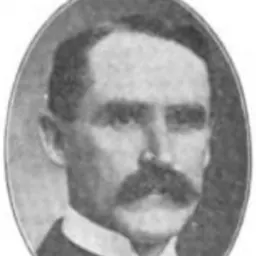



Related people
Same field, nearest in time



Contemporaries
People whose lives overlapped John Junor's


Frequently asked questions
Who was John Junor?
Scottish newspaper editor
When was John Junor born?
John Junor was born on 15 January 1919.
When did John Junor die?
John Junor died on 3 May 1997.
What was John Junor's occupation?
John Junor was a journalist and autobiographer.
Sources & further reading
Cite this page
APA: Biography.guide. (2026). John Junor. https://biography.guide/john-junor-journalist/
MLA: "John Junor." Biography.guide, https://biography.guide/john-junor-journalist/.
Chicago: "John Junor." Biography.guide. https://biography.guide/john-junor-journalist/.
Data last updated: 2026-09-20 · Spot an error? Report a correction.
Page generated 2026-09-27 05:07 UTC