
About John Jones
Lived 1817 – 1879 (aged 61–62). John Jones was an American businessperson.
John Jones (1816 – May 27, 1879) was an American abolitionist, businessman, civil rights leader, and philanthropist. He was born in North Carolina and later lived in Tennessee. Arriving in Chicago with three dollars in assets in 1845, Jones rose to become a leading African-American figure in the early history of Chicago.
In Chicago, Jones opened a tailoring shop. He led a campaign to end the Black Codes of Illinois and was the first African-American to win public office in the state. Jones became a notary public in 1869, was the first black man in the state of Illinois to serve on a grand jury in 1870, and the 1871 was elected to the Cook County Commission. He is believed to have been the first African–American to win public office in Illinois. He became one of Chicago's wealthiest men through his successful tailoring business.
Along with his wife, Mary Jane Richardson Jones, he was a dedicated abolitionist and philanthropist, turning their home into a stop on the Underground Railroad. The Jones' household was a center of abolitionist activity in the pre–Civil War era; the couple helped hundreds of people fleeing slavery. Jones died in 1879 of kidney failure.
Early life
Jones was born in Green City, North Carolina, in 1816 to a free biracial mother and German-American father. For most of his early life, he was an indentured servant who trained as a tailor in Memphis, Tennessee. In 1841, Jones married a free black woman named Mary Jane Richardson (1819-1909), the daughter of Elijah and Diza Richardson.
Jones had first met her in Tennessee and he moved to Alton, Illinois to woo her. Committed abolitionists, they were drawn by Chicago's large anti-slavery movement.
Arrival in Chicago Jones and his wife arrived in the Chicago in 1845
During his early years in Chicago, Jones became close with abolitionists Lemuel Covell Paine Freer and Dr. Charles V. Dyer. They were credited by Jones with teaching him to read and write along with the fundamentals of business and real estate. Beyond his tailoring business, Jones invested in land that would develop into the first working-class neighborhood for Chicago black families.
Activism in Chicago The Joneses became members of a small community of African-Americans in Chicago, comprising 140 people at the time of their arrival. Jones was a leading campaigner for the rights of African Americans.
While his tailoring business prospered, his wife Mary managed their home as a center of black activism, organizing resistance to the Black Codes and other restrictive laws like the Fugitive Slave Act. At their home, the Jones hosted meetings with prominent abolitionists, with local and national figures of the abolitionist movement visiting the house.
Jones authored several influential pamphlets in opposition to slavery. Brown advocated in strong opposition to a provision that was ultimately included in the 1848 state constitution that prohibited "free persons of color" from moving to Illinois, and prohibited slaveholders from bringing their slaves to Illinois to free them. In his opposition to this provision, Jones cited the principals of equal citizenship and equal treatment under the law, noting that the United States constitution did not utilize the word "white" in its text. In 1861, the Joneses helped found Olivet Baptist Church, which contained the first library open to black Chicagoans. Illinois's version of a Black law or "code", first adopted in 1819, controlled (and in a 1853 law in the lead-up to the Civil War, forbade completely) black immigration into Illinois, and prohibited blacks from serving on juries or in the Illinois state militia. Jones' first attempt at repeal was writing a series of columns in the Western Citizen in 1847. It was also during this year that he began to work closely with his friend Frederick Douglass. In December 1850, Jones circulated a petition—signed by black residents of the state—for Illinois legislators to repeal the Black Laws. In 1864, the Chicago Tribune published Jones’ pamphlet, “The Black Laws of Illinois and a Few Reasons Why They Should Be Repealed.” The next year in 1865, Illinois repealed the state’s provision of its Black Laws, with governor Richard J. Oglesby signing the bill into law. In September 1870, Jones became the first black man to serve on a grand jury in the state of Illinois. He was a member of the Republican Party. While on the county board, he was involved in the enactment of a law abolishing school segregation in Cook County. and by 1860 was one of the richest African Americans in the United States. John's tailoring business was taken over by Lloyd Garrison Wheeler, a family friend.
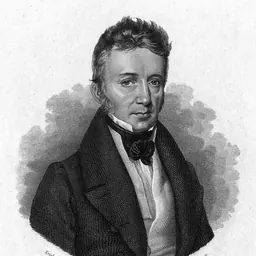
Legacy In 2004, the City of Chicago designated the site of the John and Mary Jones House as a Chicago Landmark. The Chicago History Museum has a photograph of Jones, and a painted portrait of his wife by the same artist.
Don’t just read it —
keep it.
Full-length biographies made to live with: read them, listen on the way to work, watch them tonight.
- E-book
- Audio
- Video
Instant download · yours to keep · every purchase keeps this site free
Important facts
Family & relationships
People in John Jones's life
Named in this biography and alive at the same time


Related people
Same field, nearest in time

Contemporaries
People whose lives overlapped John Jones's




Frequently asked questions
Who was John Jones?
American abolitionist and civic leader
When was John Jones born?
John Jones was born in 1817 in North Carolina.
When did John Jones die?
John Jones died on 27 May 1879 in Chicago.
What was John Jones's occupation?
John Jones was a businessperson.
What nationality was John Jones?
John Jones was American.
Sources & further reading
· DBpedia: John Jones (abolitionist)
Cite this page
APA: Biography.guide. (2026). John Jones. https://biography.guide/john-jones-businessperson-1817/
MLA: "John Jones." Biography.guide, https://biography.guide/john-jones-businessperson-1817/.
Chicago: "John Jones." Biography.guide. https://biography.guide/john-jones-businessperson-1817/.
Data last updated: 2026-09-22 · Spot an error? Report a correction.
Page generated 2026-09-27 05:18 UTC