
About John J. Parker
Lived 1885 – 1958 (aged 72). John J. Parker was an American judge, lawyer and jurist.
John Johnston Parker (November 20, 1885 – March 17, 1958) was an American politician and United States circuit judge of the United States Court of Appeals for the Fourth Circuit. He was an unsuccessful nominee for associate justice of the United States Supreme Court in 1930. He was also the United States alternate judge at the Nuremberg trials of accused Nazi war criminals and later served on the United Nations' International Law Commission.
Early and family life
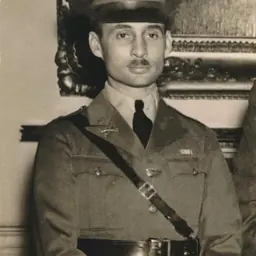
Born on November 20, 1885, in Monroe, North Carolina, Parker was the oldest of four children born to Frances Ann (Johnston) and John Daniel Parker. He was a descendent of William Bradford, a founder of Plymouth Colony, in Massachusetts, and of associate justice of the Supreme Court of the United States James Iredell. He was also a brother of Samuel I. Parker, first recipient of the army's three highest decorations for valor.
Parker received a Bachelor of Arts degree in 1907 from the University of North Carolina at Chapel Hill, where he was elected to membership in Phi Beta Kappa and was class president. He received a Bachelor of Laws in 1908 from the University of North Carolina School of Law. Following a legal apprenticeship in Greensboro, North Carolina, he practiced law in Monroe from 1909 to 1922, and then in Charlotte, North Carolina until 1925.
From 1923 to 1924 Parker served as a special assistant to the Attorney General of the United States. He was tasked with prosecution of former Wilson Administration officials for alleged frauds associated with World War I demobilization. His efforts resulted in no indictments or convictions. Nonetheless, he made favorable impressions upon Justice Department colleagues, including then Attorney General and future Supreme Court Justice Harlan F. Stone.
"hen seventeen states and the Congress of the United States have for more than three-quarters of a century required segregation of the races in the public schools, and when this has received the approval of the leading appellate courts of the country including the unanimous approval of the Supreme Court of the United States at a time when that court included Chief Justice Taft and Justices Stone, Holmes and Brandeis, it is a late day to say that such segregation is violative of fundamental constitutional rights," Parker wrote in his 1951 opinion .
The case went to the Supreme Court and, in 1954, a unanimous Court ruled in Brown that “in the field of public education, the doctrine of ‘separate but equal’ has no place” and “separate educational facilities are inherently unequal" . The following term, the Court held additional arguments to determine how the Brown decision would be implemented. In a case that became known as Brown II, the Court decided that, rather than order immediate desegregation in public schools throughout the country and risk civil unrest and resistance, it would let local authorities come up with plans to implement the Brown decision “with all deliberate speed.”
As a result, the Briggs case went back to the Fourth Circuit, and Parker issued an opinion in 1955 that Brown only outlawed state-sponsored segregation of public schools. “The Constitution, in other words, does not require integration. It merely forbids discrimination. It does not forbid such segregation as occurs as the result of voluntary action. It merely forbids the use of governmental power to enforce segregation,” he wrote . In other words, de facto public school desegregation was okay, but de jure segregation was not while J. Harvie Wilkinson, III, concurred, calling Parker the person who "most influenced school desegregation" in the post-Brown era. The Supreme Court would unofficially overturn the Parker Doctrine in 1968, ruling in Green v. County School Board of New Kent County, 391 U.S. 430 (1968), that school boards had an “affirmative duty” to end segregation “root and branch,” and emphasizing that “the time for mere ‘deliberate speed’ has run out.”
Unsuccessful Supreme Court nomination
On March 21, 1930, Parker was nominated by President Herbert Hoover as an Associate Justice of the United States Supreme Court to fill the vacancy caused by the death of Edward Terry Sanford. during confirmation hearings before the Senate Judiciary Committee. AFL president William Green specifically faulted Parker for a 1926 Fourth Circuit Court decision which he authored regarding the United Mine Workers, involving antitrust law and yellow-dog contracts. On May 7, 1930, the Senate rejected Parker's nomination by a 39–41 roll call vote. This was the first Supreme Court nomination rejected by the Senate since that of Wheeler Hazard Peckham in 1894. In 1954, he was elected to serve on the United Nations' International Law Commission. Parker also served in various capacities in the American Bar Association, winning the ABA Medal in 1943 and serving as chairman of the council of the Section of Judicial Administration from 1937 to 1938. He led the Special Committee on Improving the Administration of Justice and argued for judicial reforms that would emphasize efficiency and simplicity. He also helped establish state committees (dubbed “Parker Committees”) focused on implementing the recommendations and findings of his group .
Parker died on in Washington, D.C., on March 17, 1958, while still in active judicial service. He was buried in Elmwood Cemetery in Charlotte, North Carolina.
Legacy The Judge John J. Parker Award is presented annually by the North Carolina Bar Association.
Don’t just read it —
keep it.
Full-length biographies made to live with: read them, listen on the way to work, watch them tonight.
- E-book
- Audio
- Video
Instant download · yours to keep · every purchase keeps this site free
Important facts
People in John J. Parker's life
Named in this biography and alive at the same time



Related people
Same field, nearest in time


Contemporaries
People whose lives overlapped John J. Parker's



Frequently asked questions
Who was John J. Parker?
American judge (1885–1958)
When was John J. Parker born?
John J. Parker was born on 20 November 1885 in Monroe.
When did John J. Parker die?
John J. Parker died on 17 March 1958 in Washington, D.C..
What was John J. Parker's occupation?
John J. Parker was a judge, lawyer and jurist.
What nationality was John J. Parker?
John J. Parker was American.
Sources & further reading
Cite this page
APA: Biography.guide. (2026). John J. Parker. https://biography.guide/john-j-parker/
MLA: "John J. Parker." Biography.guide, https://biography.guide/john-j-parker/.
Chicago: "John J. Parker." Biography.guide. https://biography.guide/john-j-parker/.
Data last updated: 2026-09-26 · Spot an error? Report a correction.
Page generated 2026-09-27 05:15 UTC