
About John J. Albright
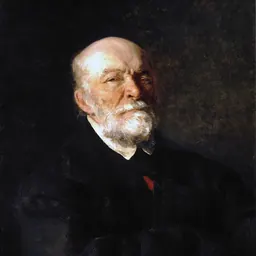
Lived 1848 – 1931 (aged 83). John J. Albright was an American business executive, known for Albright-Knox Art Gallery, Buffalo Bolt Company and Lackawanna Steel Company.
John Joseph Albright (1 January 1848 Buchanan, Virginia – 20 August 1931 Buffalo, New York) was a businessman and philanthropist, and one of Buffalo's leading socialites at the turn of the 20th century.
Early life Albright was born on January 18, 1848, in Buchanan, Virginia, to Joseph Jacob Albright and Elizabeth S. Albright, both from Pennsylvania. The family was descended from Andrew Albright, a gunsmith who supplied arms to the troops of the Continental Army during the Revolutionary War, who had come to America in 1750. Albright's father, Joseph, was an iron manufacturer and eventually, president of the First National Bank, coal agent for Delaware and Hudson Canal Company, and the Delaware, Lackawanna and Western Railroad.
Career
Following his graduation from Rensselaer Polytechnic Institute, Albright returned to Scranton. At that time, coal was in high demand in the Western United States, and Albright got involved in its sale. By 1871, Albright was working out of Harrisburg, Pennsylvania, selling coal wholesale, along with his business partner, Andrew Langdon (1835–1919). Their firm was called Langdon, Albright and Company. By 1873, Albright had married Langdon's sister, Harriet, and they all moved to Washington, DC, where Albright and Langdon started to work for the Philadelphia and Reading Coal and Iron Company. Together, Barber and Albright participated in the paving of Washington, DC, Scranton, and Buffalo. While Albright turned to other ventures, Barber continued with the asphalt business and secured a 42-year monopoly concession from the British government for the Pitch Lake in Trinidad, the largest natural deposit of asphalt in the world. Barber used the asphalt from Trinidad for paving city streets, and by 1900, Barber had laid over 12 million square yards of Trinidad asphalt pavement in 70 American cities at a cost of $35 million.
In 1883, the Philadelphia and Reading Railroad Company tightened its shipping routes and started shipping coal directly by rail through Buffalo, New York, to ship their coal to the west. Albright moved his family to Buffalo to oversee the operations. While there, he entered into partnership with Thomas Guilford Smith, another Rensselaer Polytechnic Institute graduate and Philadelphia and Reading Railroad Company executive. Their firm, Albright & Smith, handled all of Philadelphia and Reading Railroad Company's coal sales in Canada and Western New York, as well as all the railroad's coal going westward from Buffalo. Albright devised a plan to fill up the empty trains with grain on the haul back to the East. Purportedly, within a year, he had earned $100,000 .
By 1888, Albright had done so well that he decided to retire and took his family on a 14-month tour of Europe and Egypt when he was only 40 years old. Albright, however, tired of retirement and started working again upon his return. Work began in 1893 and in November 1896, power generated from Niagara Falls at the Edward Dean Adams Power Plant was being sent to Buffaloand the plants of the Pittsburgh Reduction Company, which needed large quantities of cheap electricity for smelting aluminum.
A similar set of events was happening on the Canadian side of the falls. In June 1887, recognizing an opportunity, the Ontario Power Company of Niagara Falls was incorporated in Canada "to supply manufacturers, corporations, and persons with water, hydraulic, electric, or other power." While its operations were in Queen Victoria Park in Niagara Falls, Ontario, its executive office was in Buffalo with these officers: Albright, president; Francis V. Greene, vice president; and Robert C. Board, secretary and treasurer. In 1904, Albright hired Buffalo architect E. B. Green to design the Ontario Power Company buildings, Murray Street at Buchanan Avenue, including the Entrance Pavilion, Spillway Building, Office and Transformer Station, Gate House, Screen House, and Ontario Power Company Generating Stationat river level. The conduits, two steel and one wooden (bound with iron hoops and encased in concrete), ran underground 6,180 ft (1,884 m) to the top of the generating station. There, each conduit connected with six penstocks, six feet in diameter. At the point where the conduits and the penstocks join, a section turned upwards into a spillway, called a surge tank, which served to reduce fluctuations in heat and pressure during both the increase and decrease of loads. The open spillways sent any excess water to the Niagara River if the load suddenly reduced, which prevented any unwanted rise in pressure.
Later in 1943, the Niagara, Lockport and Ontario Power Company reorganized as the Niagara Hudson Company, Inc., and became a subsidiary of Niagara Hudson Power Corporation, which was a conglomerate of 59 separate power companies in Western New York formed in 1929, and in 1932, was the "nation's largest electric utility company". In 1950, Niagara Hudson Power Corporation reorganized as the Niagara Mohawk Power Corporation and in January 2002, Niagara Mohawk was acquired by, and became a subsidiary of, National Grid plc.
Lackawanna Steel Company
In 1889, Lackawanna Iron and Steel Company, at the time the largest steel company in the world, decided to move its facilities out of Scranton, Pennsylvania, because of increases in union labor cost and lack of railroad access to the company's newly emerging markets in the West. They were drawn to Western New York by the area's easy access to the Great Lakes and the numerous rail lines in the area.
Lackawanna Company executives reached out to Buffalo attorney John G. Milburn, who brought in Albright, who had been discussing organizing a steel plant in Buffalo with William A. Rogers (vice president of Rogers, Brown & Company, the largest pig iron dealer in the United States). He asked that Rogers be brought into negotiations, as well as Brig. Gen. Edmund B. Hayes (a civil engineer and businessman with the Union Bridge Company).
In 1900, construction on the massive steel mill started, and in 1902, the company, of which Albright was then a principal shareholder, was reorganized as the Lackawanna Steel Company. The company moved its headquarters to the site and the plant began operation in 1903, By 1909, the residents of the area voted to split off from West Seneca and form the present-day city of Lackawanna, New York, named after the company. The Lackawanna Steel Company received its power from Albright's Niagara Lockport and Ontario Power Company and he served as a director of the Lackawanna Steel Company, which remained independent until 1922, when it was acquired by Bethlehem Steel.
Depew Improvement Company
In 1892, New York Central Railroad chose the Depew, New York, area (which straddles the towns of Lancaster and Cheektowaga and lies to the east of Buffalo) as a permanent location for its shops and auxiliary establishments. At the time, only minimal infrastructure was in the area.
Chauncey Depew, attorney for Cornelius Vanderbilt’s railroad interests and president of New York Central Railroad, formed the Depew Investment Company and purchased 1,000 acres of land north and south of the tracks for the enterprise. The original shareholders included Albright, George Urban, Wilson S. Bissell, and Charles Gould. The officers of the company were Albright as president and James A. Roberts as secretary. The area was eventually called "Depew" in honor of Chauncey Depew. Under Albright, production increased many times over. In 1869, Buffalo Bolt produced 14,000 nuts and bolts per day, and by 1911, the company was producing 1,250,000 per day.
In 1921, the company's main factory was located at 101 East Avenue in North Tonawanda, New York, the general offices were in Buffalo, and the western offices were at 934 Monadnock Building in Chicago, Illinois, and 1107 Chemical Building in St Louis, Missouri. The officers were Albright, president; R. K. Albright (Albright's son) and Ralph Plumb, vice presidents; G. A. Mitchell, treasurer; and Robert C. Board, secretary. The board of directors was composed of Albright, R. K. Albright, Edmund B. Hayes, Ralph Plumb, G. A. Mitchell, W. P. Cooke, and Anson Conger Goodyear.
Banking interests In May 1893, Albright, along with George V. Forman, John Satterfield, and Franklin D. Locke, founded the Fidelity Trust and Guaranty Company of Buffalo, New York. In 1909, E. B. Green was commissioned to build the Fidelity Trust Building, today known as Swan Tower and owned by Ellicott Development Co., located at 284 Main Street in Buffalo.
In December 1925, the Fidelity Trust Company, with $35 million in assets, merged with Manufacturers and Traders Bank, founded in 1856, with $64 million in assets, under the new name Manufacturers and Traders Trust Company (M&T). The $100-million company was headed by Fidelity's president, 36-year-old Lewis G. Harriman. Harriman and a group of investors including A. H. Schoellkopf, from the founding family of the Niagara Falls Hydraulic Power and Manufacturing Company, and James Forrestal, who would become the first United States Secretary of Defense, owned enough shares to control both Fidelity and M&T.
Marine National Bank
In 1908, separate from his involvement with the Fidelity Trust and Guaranty Company, Albright served as vice president of Marine Bank's board of directors, The building was added to the National Register of Historic Places in 1978.
Schools and churches In 1892, Albright helped found the Nichols School by bringing William Nichols to Buffalo to set up the school, and supported the Elmwood School (which merged with the Franklin School in 1941 to form the Elmwood Franklin School, founded in 1889. In 1904, he donated the land for the Unitarian Universalist Church of Buffalo and gave significant donations to the South Park Botanical Gardens.
Albright Art Gallery His largest gift was in 1900, when he made a donation of $350,000 so the then Fine Arts Academy, founded in 1862, could have a permanent home. The building was designed by Green and was originally intended to be used as the Fine Arts Pavilion for the Pan-American Exposition in 1901, but delays in its construction and increased costs (the total cost was purported to be closer to $1,000,000 ) caused it to remain uncompleted until 1905, when it opened as the Albright Art Gallery. The Pan-American Exposition was held in Buffalo from May 1 through November 2, 1901.
Green designed the gallery along the lines of a Greek temple and included 102 columns, more than any other American structure except the Capitol Building in Washington, DC. The building was constructed using 5,000 tons of white marble from a Maryland quarry, the same marble used in the Metropolitan Museum of Art in New York City and the Washington Monument in Washington, DC.
When the gallery opened on May 31, 1905, Harvard University President Charles William Eliot gave the keynote address and four city choral organizations performed together. Richard Watson Gilder read a poem he had written celebrating the gallery's opening. Albright, however, did not give a speech or appear in any photographs from the ceremony, as he had always been inclined to avoid the spotlight. Birge Albright, his grandson, said that Albright took friends to the gallery on Sundays when few others were around.
In 1915, Albright and two of his daughters were painted by Edmund Charles Tarbell. The oil painting, entitled John J. Albright and His Daughters, is owned by the Westmoreland Museum of American Art in Greensburg, Pennsylvania. Tarbell also painted a portrait of Albright that is currently at the Albright-Knox gallery.
John J. Albright died on August 20, 1931, at the age of 83, six weeks after an intestinal operation. He is buried with his family at the Forest Lawn Cemetery, Buffalo. In February 1929, the University at Buffalo conferred upon Albright the Chancellor's Medal, its highest honor, recognition of his achievements throughout his life.
In February 1914, Albright and his second wife Susan, purchased the 26-room Joseph Pulitzer Cottage, in Jekyl Island, in Georgia, fully furnished, after spending many winters on the island with their family. While there, the Albrights struck up a friendship with the poet laureate of England, Alfred Noyes, and his wife, who visited them in Jeykl Island in 1914. Albright introduced Noyes to William Rockefeller and other Jekyl Islanders who were at the club. The house was sold in 1931 after Albright's death, and when the state of Georgia acquired the entire Jekyl Island in 1947, the cottage was still standing. In 1951, a fire damaged the interior, and on June 23, 1951, the cottage was demolished as no funds were available to repair the damage.
Don’t just read it —
keep it.
Full-length biographies made to live with: read them, listen on the way to work, watch them tonight.
- E-book
- Audio
- Video
Instant download · yours to keep · every purchase keeps this site free
Important facts
Family & relationships
People in John J. Albright's life
Named in this biography and alive at the same time






Related people
Same field, nearest in time
Contemporaries
People whose lives overlapped John J. Albright's


Frequently asked questions
Who was John J. Albright?
American businessman and philanthropist (1848-1931)
When was John J. Albright born?
John J. Albright was born on 18 January 1848 in Buchanan.
When did John J. Albright die?
John J. Albright died on 20 August 1931 in Buffalo.
What was John J. Albright's occupation?
John J. Albright was a business executive.
What was John J. Albright known for?
John J. Albright was known for Albright-Knox Art Gallery, Buffalo Bolt Company, Lackawanna Steel Company and Ontario Power Company.
What nationality was John J. Albright?
John J. Albright was American.
Sources & further reading
Cite this page
APA: Biography.guide. (2026). John J. Albright. https://biography.guide/john-j-albright/
MLA: "John J. Albright." Biography.guide, https://biography.guide/john-j-albright/.
Chicago: "John J. Albright." Biography.guide. https://biography.guide/john-j-albright/.
Data last updated: 2026-09-25 · Spot an error? Report a correction.
Page generated 2026-09-27 05:11 UTC