
John IV, Count of Nassau-Siegen
Count of Nassau-Siegen, Vianden and Diez, Lord of Breda
About John IV, Count of Nassau-Siegen
Lived 1410 – 1475 (aged 64). John IV, Count of Nassau-Siegen was a count of Vianden, count of Diez and military personnel.
Count John IV of Nassau-Siegen (1 August 1410 – 3 February 1475), , official titles: Graf zu Nassau, Vianden und Diez, Herr zu Breda, was since 1442 Count of Nassau-Siegen (a part of the County of Nassau), of Vianden and of half Diez, and Lord of and of . He descended from the Ottonian Line of the House of Nassau.
Since the death of his father, John owned many fiefs in the Netherlands, which he managed to expand. Through his marriage he obtained that many fiefs in the Duchy of Jülich, that he possessed of that duchy. John was a loyal servant of the Dukes of Burgundy in the Netherlands, who was still called up for military service even when he was well into his fifties, but he was not one of the closest noble advisors. John can best be characterised as a wealthy nobleman who faithfully fought in the campaigns for which he was called up; he was not known for spectacular deeds or revolutionary ideas. The campaigns he took part in are therefore more typical of the politics of the Dukes of Burgundy than of his own preferences and interests. For the administration of justice, the County of Nassau-Siegen had a Schultheiß in most of the districts. The oldest preserved ordinance for the Schultheiß of the Dillenburg district is from John's reign. A not inconsiderable source of income for the Counts of Nassau-Siegen has always been the iron toll. A charter from John's reign concerning the tariffs lists the individual taxes in detail.
Biography John was born in Breda Castle on 1 August 1410 as the eldest son of Count Engelbert I of Nassau-Siegen and Lady Joanne of Polanen.
In the period between his marriage and the death of his father, John lived in the house De Herberghe in the Reigerstraat in Breda.
John was interested in religion and science and owned a library in Breda Castle. – so before the death of his father – as drost of Brabant. As drost, he was the highest judicial officer in the duchy who dealt with the cases that did not ressorted to a specific court. It was not a very politically sensitive office, although he could be assisted by archers on foot and horseback and received an annual payment of 600 Philippusguilders.
Because of Philip the Good's interest in the Middle East, where his grandfather had suffered a grievous defeat at Nicopolis in 1396 that was still unreconciled, and the ever-increasing threat to Constantinople from the Ottoman Empire, John undertook a journey to the island of Rhodes on Philip's orders from May 1441 to February 1442, to see how the infidels could best be combated, but this led to nothing. This was not a bad idea, but later historians exaggerate when they say that this ended all unrest. The citizens of Utrecht accepted the inevitable for the time being, but in Liège the unrest remained for many years, until in 1465 it came to an armed outburst. Again, John was part of the army that had to subdue the city liberties and in the Battle of Montenaken he was the commander of the victorious army division. He was also present at the capture of Dinant in August 1466. However, the County of Vianden had already been assigned to Henry by the marriage contract on 18 May 1415. Together with his brother, John inherited the property of their uncle Count John II with the Helmet in May 1443. But this led to a conflict with his niece Ottilie of Nassau-Siegen, who also claimed her father part's of the County of Diez as her inheritance. The conflict was complicated further due to the fact that another part of the County of Diez belonged to Ottilie's father-in-law Count Philip the Elder of Katzenelnbogen.
John took part in the Soest Feud at the side of Archbishop of Cologne, together with Count John I of Nassau-Beilstein, the latter's son Philip and brother Count . Philip died in that feud in 1446. John received the office of Marshal of Westphalia in gratitude from the archbishop, but exchanged it for pledged Rhine tolls in 1455. The Rhine tolls had always been an important concern for the Counts of Nassau, because the iron trade and the exchange of vital goods with the Netherlands took place over the Rhine.
Approximately midway between their possessions in the Netherlands and their counties in Germany the Counts of Nassau owned a house in the city of Cologne (das achte Haus von der Goltgassenecken nach St. Cunibert hin), which made the connection between the two areas easier for them. His widespread possessions forced John to travel constantly, in order to govern his possessions well. When John was in his county, he governed it from Siegen or Dillenburg.
The County of Nassau-Siegen was divided into districts (Ämter). In each district (Amt) the count appointed an Amtmann. These were members of the local nobility and deputised for the count. They had a number of servants to guard the public order. In times of war they formed the core of the army. Because of John's sometimes long absences, these Amtmänner had unlimited power. One of these was Philipp von Bicken, appointed by John. During John's long absence, however, von Bicken used the trust placed in him and his own power base in the Haiger Mark to repeatedly overstep his authority, to such an extent that he arrogated territorial lord rights to himself, in order to increase his family's still very considerable possessions. He fell into disfavour with John in 1466 and von Bicken fled the county and put himself under Hessian protection. It was not until 1486 that John's son John V was able to definitively subjugate the .
For the administration of justice, the county had a Schultheiß in most of the districts. The oldest preserved ordinance for the Schultheiß of the Dillenburg district is from 10 April 1465, which contains only a part of his tasks and authority. In this ordinance the provisions on matrimonial law are prominently present.
When the count's family started staying in the county more often, a court was established. The financial administration was still relatively simple; there was no distinction between the public and the private treasury of the count. All income flowed into the private treasury of the count. The count received the revenues from the farms in the villages in kind, which were supplied by the serfs working there. A not inconsiderable source of income for the Counts of Nassau has always been the iron toll. A charter of 1 April 1470 concerning the tariffs in Siegen, Netphen and Wilnsdorf lists the individual taxes for pig iron, steel, cast iron pans, metal sheets, scythes, cauldrons, etc. in detail. John had Dillenburg Castle – which until then had been used primarily as a stronghold against the unruly local nobility – extended in the period 1453–1467 and rebuilt into a residential castle for the count's family. And in 1472 he started the expansion of , which lasted until 1481.
Emperor Frederick III. Attributed to Hans Burgkmair, c. 1500. Kunsthistorisches Museum, Vienna. On 28 May 1470, Emperor Frederick III confirmed and granted John permission to purchase rights to the toll in Königsdorf and the associated tolls in Mülheim, , , , Bocklemünd, and , as well as other rights from the Archdiocese of Cologne. The late Archbishop Thierry II had transferred these tolls and rights to John, with the approval of the Chapter, as compensation for the losses caused by the Archbishop and the Archdiocese. This was evident to the Emperor from the copies of four charters signed by Thierry, which were presented to him, granting John the rights to these tolls and rights, which he still owned and had been using up until then, for the unhindered use of himself and his heirs.
John was one of the princes ordered by the Emperor on 12 June 1470 to wage war against Count palatine Frederick I. John had the confidence of the Emperor. This is shown by the fact that in 1472 the Emperor ordered John to question witnesses as his commissioner in the lawsuit in the Kammergericht between the citizens of and the city of Wetzlar. In a summons to the Schöffen of Wetzlar – sent by Count Philip II of Nassau-Weilburg with John's letter of attorney – the hearings are mentioned to take place on 12 October in Siegen. And on 30 June 1474, the Emperor informed the mayors and the city council of Cologne that he would soon pay off part of his debt of 2,000 Rhenish guilders by having John pay them the sum of 600 guilders.
John also seems to have been on the best of terms with the church. In any case, he received a so-called Butterbrief from Pope Sixtus IV (dated Rome 25 February 1472), which allowed the inhabitants of his cities and castles to consume butter during Lent, and milk food – apart from cheese – instead of oil, because they lived in a cold region, where no olive oil grew and hardly any fish was available. On 27 February 1458, John bought the heerlijkheden of Gageldonk and Hambroeck. He freed the heerlijkheid of Breda from the feudal ties to the Margraviate of Antwerp and brought it directly under the Duchy of Brabant. He also increased the liberties of the city of Breda.
Through his marriage to Lady Mary of Looz-Heinsberg, John obtained the heerlijkheden of Herstal, Vught, Gangelt, Waldfeucht and the , so that he possessed of the Duchy of Jülich. This led to a dispute with his distant relative Count John II of Nassau-Saarbrücken, who was married to Lady Jeanne of Looz-Heinsberg, the daughter and heiress of Lord John IV of Looz-Heinsberg.
At John's request, Emperor Frederick III declared on 28 May 1470 that by granting the entire Duchy of Jülich to Duke Gerhard VII, the claims of Philippa of Looz-Heinsberg and her sister Mary, John's wife, were not to be affected. Apparently this had no effect, because in 1471 or 1472 the Emperor ordered Duke Charles the Bold of Burgundy to settle on his behalf the dispute between Gerhard on the one hand and John and his wife Mary on the other. The dispute became more complicated when in 1472 Gerhard VII's son William married to Countess Elisabeth of Nassau-Saarbrücken, John II's eldest daughter, who had inherited her mother's possessions. In 1474, the Emperor withdrew the order to Charles the Bold and instead transferred the matter to Archbishop John II of Trier. The dispute was only settled when on 25 August 1499 John's eldest son Engelbert II transferred his half of the castle and the land of Millen with the towns of Gangelt and Vught to Duke William of Jülich and Berg and received in exchange from the latter on 27 August 1499 the city and the land of Diest and the castle and the land of Zichem and Zeelhem.
Dispute with his sister John came into conflict with his sister Mary. She filed a complaint against her brother with Emperor Frederick III for forcibly removing her inheritance and goods. On 14 October 1463, the Emperor appointed Abbot of Fulda as his attorney and instructed him to summon both parties to a trial on his behalf, to interrogate them and to give judgment. The abbot could – if necessary – examine witnesses and – if necessary – threaten these witnesses with punishment in order to force them to testify, as well as to carry out the proceedings in all respects in the event that one of the parties did not appear. The abbot summoned John by letter of 17 August 1464 to appear before him 45 days later in Salmünster. John received this summons on 2 September 1464 in Vianden from the hands of the servus et nuncius of the abbot.
The abbot's judgment is unknown, as is what happened next. However, on 7 July 1465, the Emperor informed Mary that John had appealed against the judgment by Archbishop John II of Trier unfavourable to him, and summoned her to appear before him on the 45th day after receipt of this summons or on the first day of the following court and informed her that, even if she did not appear, the trial would take place. What happened afterwards is also unclear. What is known is that the Emperor summoned John for the settlement of the inheritance dispute with his sister, because on 9 February 1467 Mary appointed attorneys for the trial. That is the last preserved record of the dispute.
Last years, death, funeral and succession John signed an inheritance treaty with his sons on 4 May 1472, in which it was decided to divide the possessions after John's death. The eldest son, Engelbert, would get the possessions in the Netherlands, while the youngest son, John, would get the possessions right of the River Rhine (Nassau-Siegen and Diez).
John died in Dillenburg on 3 February 1475 and was buried under the epitaph in the Grote Kerk in Breda. His heart was interred in the church in Feldbach and transferred to the in Dillenburg around 1495, to Lady Mary of Looz-Heinsberg (1424 – Siegen,
From the marriage of John and Mary the following children were born: Anne (1440 or 1441 – Celle, 5 or 8 April 1514 ), married: on 28 October 1467 to Duke Otto II the Victorious of Brunswick-Lüneburg (1439 – January 1471 ); on 24 January 1474 to Count Philip the Elder of Katzenelnbogen (1402 – 28 July 1479 ). Joanne (1444 – May 1468), married on 14 October 1464 to Count Philip I of Waldeck-Waldeck (1445 – 1475). Ottilie ( – Alkmaar, 22 April 1495). Was a nun in the Bethany Abbey near Mechelen until 1463 and then in the Saint Catherinadal Abbey in Breda 1463–1476. She was the first prioress of Vredenburg Abbey in Bavel 1476–1495. Adriana (Breda, 7 February 1449 – 15 January 1477 ), married on 12 September 1468 to Count Philip I of Hanau-Münzenberg (21 September 1449 – 26 August 1500). Count Engelbert II the Illustrious (Breda, 17 May 1451 – Brussels, 31 May 1504), succeeded his father in the possessions in the Netherlands. Married in Koblenz on 19 December 1468 to Margravine (15 May 1450 – Breda, 5 July 1501). Count John V (Breda, 9 November 1455 – Dillenburg or Siegen, 30 July 1516), succeeded his father in Nassau-Siegen and Diez. Married in Marburg on 11 February 1482 to Landgravine Elisabeth of Hesse-Marburg (Marburg, May 1466 – Cologne, 17 January 1523 ).
Illegitimate children John had two illegitimate children: , castellan of Heusden Castle. Son of Aleid van Loemel. Was granted the castles and heerlijkheden Corroy and Frasne as a fief on 29 April 1485, after he had bought it from his halfbrother Engelbert II. In 1492, however, these properties reverted to Engelbert II. He married (marriage contract Loon op Zand, 4 November 1470) to Adriana van Haastrecht . Jan van Nassau was the progenitor of the illegitimate cadet branch van Nassau van Merwen. . Bought Thommes and Auimel in 1469. On 7 October 1509 he still received 100 guilders annually from the of St. Vith. He married Katharina von Brandscheid, Lady of Reinhardstein. Adriaan van Nassau was the progenitor of the illegitimate cadet branch Nassau-Reinhardstein.
Ancestors
Don’t just read it —
keep it.
Full-length biographies made to live with: read them, listen on the way to work, watch them tonight.
- E-book
- Audio
- Video
Instant download · yours to keep · every purchase keeps this site free
Important facts
People in John IV, Count of Nassau-Siegen's life
Named in this biography and alive at the same time




Related people
Same field, nearest in time
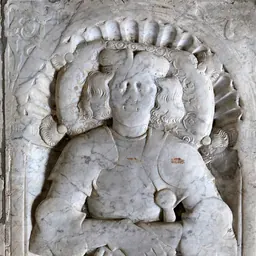

Contemporaries
People whose lives overlapped John IV, Count of Nassau-Siegen's



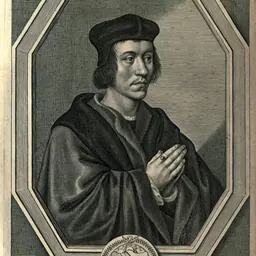
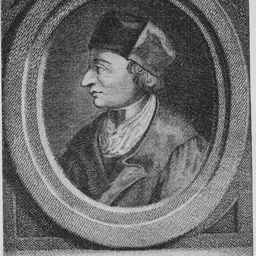
Frequently asked questions
Who was John IV, Count of Nassau-Siegen?
Count of Nassau-Siegen, Vianden and Diez, Lord of Breda (1442-1475)
When was John IV, Count of Nassau-Siegen born?
John IV, Count of Nassau-Siegen was born on 1 August 1410 in Dillenburg.
When did John IV, Count of Nassau-Siegen die?
John IV, Count of Nassau-Siegen died on 3 February 1475 in Dillenburg.
What was John IV, Count of Nassau-Siegen's occupation?
John IV, Count of Nassau-Siegen was a count of Vianden, count of Diez and military personnel.
Sources & further reading
· Wikipedia: John IV, Count of Nassau-Siegen
· DBpedia: John IV of Nassau-Siegen
Cite this page
APA: Biography.guide. (2026). John IV, Count of Nassau-Siegen. https://biography.guide/john-iv-count-of-nassau-siegen/
MLA: "John IV, Count of Nassau-Siegen." Biography.guide, https://biography.guide/john-iv-count-of-nassau-siegen/.
Chicago: "John IV, Count of Nassau-Siegen." Biography.guide. https://biography.guide/john-iv-count-of-nassau-siegen/.
Data last updated: 2026-09-20 · Spot an error? Report a correction.
Page generated 2026-09-27 05:31 UTC