
About John Hewitt
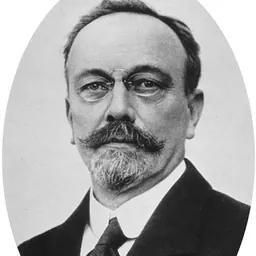
Lived 1907 – 1987 (aged 79). John Hewitt was a British poet.
John Harold Hewitt (28 October 1907 – 22 June 1987) was perhaps the most significant Belfast poet to emerge before the 1960s generation of Northern Irish poets that included Seamus Heaney, Derek Mahon and Michael Longley. He was appointed the first writer-in-residence at Queen's University Belfast in 1976. His collections include The Day of the Corncrake and Out of My Time: Poems 1969 to 1974 (1974). He was also made a Freeman of the City of Belfast in 1983, and was awarded honorary doctorates by the University of Ulster and Queen's University Belfast.
From November 1930 to 1957, Hewitt held positions in the Belfast Museum & Art Gallery. His radical socialist ideals proved unacceptable to the Belfast Unionist establishment and he was passed over for promotion in 1953. Instead in 1957 he moved to Coventry, a city still rebuilding following its devastation during World War II . Hewitt was appointed Director of the Herbert Art Gallery & Museum where he worked until retirement in 1972. He was attracted to the Ulster dissenting tradition and was drawn to a concept of regional identity within the island of Ireland, describing his identity as Ulster, Irish, British and European. John Hewitt officially opened the Belfast Unemployed Resource Centre (BURC) Offices on Mayday 1985.
His life and work are celebrated in two prominent ways – the annual John Hewitt International Summer School – and, less conventionally, a Belfast pub is named after him – the John Hewitt Bar and Restaurant, which is situated on the city's Donegall Street and which opened in 1999. The bar was named after him as many years earlier he had opened the Belfast Unemployed Resource Centre, which owns the establishment. It is a popular meeting place for local writers, musicians, journalists, students and artists. Both the Belfast International Arts Festival and the Belfast Film Festival use the venue to stage events.
Hewitt's life and writing
Early life After attending Agnes Street National School, Hewitt attended the Royal Belfast Academical Institution from 1919 to 1920 which he followed by obtaining a teaching qualification from Stranmillis College, Belfast.
In 1930, Hewitt was appointed Art Assistant at the Belfast Museum and Art Gallery, where amongst other duties, he gave public lectures on art, at one of which he met Roberta "Ruby" Black, whom he was to marry in 1934. Roberta was also a convinced Socialist, and the couple became members of the Independent Labour Party, the Belfast Peace League, the Left Book Club and which answered a part of Hewitt's temperament which had been suppressed. Finally, and most importantly, he began his lifelong work of excavation and discovery of the poetry of Ulster, starting with Richard Rowley, Joseph Campbell and George William Russell (AE). This research culminated, in part, with the publications of Fibres, Fabric and Cordage in 1948, Rhyming Weavers and other Country Poets of Antrim and Down (based on his MA thesis, Ulster Poets 1800–1870 of 1951) in 1974, and a book called The Rhyming Weavers in 1979. All of these publications and more, were based on his interest in the Ulster rhyming weaver poets of the 19th century, such as Henry MacDonald Flecher, David Herbison, Alexander MacKenzie, James MacKowen, and James Orr.
Hewitt himself felt that his juvenilia ended with the poem Ireland (1932), which he placed at the start of his Collected Poems (1968), and indeed it is more complex than most of his earlier work, and begins his lifelong preoccupation with bleak landscapes of bog and rock; with exile, and with the nature of belonging.
The 1930s The 1930s was a period of transition in Hewitt's poetry, one in which he began seriously to address the history of his native province, and the contradictions between his love for the people and the landscape, his inspiration in the radical dissenting tradition, and the conflicts which mark Northern Ireland. A key text is The Bloody Brae: A Dramatic Poem (finished in 1936, though not broadcast – on the Northern Ireland Home Service of the BBC – until 1954; the Belfast Lyric Players performed a stage version in 1957, which they revived in 1986), which tells of a legendary massacre of Roman Catholics by Cromwellian troops in Islandmagee, County Antrim, in 1642. John Hill, one of the soldiers who has been racked by guilt since he participated in the slaughter, returns many years later to beg forgiveness. This he receives from the ghost of one of his victims, a gesture which she wraps in a condemnation of his self-indulgence, luxuriating in his guilt rather than taking positive action to combat bigotry. Another theme which was to become a fixture in Hewitt's poetry also first appears in The Bloody Brae; that is, a bold assertion of the right of his people to live in Ulster, rooted in their hard work and commitment to it: This is my country; my grandfather came here and raised his walls and fenced the tangled waste and gave his years and strength into the earth Also in the 1930s, Hewitt was involved with a group of young artists and sculptors known as the 'Ulster Unit', and acted as their secretary. The regulars, at various points, included writers John Boyd, Denis Ireland, Sam Hanna Bell and Richard Rowley, actors Joseph Tomelty, Jack Loudon and J.G. Devlin, the poet Robert Greacen, artists Padraic Woods, Gerard Dillon, Harry Cooke Knox and William Conor and (an outspoken opponent of sectarianism) the Rev. Arthur Agnew. The ebullient atmosphere the circle created was a backdrop to the appearance of Campbell's Cafe in Brian Moore's wartime Bildungsroman, The Emperor of Ice-Cream.
During the 1940s and 1950s, Hewitt helped young Ulster poets by providing them with room, board and advice while he increasingly played the role of reviewer and art critic. He gained an MA from Queen's University Belfast, with a thesis on Ulster poets from 1800 to 1870, in 1951. While in Coventry, Hewitt started work on his unpublished autobiography, A North Light. He subsequently returned to Belfast on his retirement in 1972.
Legacy The John Hewitt Society was established in 1987 to commemorate his life and work. Its mission is "to promote literature, arts, and culture inspired by the ideals and ideas of the poet John Hewitt". The Society runs an annual summer school.
Don’t just read it —
keep it.
Full-length biographies made to live with: read them, listen on the way to work, watch them tonight.
- E-book
- Audio
- Video
Instant download · yours to keep · every purchase keeps this site free
Important facts
People in John Hewitt's life
Named in this biography and alive at the same time



Related people
Same field, nearest in time


Contemporaries
People whose lives overlapped John Hewitt's


Frequently asked questions
Who was John Hewitt?
Northern Ireland poet
When was John Hewitt born?
John Hewitt was born on 28 October 1907.
When did John Hewitt die?
John Hewitt died on 22 June 1987.
What was John Hewitt's occupation?
John Hewitt was a poet.
What nationality was John Hewitt?
John Hewitt was British.
Sources & further reading
Cite this page
APA: Biography.guide. (2026). John Hewitt. https://biography.guide/john-hewitt-poet/
MLA: "John Hewitt." Biography.guide, https://biography.guide/john-hewitt-poet/.
Chicago: "John Hewitt." Biography.guide. https://biography.guide/john-hewitt-poet/.
Data last updated: 2026-09-20 · Spot an error? Report a correction.
Page generated 2026-09-27 05:25 UTC