
About John Henry Parker
Lived 1866 – 1942 (aged 76). John Henry Parker was an American military personnel.
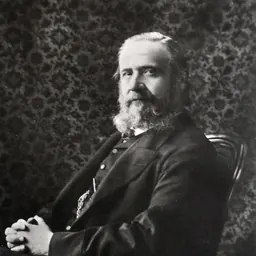
John Henry Parker aka "Gatling Gun Parker" (September 19, 1866 – October 14, 1942) was a brigadier general in the United States Army. He is best known for his role as the commander of the Gatling Gun Detachment of the U.S. Army's Fifth Army Corps in Cuba during the Santiago campaign in the Spanish–American War. Nominated by his congressman to attend the United States Military Academy at West Point, he graduated in 1892, and was assigned in June of that year as a 2nd Lieutenant to the 13th Infantry Regiment.
Known as "Blackie" to his fellow officers, Parker was tasked with the charge of training soldiers of the Machine Gun Detachment in the use of their weapons. In the 1890s, duty with the machine gun detachment was regarded as of little value by most Army officers, and the detachment was frequently used as a dumping ground for men deemed unsuitable or undisciplined by their commanders. Unfortunately, Parker's treatise was ignored by the Army, though he continued to advocate the use of the machine gun in an offensive role.
In September 1897 Parker was assigned to the Infantry and Cavalry School as a student officer, where he graduated in April 1898. After Parker presented a detailed operational plan for the composition and employment of the Gatling Guns, Shafter approved the request, apparently impressed by the lieutenant's enthusiasm and attention to detail. On May 27, Parker was given four of a consignment of fifteen brand-new ten-barrel Model 1895 Gatling guns in .30 Army caliber recently received from Colt's Arms Company. In order to save time, Parker also received permission from General Shafter to utilize men from the infantry regiments already in Tampa and assigned to the invasion. However, the men themselves were "volunteers" selected by their existing company commanders, many of whom believed the assignment to be a temporary work detail (one commander even sent the cook from his private mess).
On his own initiative, Parker developed his own table of organization to include gun carriages, crew schedules, ammunition loads, and draft animal requirements. He then commenced training drills for the crews, using his own theory of mobile machine gun tactics to structure the new unit. Parker's men responded enthusiastically to the challenge of learning to operate, maintain, and fire the new guns.
After being officially mustered into service on June 30, 1898, the Gatling Gun Detachment was ordered to advance to El Pozo, the site of General Shafter's headquarters for the impending offensive. Parker's battery was initially ordered to provide covering fire for the artillery. One of the Gatlings was detached to the service of General Shafter's aide, Lt. Miley.
During the assault on San Juan Heights, Lt. Parker and his men used three of their four Gatling guns to cover the American assaults on both San Juan Hill and Kettle Hill. Equipped with swivel mountings that enabled the gunners to rake Spanish positions, the three fast-firing guns, firing at a range of 600-800 yards, expended approximately 18,000 cal. .30 rounds in eight and one-half minutes (over 700 rounds per minute of continuous fire) into the Spanish defensive lines atop the heights, killing many of the defenders, forcing others to flee the trenchlines, while disrupting the aim of those still alive who continued to resist.
Col. Theodore Roosevelt later noted that the hammering sound of the Gatling guns raised the spirits of his men: While thus firing, there suddenly smote on our ears a peculiar drumming sound. One or two of the men cried out, "The Spanish machine guns!" but, after listening a moment, I leaped to my feet and called, "It's the Gatlings, men! Our Gatlings!" Immediately the troopers began to cheer lustily, for the sound was most inspiring.
Trooper Jesse D. Langdon of the 1st Volunteer Infantry, who accompanied Col. Theodore Roosevelt and the Rough Riders in their assault on Kettle Hill, reported: We were exposed to the Spanish fire, but there was very little because just before we started, why, the Gatling guns opened up at the bottom of the hill, and everybody yelled, "The Gatlings! The Gatlings!" and away we went. The Gatlings just enfiladed the top of those trenches. We'd never have been able to take Kettle Hill if it hadn't been for Parker's Gatling guns. Upon gaining San Juan Hill, the carnage wrought by the Gatling fire was immediately noted by the officers and men who had led the charge into the Spanish trenches atop San Juan. Captain Boughton, among the first of the officers to surmount the crest of San Juan Hill during the infantry assault, stated the trenches on the hilltop were already filled with dead and dying Spanish riflemen, while the open ground behind the trenchline was covered with dead and dying Spanish defenders who had been shot while attempting to flee the hail of Gatling fire. At a distance of 600 yards, Parker immediately ordered Sgt. Green's Gatling—the only gun within shouting distance—to open fire against the Spanish attacking the Americans on Kettle Hill. Parker then moved the two guns again to avoid counterbattery fire, where they were used at a range of 2,000 yards to kill and scatter the crew of a Spanish 160 mm (6.3-inch) artillery cannon. The contributions of Parker's Gatling Gun Detachment during the Santiago campaign were noted by Col. Roosevelt, who stated: I think Parker deserved rather more credit than any other one man in the entire campaign ... he had the rare good judgment and foresight to see the possibilities of the machine-guns. ... He then, by his own exertions, got it to the front and proved that it could do invaluable work on the field of battle, as much in attack as in defence. After Parker's exploits became known by the press, he would forever after be referred to as "Gatling Gun" Parker.
Later career As an Army officer, Parker continued to expound his theories on the tactical employment of machine guns, particularly in the offense. He was a prolific writer, and contributed numerous articles and treatises to the Infantry Journal and other Army publications. Parker was promoted in rank to captain in 1900 and was transferred to the 28th Infantry Regiment. In January 1908 he was assigned the task of developing organizational schedules and training regulations for the U.S. Army's dismounted machine gun companies.
During World War I, Parker—by now a Colonel in the 102nd Infantry Regiment, 26th Division, A.E.F.—saw combat on numerous occasions, and was singled out numerous times by his superior officers for his efficiency and bravery in the field. As an instructor at the Army Machine-Gun School at Langres, France, Parker instructed AEF troops in the use of the machine gun, for which he received the Distinguished Service Medal. From January–November 1918 Parker received the Silver Star Citation and the Distinguished Service Cross four times for valor displayed on four separate occasions (his final DSC Citation was a Third Bronze Oak Leaf in lieu of a Fourth Award of the DSC). (Note - during and shortly after World War I, bronze oak leaves, rather than oak leaf clusters, were awarded to represent additional awards of decorations.) His fourth DSC citation states that he was receiving the award for extraordinary heroism in action: During the attack on the village of Gesnes Colonel Parker displayed great gallantry and fearlessness in leading and directing his front line with utter disregard for personal safety and urged his men forward by his personal example, all under heavy machine-gun, high-explosive, gas-shell, and shrapnel fire. He was abreast of his front line until he fell, twice wounded, but thereafter remained in active command for a period of five hours, when he was relieved by the lieutenant colonel of his regiment.
Awards Distinguished Service Cross with three bronze oak leavesDistinguished Service MedalSilver StarPurple Heart with two oak leaf clustersSpanish Campaign MedalArmy of Cuban Occupation MedalPhilippine Campaign MedalCuban Pacification MedalMexican Border Service MedalVictory MedalCommander of the Order of the Black Star (Dahomey)Officer of the Legion of Honor (France)Croix de Guerre with Palm (France)
Gold Medal, Military Service Institute (1911)
Authored works , preface by Theodore Roosevelt. Reprint of History of the Gatling Gun Detachment Fifth Army Corps, at Santiago, with a Few Unvarnished Truths Concerning that Expedition.
Don’t just read it —
keep it.
Full-length biographies made to live with: read them, listen on the way to work, watch them tonight.
- E-book
- Audio
- Video
Instant download · yours to keep · every purchase keeps this site free
Important facts
People in John Henry Parker's life
Named in this biography and alive at the same time
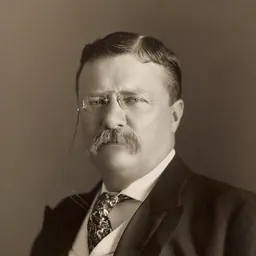


Related people
Same field, nearest in time





Contemporaries
People whose lives overlapped John Henry Parker's



Frequently asked questions
Who was John Henry Parker?
United States Army general (1866–1942)
When was John Henry Parker born?
John Henry Parker was born on 9 September 1866 in Sedalia.
When did John Henry Parker die?
John Henry Parker died on 14 October 1942 in San Francisco, Reno.
What was John Henry Parker's occupation?
John Henry Parker was a military personnel.
What nationality was John Henry Parker?
John Henry Parker was American.
Sources & further reading
· Wikipedia: John Henry Parker
· DBpedia: John Henry Parker (general)
Cite this page
APA: Biography.guide. (2026). John Henry Parker. https://biography.guide/john-henry-parker-military-personnel/
MLA: "John Henry Parker." Biography.guide, https://biography.guide/john-henry-parker-military-personnel/.
Chicago: "John Henry Parker." Biography.guide. https://biography.guide/john-henry-parker-military-personnel/.
Data last updated: 2026-09-24 · Spot an error? Report a correction.
Page generated 2026-09-27 04:59 UTC