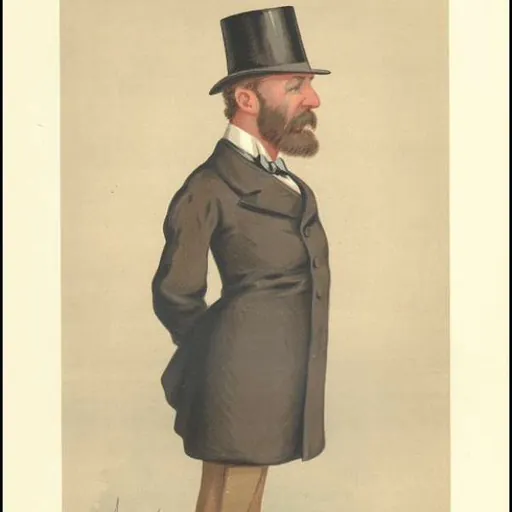
About John Hay
Lived 1827 – 1916 (aged 88). John Hay was a British naval officer and politician.
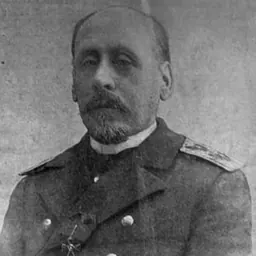
Admiral of the Fleet Lord John Hay, (23 August 1827 – 4 May 1916) was a Royal Navy officer and politician. After seeing action in 1842 during the First Opium War, he went ashore with the Naval Brigade and took part in the defence of Eupatoria in November 1854 and the Siege of Sevastopol in spring 1855 during the Crimean War. He also took part in the Battle of Taku Forts in August 1860 during the Second Opium War. As a politician, he became Member of Parliament for Wick and later for Ripon. He was sent to the Mediterranean in July 1878 to take control of Cyprus and to occupy it in accordance with decisions reached at the Congress of Berlin. In a highly political appointment, he was made First Naval Lord in March 1886 when the Marquis of Ripon became First Lord of the Admiralty but had to stand down just five months later when William Gladstone's Liberal government fell from power in August 1886.
Early career
Born in Geneva, Switzerland, the fourth son of George Hay, 8th Marquess of Tweeddale and Lady Susan Montagu (daughter of the William Montagu, 5th Duke of Manchester), Hay joined the Royal Navy in 1840. He was promoted to commander on 28 August 1851 and given command of the sloop HMS Wasp in the Mediterranean Fleet in August 1852; he went ashore with the Naval Brigade and took part in the defence of Eupatoria in November 1854 and the Siege of Sevastopol in Spring 1855 during the Crimean War. and was appointed to the French Legion of Honour, 5th Class and the Turkish Order of the Medjidie, 4th class for his services in the Crimea.
Promoted to captain – in recognition of his services at Eupatoria – on 27 November 1854 and, having been appointed a Companion of the Order of the Bath on 5 July 1855, Hay was given command of the fifth-rate HMS Forth in December 1855. and served his constituents there until the 1859 general election. and served as Civil Lord of the Admiralty until the Liberal government fell in June 1866; he went on to be Junior Naval Lord in December 1868. He resigned his seat in Parliament in February 1871 and was given command of the ironclad ram HMS Hotspur. Hay became Second-in-command of the Channel Squadron in January 1875, hoisting his flag in ironclad battleship HMS Northumberland and then the ironclad battleship HMS Black Prince, and then became Commander-in-Chief of the Channel Squadron, hoisting his flag in the armoured frigate HMS Minotaur, in November 1877. he was sent to the Mediterranean in July 1878 to take control of Cyprus and to occupy it in accordance with decisions reached at the Congress of Berlin. he went on to be Commander-in-Chief, Mediterranean Fleet, hoisting his flag in the central battery ship HMS Alexandra in February 1883. He was promoted to full admiral on 8 July 1884 and, in his role as Commander-in-Chief, provided support for the Nile Expedition to relieve Major General Charles Gordon.
In a highly political appointment, Hay was made First Naval Lord in March 1886 when the Marquess of Ripon became First Lord of the Admiralty but had to stand down just five months later when William Gladstone's Liberal government fell from power in August 1886. He became Commander-in-Chief, Plymouth in May 1887, and having been promoted to Admiral of the Fleet on 15 December 1888, he retired in August 1892. He died at his home, Fulmer Place, at Fulmer in Buckinghamshire on 4 May 1916.
Family
In 1876 Hay married Christina Lambert, youngest daughter of Nathaniel Grace Lambert, MP, of Buckinghamshire, who represented that constituency as a Liberal from 1868 to 1874; their daughter Minnie Christine Brenda Hay went on to marry Lord Aberdour.
Don’t just read it —
keep it.
Full-length biographies made to live with: read them, listen on the way to work, watch them tonight.
- E-book
- Audio
- Video
Instant download · yours to keep · every purchase keeps this site free
Important facts
People in John Hay's life
Named in this biography and alive at the same time


Related people
Same field, nearest in time


Contemporaries
People whose lives overlapped John Hay's




Frequently asked questions
Who was John Hay?
British navy officer and politician (1827-1916)
When was John Hay born?
John Hay was born on 23 August 1827 in Geneva.
When did John Hay die?
John Hay died on 4 May 1916 in Fulmer.
What was John Hay's occupation?
John Hay was a naval officer and politician.
What nationality was John Hay?
John Hay was British.
Sources & further reading
· DBpedia: Lord John Hay (Royal Navy officer, born 1827)
Cite this page
APA: Biography.guide. (2026). John Hay. https://biography.guide/john-hay-naval-officer/
MLA: "John Hay." Biography.guide, https://biography.guide/john-hay-naval-officer/.
Chicago: "John Hay." Biography.guide. https://biography.guide/john-hay-naval-officer/.
Data last updated: 2026-09-21 · Spot an error? Report a correction.
Portrait: Wikimedia Commons · author & licence
Page generated 2026-09-27 05:00 UTC