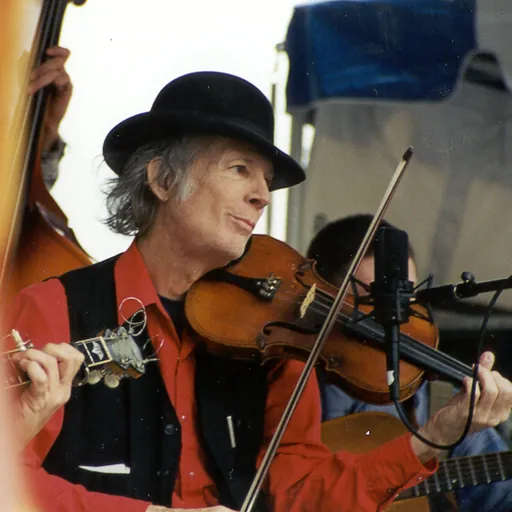
John Hartford
American singer-songwriter and musician
About John Hartford
Lived 1937 – 2001 (aged 63). John Hartford was an American singer-songwriter, musician, banjoist, fiddler, guitarist and singer.
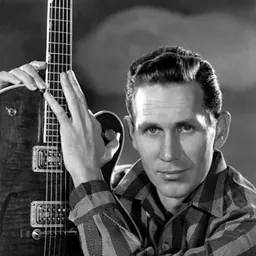
Early life Harford (he changed his name to Hartford later in life on the advice of Chet Atkins)
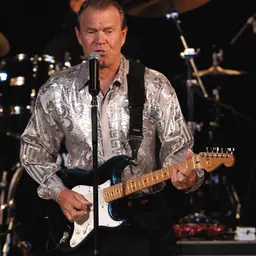
In 1967, Hartford's second album Earthwords & Music spawned his first major songwriting hit, "Gentle on My Mind". His recording of the song was only a modest success, but it caught the notice of Glen Campbell, who recorded his own version, which gave the song much wider publication. At the 1968 Grammys, the song netted four awards, two of which went to Hartford. It became one of the most widely recorded country songs of all time, and the royalties it brought in allowed Hartford great financial independence; Hartford later said that the song bought his freedom.
As his popularity grew, he moved to the West Coast, where he became a regular on The Smothers Brothers Comedy Hour; other television appearances followed, as did recording appearances with several major country artists. Hartford played banjo and sang the vocal harmonies on the Guthrie Thomas song "I'll be Lucky". He also played with The Byrds on their album Sweetheart of the Rodeo.
His success on the Smothers Brothers series was enough that Hartford was offered the lead role in a TV detective series, but he turned it down to move back to Nashville and concentrate on music. He also was a regular on The Glen Campbell Goodtime Hour In live performances, John Hartford was a true one-man band; he used several stringed instruments and a variety of props such as plywood squares and boards with sand and gravel for flatfoot dancing.
Newgrass Hartford recorded four more albums for RCA from 1968 to 1970: The Love Album, Housing Project, John Hartford, and Iron Mountain Depot. In 1971, he moved to Warner Bros. Records, where he was given more freedom to record in his nontraditional style, fronting a band that included Vassar Clements, Tut Taylor, and Norman Blake. He recorded several albums that set the tone of his later career, including Aereo-Plain and Morning Bugle. Sam Bush said, "Without Aereo-Plain (and the Aereo-Plain band), there would be no newgrass music." Hartford's Grammy-winning Mark Twang features Hartford playing solo, reminiscent of his live solo performances playing the fiddle, guitar, banjo, and amplified plywood for tapping his feet. At the same time, he developed a stage show, which toured in various forms from the mid 1970s until shortly before his death. is denoted on official navigational charts with the "John Hartford Light".
An accomplished fiddler and banjo player, Hartford was simultaneously an innovative voice on the country scene and a reminder of a vanished era. Along with his own compositions, such as "Long Hot Summer Days" and "Kentucky Pool", Hartford was a repository of old river songs, calls, and stories. His song "Let Him Go on Mama" from Mark Twang was inspired by retired Streckfus Steamers musician (and later chief engineer of the steamboat Delta Queen) Mike O'Leary. Hartford was also the author of Steamboat in a Cornfield, a children's book that recounts the true story of the Ohio River steamboat The Virginia and its beaching in a cornfield.
Final years and legacy Between 1995 and 2001, Brandon Ray Kirk and he co-authored a biography of blind fiddler Ed Haley. Hartford's album The Speed of the Old Longbow is a collection of Haley's tunes. Writer and arts administrator Art Menius profiled Hartford in the Academia journal article, "John Hartford as I Knew Him", saying "John connected not just words to music, but the old days of Nashville to its present, tradition to innovation, new grass to bluegrass to old-time, television to radio, river to shore, aging musicians to hippies. Goethe may have been the last person to know everything worth knowing, but John Hartford tried." Hartford also provided voice acting for the Ken Burns' documentary series Baseball and The Civil War.
From the 1980s onwards, Hartford had non-Hodgkins lymphoma. He died of the disease at Centennial Medical Center in Nashville, on June 4, 2001, at age 63. He is interred at Spring Hill Cemetery in Nashville, Tennessee. Hartford was given a star on the St. Louis Walk of Fame in honor of his work. He also was given a posthumous president's award by the Americana Music Association in September 2005. The annual John Hartford Memorial Festival was held in southern Indiana from 2011 to 2019 and in 2022.
Hartford acknowledged that the royalties he earned from "Gentle" allowed him to live the life he wanted as a musician, author, folklorist and steamboat pilot. The Financial Times commented that "his song about freedom ensured his own freedom."
Works Hartford recorded more than 30 albums, ranging across a broad spectrum of styles, from the traditional country of his early RCA recordings, to the new and experimental sound of his early newgrass recordings, to the traditional folk style to which he often returned later in his life. Hartford's albums also vary widely in formality, from the stately and orderly Annual Waltz to the rougher and less cut recordings that typified many of his later albums.
Aereo-Plain and Morning Bugle are often considered to be Hartford's most influential works, coming as they did at the beginning of a period in which artists such as Hartford and the New Grass Revival, led by Sam Bush, would create a new form of country music, blending their country backgrounds with influences from a number of other sources. His later years had a number of live albums, as well as recordings that explored the repertoire of old-time folk music. He sketched the cover art for some of his midcareer albums, drawing with both hands simultaneously.
Hartford is also a published author, including 1971's collection of poetry Word Movies and 1986's Steamboat in a Cornfield, a poetic retelling of a steamboat running aground along the Ohio River.
In popular culture His song "This Eve of Parting", from the 1968 album The Love Album, was featured in the 2017 movie Lady Bird, portions being heard at two different points in the film.
Cartoonist Jim Scancarelli was a fan, and mentioned Hartford several times in his strip Gasoline Alley. In 1991, a flood washes up a steamboat carrying Hartford; in 1998, he played at Rufus and Melba's wedding reception; and in 2002, when Skeezix and Slim are lost in a cemetery, Hartford's gravestone is seen.
The third track on the album A Tear in the Eye Is a Wound in the Heart by the band Black Prairie, of Portland, Oregon, is entitled "For the Love of John Hartford", an instrumental.
Discography
Don’t just read it —
keep it.
Full-length biographies made to live with: read them, listen on the way to work, watch them tonight.
- E-book
- Audio
- Video
Instant download · yours to keep · every purchase keeps this site free
Important facts
People in John Hartford's life
Named in this biography and alive at the same time






Related people
Same field, nearest in time





Contemporaries
People whose lives overlapped John Hartford's



Frequently asked questions
Who was John Hartford?
American singer-songwriter and musician (1937–2001)
When was John Hartford born?
John Hartford was born on 30 December 1937 in New York City.
When did John Hartford die?
John Hartford died on 4 June 2001 in Nashville.
What was John Hartford's occupation?
John Hartford was a singer-songwriter, musician, banjoist, fiddler, guitarist and singer.
What nationality was John Hartford?
John Hartford was American.
Sources & further reading
Cite this page
APA: Biography.guide. (2026). John Hartford. https://biography.guide/john-hartford/
MLA: "John Hartford." Biography.guide, https://biography.guide/john-hartford/.
Chicago: "John Hartford." Biography.guide. https://biography.guide/john-hartford/.
Data last updated: 2026-09-22 · Spot an error? Report a correction.
Portrait: Wikimedia Commons · author & licence
Page generated 2026-09-27 05:01 UTC