
About John H. Wheeler
Lived 1806 – 1882 (aged 75–76). John H. Wheeler was an American lawyer, politician and diplomat.
John Hill Wheeler (1806–1882) was an American attorney, politician, historian, planter and slaveowner. He served as North Carolina State Treasurer (1843–1845), and as United States Minister to Nicaragua (1855–1856).
Wheeler gained national attention as a central figure in an 1855 legal case that tested the Fugitive Slave Act of 1850. Pennsylvania was a free state, and enslaved Jane Johnson and her two sons walked away from Wheeler in Philadelphia, while he and his family were en route to New York City and a voyage to Nicaragua. Her actual name was documented in 2013. Wheeler earned a bachelor's degree at Columbian College (now George Washington University). He read law under John Louis Taylor and was admitted to the bar in 1827. The following year he continued his studies and received a master's degree from the University of North Carolina at Chapel Hill.
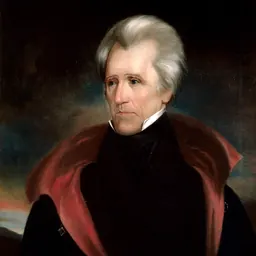
Personal life and political career Wheeler was first elected to the North Carolina House of Commons in 1827, from Hertford County at age 21, and served four years. Years later he was elected to the House again, but from Lincoln County. He gained a patronage position under President Andrew Jackson, who appointed Wheeler as superintendent of the federal mint in Charlotte, North Carolina (1837–1841).
Wheeler married his first wife, the well educated and literary Mary Elizabeth Brown, in 1830. They had one daughter. In 1838 he married Ellen Oldmixon Sully, daughter of the painter Thomas Sully, and, they had two sons. During the Civil war one son, Levi Woodbury Wheeler, was to serve in the Confederate army and another, Charles Sully Wheeler, in the US Navy.
In 1842, Wheeler was elected state treasurer by the North Carolina General Assembly, but he was defeated for re-election in 1844.
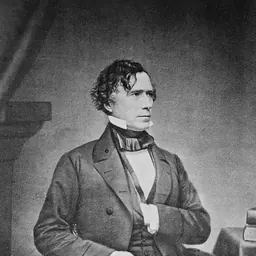
Wheeler moved to Washington, DC about 1853 to be more active in national politics. President Franklin Pierce appointed him as an assistant secretary in 1854. Shortly thereafter Wheeler was appointed as US Minister to Nicaragua. There, he officially recognized the government of William Walker, an American adventurer who had invaded the country with a small force, intending to take it over.
After returning to North Carolina, Wheeler served in a variety of minor federal government patronage posts.
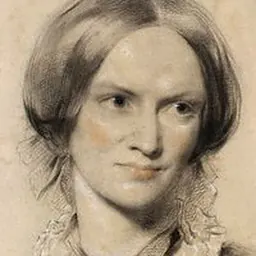
Literary interests Wheeler read widely and had a large library in his plantation house, containing works by prominent English writers, such as Jane Austen, Charles Dickens, Charlotte Brontë, and others. His library has been studied in the 21st century for evidence of what a literate slave might have read there. Hannah Bond, documented as a woman who escaped from his plantation to the North about 1857, later wrote a novel that included many quotes from these authors. After the manuscript was found in the early 21st century and authenticated, her work was published for the first time in 2002; it is believed to be the first novel by an African-American woman.
Gates adds that Wheeler had Harriet Beecher Stowe's bestseller, Uncle Tom's Cabin. That might be expected, given its notoriety and status as a bestseller. Gates writes that:
In addition, Wheeler's library contained several significant abolitionist texts by white authors, like Scenes in the Life of Harriet Tubman and Lydia Maria Child's Freedman's Book, alongside racist texts like Negrophobia 'On the Brain' in White Men, by J. R. Hayes, and John Campbell's Negromania, the Falsely Assumed Equality of the Various Races of Man. (As we might expect, Wheeler's library contained a much larger section of these sorts of books than antislavery ones.) It was as if he read the works of fugitive slaves to study the mind of the enemy, perhaps better to master and control his slaves, and to prevent them from escaping. The case attracted national attention after white abolitionist Passmore Williamson, an officer of the Society, was jailed for contempt of court for refusing to tell where Johnson was hidden. He did not know, as the Committee kept such information secret.
Don’t just read it —
keep it.
Full-length biographies made to live with: read them, listen on the way to work, watch them tonight.
- E-book
- Audio
- Video
Instant download · yours to keep · every purchase keeps this site free
Important facts
People in John H. Wheeler's life
Named in this biography and alive at the same time



Related people
Same field, nearest in time




Contemporaries
People whose lives overlapped John H. Wheeler's





Frequently asked questions
Who was John H. Wheeler?
American politician, North Carolina
When was John H. Wheeler born?
John H. Wheeler was born in 1806.
When did John H. Wheeler die?
John H. Wheeler died in 1882.
What was John H. Wheeler's occupation?
John H. Wheeler was a lawyer, politician and diplomat.
What nationality was John H. Wheeler?
John H. Wheeler was American.
Sources & further reading
Cite this page
APA: Biography.guide. (2026). John H. Wheeler. https://biography.guide/john-h-wheeler/
MLA: "John H. Wheeler." Biography.guide, https://biography.guide/john-h-wheeler/.
Chicago: "John H. Wheeler." Biography.guide. https://biography.guide/john-h-wheeler/.
Data last updated: 2026-09-20 · Spot an error? Report a correction.
Page generated 2026-09-27 05:32 UTC