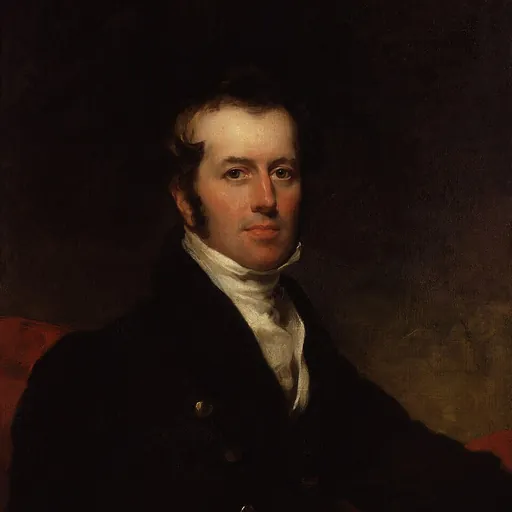
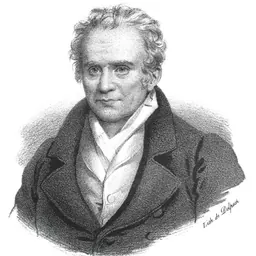
John George Children
British chemist, mineralogist and zoologist
About John George Children
Lived 1777 – 1852 (aged 74). John George Children was a British chemist, entomologist, zoologist and ornithologist.
John George Children FRS FRSE FLS PRES DL (18 May 1777 – 1 January 1852 in Halstead, Kent) was a British chemist, mineralogist and zoologist. Children established a chemical laboratory at his father's home Ferox Hall and conducted experiments into galvanic cells. Following Children's father's bankruptcy and sale of the family estates in 1812 he was forced to seek employment, and in 1816 following a failed attempt at establishing a gunpowder business with his friend Sir Humphry Davy he became the assistant librarian of the department of antiquities at the British Museum in London. In 1822 Davy helped him secure a controversial appointment to the post of assistant keeper of the Natural History Department of the British Museum. He later served as Keeper of the Zoological Department following the division of the Natural History Department into three distinct departments in 1837 (though he had managed the Zoological collections since 1823), he remained in this post until his retirement from the museum in 1840. Along with Davy he built a large galvanic cell, assisted him in experiments and invented a method to extract silver from ore without the need for mercury. Children was also the founding president of the Royal Entomological Society. His daughter Anna Atkins became a pioneer of botanical photography.
Personal life and early career
John George was born on 18 May 1777 at Ferox Hall, Tonbridge, Kent. His father, George Children (1742–1818), a banker, belonged to a family of the landed gentry that lived at the house named Childrens, near Nether Street in Hildenborough; his mother, Susanna, who was the daughter of Rev. Thomas Marshall Jordan of West Farleigh, died six days after he was born.
Children studied at Tonbridge School, Eton College and later at Queens' College, Cambridge. In 1798, he married Hester Anna Holwell, granddaughter of John Zephaniah Holwell. After her unexpected passing, in 1800, he began to travel with more regularity. He also established a chemical laboratory at Ferox Hall. He went on to marry another woman, Caroline Wise (daughter of George Furlong Wise of Woolston), in 1809; she also died the following year. In 1812 the collapse of the Tonbridge Bank led to financial problems. In 1816 his father was declared bankrupt. It was then that he found work as a librarian. In 1819, he married Eliza Towers, the two remaining together until her death, twenty years later, in 1839.
He died at Halstead Place in Kent, the home of his daughter Anna Atkins and her husband John Pelly Atkins, the Children family having lost their many properties following the collapse of the Tonbridge Bank. These were published in Philosophical Transactions in 1815 and for this he received the Royal Institution medal in 1828. Following the bankruptcy of his father, he began to work on a gunpowder business with Davy but this did not last. In 1822, he found a position as an assistant librarian through Lord Camden in the Department of Antiquities at the British Museum when he was appointed assistant keeper of the Natural History Department in succession to William Elford Leach. The appointment, influenced by Sir Humphry Davy, was controversial as he was less qualified than another applicant, William Swainson. After the division of the Department into three sections in 1837 he became keeper of the Department of Zoology, retiring in 1840 and succeeded by his assistant John Edward Gray. After his retirement he took an interest in astronomy.
Around 1823-24, there was an interest in silver mining in South America and there was a search for silver extraction techniques that did not need expensive mercury. Children found a process that he sold to several companies including Real del Monte and United Mexicans. the Australian stick insect Tropidoderus childrenii, the North American lady beetle Exochomus childreni as well as a mineral called childrenite. John James Audubon named Sylvia childrenii (or Children's warbler) after him, stating "I have named it after my most esteemed friend, J. G. Children, Esq. of the British Museum, as a tribute of sincere gratitude for the unremitted kindness which he has shewn me" but that is a junior name as the specimen it was based on was of a juvenile of the already described yellow warbler.
Family Children's only daughter (from his first wife Hester Anna) was Anna Atkins, a botanist, who is best known for her book of cyanotype photograms of algae, the first book of exclusively photographic images ever made. She wrote a memoir on the life of her father which included several unpublished poems.
Don’t just read it —
keep it.
Full-length biographies made to live with: read them, listen on the way to work, watch them tonight.
- E-book
- Audio
- Video
Instant download · yours to keep · every purchase keeps this site free
Important facts
People in John George Children's life
Named in this biography and alive at the same time
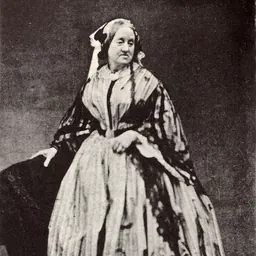
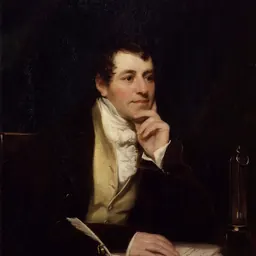
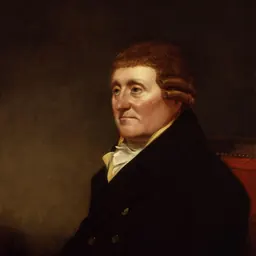

Related people
Same field, nearest in time



Contemporaries
People whose lives overlapped John George Children's

Frequently asked questions
Who was John George Children?
British chemist, mineralogist and zoologist
When was John George Children born?
John George Children was born on 18 May 1777 in Tonbridge.
When did John George Children die?
John George Children died on 1 January 1852 in Halstead.
What was John George Children's occupation?
John George Children was a chemist, entomologist, zoologist and ornithologist.
What nationality was John George Children?
John George Children was British.
Sources & further reading
· Wikipedia: John George Children
· DBpedia: John George Children
Cite this page
APA: Biography.guide. (2026). John George Children. https://biography.guide/john-george-children/
MLA: "John George Children." Biography.guide, https://biography.guide/john-george-children/.
Chicago: "John George Children." Biography.guide. https://biography.guide/john-george-children/.
Data last updated: 2026-09-23 · Spot an error? Report a correction.
Portrait: Wikimedia Commons · author & licence
Page generated 2026-09-27 05:06 UTC