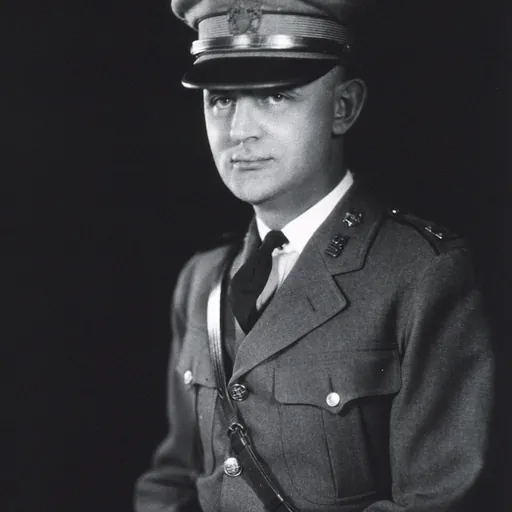
About John Friend Mahoney
Lived 1889 – 1957 (aged 67). John Friend Mahoney was an American physician.
John Friend Mahoney (August 1, 1889 – February 23, 1957) was an American physician best known as a pioneer in the treatment of syphilis with penicillin. He won the 1946 Lasker Award.
Mahoney led human experiments in Terre Haute prison and was a supervisor of the Guatemala syphilis experiments, the latter of which involved the deliberate spread of syphilis and gonorrhea to unwitting patients, which included orphan children. These experiments are today widely deemed as unethical.
Early life and education The son of David and Mary Ann Mahoney, John Friend Mahoney was born on August 1, 1889, in Fond du Lac, Wisconsin. In 1914 Mahoney graduated from Marquette University with attached clinical training at the Milwaukee County Hospital and at the Chicago Lying-in Hospital.
Career From 1917 he worked as an assistant surgeon in the U.S. forces in Europe during World War I. After returning in 1919, he served in the United States Public Health Service on various quarantine stations and marine hospitals, including Ellis Island. In this context, Mahoney was sent to Europe from 1925 to 1929. While in England, Ireland and Germany, Mahoney studied syphilis treatment.
In 1929 Mahoney became director of the Venereal Disease Research Laboratory of the Food and Drug Administration. The laboratory improved serological tests for syphilis and demonstrated, with the advent of sulfonamide treatment in the United States in the 1930s, its efficacy in treating gonorrhea. He was also medical director of the Marine Hospital in Staten Island.
Mahoney was made aware of the possibilities of penicillin treatment by a paper by Wallace Herrell and colleagues from the Mayo Clinic. Particular attention was on the treatment of gonorrhea patients where the pathogen was resistant to sulfonamides. Mahoney confirmed this and also began to test penicillin for syphilis treatment, first in vitro without success, then in rabbits. He led the Terre Haute Prison experiments and supervised Dr. John C. Cutler in the Guatemala Syphilis Experiment. By 1929, Dr. Mahoney worked as the director of the Venereal Disease Research Lab in Staten Island, where the Terre Haute experiments began in 1943; this is also where Cutler first assisted him.
After stopping the Terre Haute experiments for lack of accurate infection of subjects with gonorrhea, Dr. Mahoney moved on to study the effects of penicillin on syphilis. His research found huge success for penicillin treatments and the U.S. Army embraced it in STD prescription. Although this seemed prosperous, Mahoney and his collaborators questioned the long term effectiveness of eliminating the disease altogether in individuals. Mahoney, Cutler and other researchers felt that a smaller, more controlled group of individuals to study would be more helpful in finding this cure. This led to the use of citizens in Guatemala as subjects; once this approach was proven successful he began clinical trials.
Mahoney continued to supervise Cutler, who resumed these experiments, conducted by the United States Public Health Service with funding from the United States National Institutes of Health (NIH). Beginning in 1946, doctors deliberately infected an estimated 1500 to 5000 Guatemalans with syphilis without the informed consent of the subjects. Unwitting subjects of the experiments included orphans as young as nine, as well as soldiers, prisoners and mental patients.
Approximately half of those infected as part of the study were treated for the diseases they contracted. A total of 83 subjects died, though the exact relationship to the experiment remains undocumented. This study not only violated the Hippocratic Oath but it echoed Nazi crimes exposed around the same time at the Nuremberg trials.
Personal life He was married and had a son and daughter.
Don’t just read it —
keep it.
Full-length biographies made to live with: read them, listen on the way to work, watch them tonight.
- E-book
- Audio
- Video
Instant download · yours to keep · every purchase keeps this site free
Important facts
People in John Friend Mahoney's life
Named in this biography and alive at the same time


Related people
Same field, nearest in time


Contemporaries
People whose lives overlapped John Friend Mahoney's


Frequently asked questions
Who was John Friend Mahoney?
American physician
When was John Friend Mahoney born?
John Friend Mahoney was born on 1 August 1889 in Fond du Lac.
When did John Friend Mahoney die?
John Friend Mahoney died on 23 February 1957.
What was John Friend Mahoney's occupation?
John Friend Mahoney was a physician.
What nationality was John Friend Mahoney?
John Friend Mahoney was American.
Sources & further reading
· Wikipedia: John Friend Mahoney
· DBpedia: John Friend Mahoney
Cite this page
APA: Biography.guide. (2026). John Friend Mahoney. https://biography.guide/john-friend-mahoney/
MLA: "John Friend Mahoney." Biography.guide, https://biography.guide/john-friend-mahoney/.
Chicago: "John Friend Mahoney." Biography.guide. https://biography.guide/john-friend-mahoney/.
Data last updated: 2026-09-20 · Spot an error? Report a correction.
Portrait: Wikimedia Commons · author & licence
Page generated 2026-09-27 04:57 UTC