
About John Francis Hylan
Lived 1868 – 1936 (aged 67). John Francis Hylan was an American politician.
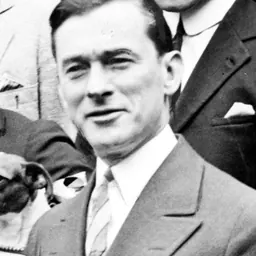
John Francis Hylan (April 20, 1868 – January 12, 1936), also known as "Red Mike" Hylan, was the 97th Mayor of New York City (the seventh since the consolidation of the five boroughs), from 1918 to 1925. From rural beginnings in the Catskills, Hylan eventually obtained work in Brooklyn as a laborer on the elevated railroad. During his nine years with the company, he worked his way to engineer, and also studied to earn his high school diploma. He continued by earning a law degree. He practiced law for nine years, and also participated in local Democratic politics.
In 1917 with the consent of Tammany and William Randolph Hearst, he was put forward as a Brooklyn Democratic candidate for Mayor and won the first of two terms. He was re-elected with a wide plurality, which swept many Brooklyn Democrats into office. His chief focus in office was to keep subway fares from rising. By the end of his second term, however, a report by a committee appointed by Governor Al Smith severely criticized his administration's handling of the subway system.
Tammany ran Jimmy Walker against him for the Democratic nomination and Hylan lost. Walker appointed him to the Children's Court where he sat for many years. After his term as mayor, Hylan spent much time attacking the "interests," arguing that industrial concentration gave great power to individuals to influence politics and impoverish the working poor.
Early life Hylan was born in 1868 in Hunter, New York. He was the third child, and had two older sisters and two younger brothers. Hylan's father had emigrated from County Cavan, Ulster, Ireland at the age of seven. He served as a corporal in the 120th New York Infantry, called the "Ulster Regiment," during the Civil War.
Hylan's mother, who came from the Jones family upstate, had a Welsh father and a maternal grandfather, Jacob Gadron, who fought in the American Revolution among Lafayette's forces. He fondly remembered her throughout his life and wrote that the words she spoke on his leaving the family ("Be honest, be truthful, be upright, and do by others as you would have them do unto you") were "indelibly imprinted on" his memory. Although his mother was Methodist, Hylan was raised a Catholic. During his years as a motorman, he regularly paid the $75 semiannual interest payment for his family's farm and paid the principal off before he left that job. Hylan wrote that he had no inclination to seek any other position once he was settled and making $100 a month.
Hylan considered law because his younger brother, who had been studying law and on whom his parents had pinned hopes and family pride, had died. His wife encouraged him, but because of his limited education, he had to study at the Long Island Business College to prepare himself for his Regents exam before he could begin to study law. He got into law school with the help of his wife, as well as that of a teacher who gave up his lunch hour to help, and for whom Hylan later found a position in the Department of Water Supply, Gas and Electricity when he became mayor.
After he passed his Regents exam, he enrolled in New York Law School where Woodrow Wilson, who was teaching Constitutional Law there at the time, was among his professors. After graduating in October 1897, Hylan clerked for Long Island City attorney James T. Olwell. He prepared himself in two and a half years. The earliest bar exam he could take was in Syracuse, but immediately before he was set to take the exam, he was involved in a near accident with the railroad's supervisor. Hylan said that it was the supervisor's fault, but nonetheless, he was fired. Even so, the privileges of his membership in the Brotherhood of Locomotive Engineers enabled him to travel to Syracuse at no charge, and he passed the bar exam.
Law and politics
Law career Hylan learned that law practices required startup cash, so he mortgaged the farm again to raise $500. With that sum, he set up an office on the corner of Gates Avenue and Broadway in Bushwick. He made $24 his first month, but gradually built up a good civil litigation practice. He soon formed a partnership with Harry C. Underhill, an attorney who had written a treatise on evidence and would go on to write on other practice topics. Underhill did the office work, while Hylan was the trial lawyer. The firm occasionally received positive local publicity, such as the time when they obtained a ruling that the Brooklyn Heights Railroad Company had to offer free transfers at all junctions. Hylan litigated small civil cases and family law matters. He had little work in the police courts and "never cared for that branch of the law."
After eight years in the courts of Brooklyn, he was respected enough to begin getting appointments within the power of local judges. Hylan had higher ambitions, so he began making the kind of connections expected of someone considering a run for higher office. One connection he made, albeit by accident, was John H. McCooey, the future Brooklyn Democratic Party boss; they met when McCooey was a postal clerk and Hylan was sending money orders to his parents for interest payments on the family farm's mortgage. Hylan would remain grateful for the kindness McCooey showed him, and they remained friends thereafter.
Other contacts were made by constant attendance at local organizations, political and otherwise. In addition to his union membership, which he kept up even when he was mayor, he was a member of the Foresters of America, the Broadway Board of Trade, the Twenty-eighth Ward Taxpayer Association, and he began working his way up the local Democratic club.
Politics and judgeships In 1906, Hylan discovered that machinations surrounding a state law regarding the appointment of magistrates that was intended to result in the appointment of 10 to assist the judges of the Kings County Court had resulted in the appointment of eight; he successfully sought appointment to one of the two vacancies. When the magistrate's positions became elected, State Senator Patrick H. McCarren, the leader of Brooklyn's Democratic Party, repaid a political debt to Hylan by supporting him in the election, which he won.
Hylan was appointed to the Kings County Court by Governor Martin H. Glynn in 1914 and he was later elected to a full term. He remained on the court until 1917, when he was elected mayor.
Mayor of New York City
Hylan defeated the reformer John Purroy Mitchel in the four-sided 1917 mayoral election, restoring the power of Tammany at City Hall. Hylan was the first Democratic candidate to obtain a significant portion of the African American voter base. He easily won re-election in 1921 but was defeated for re-nomination in 1925 by State Senator James J. "Jimmy" Walker. Walker later appointed Hylan to the municipal judiciary. The Hylan Boulevard in Staten Island was renamed for him in 1923 over the protests of his political opponents.
Hylan developed a reputation for not being exceptionally intelligent or well-spoken. According to Robert Moses, Hylan went through most of a mayoral campaign using just one stump speech: a call to keep the five-cent subway fare in place. He asked for Moses' help in preparing another, and Moses obliged. The first time Hylan tried to deliver the new speech, he reached the climax—a Revolutionary War-inspired "I call for the spirit of 1776"—but rather than closing out on a high note, Hylan missed the context and read out the number's digits, saying, "I call for the spirit of one-seven-seven-six."
In another story recounted about Hylan's supposed lack of intelligence and articulateness, his successor Jimmy Walker appointed Hylan as judge of the Queens Children's Court. When journalist Alva Johnston asked Walker why he would appoint a rival to a judgeship, Walker quipped, "The children now can be tried by their peer."
Famous speech Hylan's most famous statement against "the interests" was the following speech, made in 1922, while he was the sitting Mayor of New York City:
Death Hylan died of a heart attack at the age of 67 on January 12, 1936, at his home in Forest Hills, Queens.
Don’t just read it —
keep it.
Full-length biographies made to live with: read them, listen on the way to work, watch them tonight.
- E-book
- Audio
- Video
Instant download · yours to keep · every purchase keeps this site free
Important facts
People in John Francis Hylan's life
Named in this biography and alive at the same time





Related people
Same field, nearest in time




Contemporaries
People whose lives overlapped John Francis Hylan's



Frequently asked questions
Who was John Francis Hylan?
American politician (1868–1936)
When was John Francis Hylan born?
John Francis Hylan was born on 20 April 1868 in Hunter.
When did John Francis Hylan die?
John Francis Hylan died on 12 January 1936 in Forest Hills.
What was John Francis Hylan's occupation?
John Francis Hylan was a politician.
What nationality was John Francis Hylan?
John Francis Hylan was American.
Sources & further reading
· Wikipedia: John Francis Hylan
Cite this page
APA: Biography.guide. (2026). John Francis Hylan. https://biography.guide/john-francis-hylan/
MLA: "John Francis Hylan." Biography.guide, https://biography.guide/john-francis-hylan/.
Chicago: "John Francis Hylan." Biography.guide. https://biography.guide/john-francis-hylan/.
Data last updated: 2026-09-25 · Spot an error? Report a correction.
Page generated 2026-09-27 05:10 UTC