
About John Ford Elkington
Lived 1866 – 1944 (aged 77–78). John Ford Elkington was a military personnel.
Lieutenant Colonel John Ford Elkington (3 February 1866 – 27 June 1944) was a British Army officer. Elkington attended Elizabeth College in Guernsey and the Royal Military College, Sandhurst. He was commissioned into the Royal Warwickshire Regiment in 1886. Elkington served with the West African Frontier Force, with British forces in the Second Boer War and in India. In 1914 he was promoted to lieutenant colonel and given command of his regiment's 1st battalion. Elkington deployed to France at the start of the First World War with his unit and saw action at the 26 August Battle of Le Cateau during the Great Retreat from Mons. That afternoon the battalion retreated to Saint-Quentin, Aisne where it became mixed with the 2nd battalion of the Royal Dublin Fusiliers. The men were exhausted and hungry and Elkington was disappointed at finding no onward transport in the town. The Dublins' commander, Lieutenant Colonel Mainwaring, entered into a written agreement with the town's mayor to surrender rather than fight in the streets, though Elkington stated he did not see the agreement. The following day a cavalry major arrived in the town and by threats and encouragement succeeded in marching the men and other stragglers out of the town and away from advancing German forces.
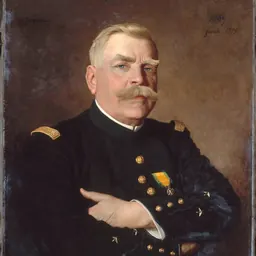
Two weeks after the incident Elkington was charged with cowardice at a court-martial. Though cleared of the main charge he was convicted of conduct unbecoming an officer and a gentleman and, with Mainwaring, was cashiered. Elkington applied to rejoin the army as a private but was refused and instead travelled to Paris to join the French Foreign Legion. In late Spring 1915 he fought at the Second Battle of Artois and received the Croix de Guerre for bravery in rescuing a detachment of his unit. Elkington was wounded in the leg by machine-gun fire while leading an assault in the Second Battle of Champagne on 28 September 1915. He spent the next 10 months in hospital but received a palm to his Croix de Guerre and was awarded the Médaille Militaire on the orders of General Joseph Joffre. News of the awards reached the British press and in September 1916 he returned to a hero's welcome. Elkington was reinstated to his previous rank in the army and appointed to the Distinguished Service Order by George V.
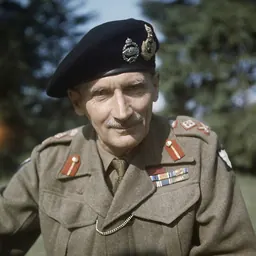
Elkington's wound left him with difficulties walking and he retired from the army in 1918. In retirement he lived in Burghclere, Hampshire. After his son was killed in the Second World War Elkington commissioned a stained glass window in the local church. He died before it was completed and it was unveiled, with a plaque in Elkington's honour, by Field Marshal Bernard Montgomery in 1946.
Early career
John Ford Elkington was born on 3 February 1866 in Newcastle, Jamaica, which was then a British Army camp. He was the son of Irish-born British Army officer John Henry Ford Elkington (1830–1889), who rose to the rank of lieutenant-general and was later Lieutenant Governor of Guernsey. His mother was Scottish-born Margaret Elkington née Jamieson (1847–1935). Elkington had four brothers, who all served in the army, and one sister. He was appointed a lieutenant in the Royal Warwickshire Regiment, in which his father had also served, on 30 January 1886.
Elkington was promoted to the supernumerary rank of captain on 25 January 1893. He volunteered to serve in the West African Frontier Force and was deployed to Nigeria between 11 March 1899 and 23 May 1900 when he was invalided home with malaria.
Elkington afterwards served in the Second Boer War (1900–1902). For his service he received the Queen's South Africa Medal with clasps for the Cape Colony, Orange Free State, Belfast and South Africa. He returned to South Africa in 1907, being seconded to his regiment's 3rd battalion. He was promoted to lieutenant colonel on 24 February 1914, receiving seniority backdated to 6 April 1910. For part of early 1914 he commanded Shorncliffe Army Camp in Kent. Elkington and the Dublins' commander Lieutenant Colonel Arthur Mainwaring, found the Grand Place of the town filled with British stragglers, separated from their units and with very few officers. Elkington claimed to have no knowledge of the content of the agreement until he was shown it at his court martial. Elkington and Mainwaring kept their men in sheds at the railway station, to the west of the town, and disarmed them. Bridges' C Squadron had been the first British unit to open fire on the Western Front on 22 August. Bridges was appalled at the prospect of a mass surrender to German forces and retrieved the agreement from the French mayor. In his memoirs Montgomery criticised Elkington's leadership in this period, though he praised his successor Major A. J. Poole. Elkington was the first British officer of the war to be sentenced to cashiering by a court-martial. He decided instead that he would join the French Foreign Legion and did so by the end of September, enlisting at Paris under his real name. Throughout his Foreign Legion service Elkington carried a copy of Rudyard Kipling's poem "If—". Most of the British members of his unit transferred out at this time to join the British Army, but this option was not open to Elkington. He made a point of avoiding British units in the field, in case he was recognised. This happened on just one occasion when "one day someone shouted my name. I remember I was just about to wash in a stream when a staff motor drove by and an officer waved his hand and called out. But I pretended not to hear and turned away". The French commander-in-chief, General Joseph Joffre, ordered that Elkington receive the Médaille militaire and be mentioned in orders (receiving palm leaves for his Croix de Guerre). These decorations were presented at the hospital by a general. and retired on 1 July 1919. In retirement Elkington and his family moved to Burghclere in Hampshire, where he served as a justice of the peace.
Elkington's youngest son served with the 10th battalion of the Rifle Brigade during the Second World War and was killed in action near Bou Arada, Tunisia on 19 January 1943. Elkington bestowed a stained glass window in his son's honour at the Church of the Ascension in Burghclere. Elkington died on 27 June 1944, before it could be unveiled. The window, with additional plaques honouring Elkington and his son-in-law Sir Richard de Bacquencourt des Voeux (who was killed while commanding the 156th Parachute Battalion at the Battle of Arnhem on 20 September 1944), was unveiled in May 1946 by Montgomery. Mary Elkington died on 26 May 1956. Elkington's tunic is held in the collection of the Warwickshire Regiment's Museum.
Don’t just read it —
keep it.
Full-length biographies made to live with: read them, listen on the way to work, watch them tonight.
- E-book
- Audio
- Video
Instant download · yours to keep · every purchase keeps this site free
Important facts
People in John Ford Elkington's life
Named in this biography and alive at the same time



Related people
Same field, nearest in time





Contemporaries
People whose lives overlapped John Ford Elkington's


Frequently asked questions
Who was John Ford Elkington?
British Army officer
When was John Ford Elkington born?
John Ford Elkington was born in 1866.
When did John Ford Elkington die?
John Ford Elkington died in 1944.
What was John Ford Elkington's occupation?
John Ford Elkington was a military personnel.
Sources & further reading
· Wikipedia: John Ford Elkington
· DBpedia: John Ford Elkington
Cite this page
APA: Biography.guide. (2026). John Ford Elkington. https://biography.guide/john-ford-elkington/
MLA: "John Ford Elkington." Biography.guide, https://biography.guide/john-ford-elkington/.
Chicago: "John Ford Elkington." Biography.guide. https://biography.guide/john-ford-elkington/.
Data last updated: 2026-09-20 · Spot an error? Report a correction.
Page generated 2026-09-27 05:28 UTC