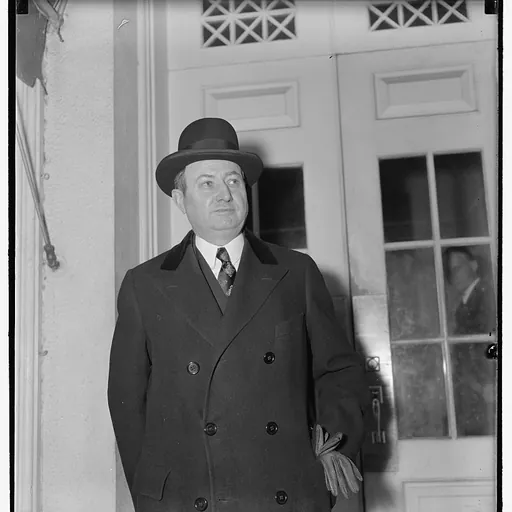
About John Flournoy Montgomery
Lived 1878 – 1954 (aged 75–76). John Flournoy Montgomery was an American diplomat.
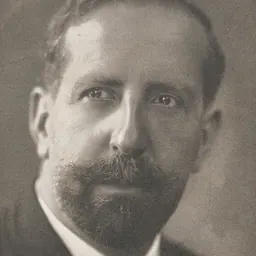
John Flournoy Montgomery (September 20, 1878 – November 7, 1954) was an American businessman and diplomat. His sole diplomatic posting was as U.S. Minister to Hungary, between 1933 and 1941. This ambassadorial assignment placed Montgomery at the center of the seething intrigue and gathering storm that characterized 1930s Hungary and Central Europe; in particular he was witness to the rise of Adolf Hitler's influence in Budapest, and the complex struggle over the alliance between Hungary and Nazi Germany. His memoirs, entitled Hungary: The Unwilling Satellite, provide a first-person report of that era.
Background Montgomery was a native of Missouri, born September 20, 1878, in the town of Sedalia and educated there. At the age of 26, he married Hedwig Wildi; the couple had two daughters. Montgomery built a successful career in the dairy industry, specifically in the processing of condensed milk. From 1925 to 1933, he was the president of the International Milk Company in New Jersey. He was a loyal and generous supporter of the Democratic Party, and after Democrat Franklin D. Roosevelt claimed the White House in 1932, Montgomery was rewarded with the promise of a diplomatic job.
Budapest posting In June 1933, Montgomery was sworn in as U.S. Minister to Hungary (he had hoped to be sent to Vienna, but Budapest was what he was offered). Montgomery was clearly expected to watch over the political intrigues not only in Budapest but, from his central location on the Danube, to monitor the goings-on in Hungary's neighbors (Austria, Czechoslovakia, Romania, Yugoslavia) and other countries in the region as well, including Bulgaria, Poland, Germany and Italy. Roosevelt invited Montgomery to report to him personally, an opportunity the ambassador took occasionally.
Although he had no experience as an international diplomat, Montgomery proved to be an enthusiastic and dedicated ambassador. He cultivated hundreds of friendships among the Hungarian and European political class, with whom he socialized regularly; he faithfully dictated records of almost every conversation he held with important political players, and kept a detailed journal. He avidly collected and recorded information about his many contacts, including their earlier jobs, their families and hobbies, and even gossip he heard about them from his other friends.
At the same time, Montgomery's effectiveness was limited by his background. He spoke only English, which restricted most of his meaningful contacts to those Hungarians and other Europeans who had studied English themselves: primarily educated aristocrats and members of the ruling political elite. His inability to read local newspapers or understand casual conversations in the street meant that Montgomery was cut off from much of the Hungarian capital's busy middle- and working-class political scene.
Montgomery was also plainly charmed by Budapest's Gilded Age atmosphere, and enchanted by the capital's old-world pageantry – the elaborate costumes and glittering, semi-feudal rituals to which Hungary still clung in the inter-war period. In particular, he was won over by the considerable charisma and personal charm of Hungary's head of state, the regent Miklós Horthy.
In this, Montgomery echoed the stance of the regent Horthy, who wrote in his own memoirs:
This similarity of opinion is not unusual: a comparison of Horthy's memoirs and Montgomery's yields a broad alignment of their views, especially regarding Hungary's political choices before and during the Second World War.
The friendship between Montgomery and Horthy was cemented during a famous episode on March 15, 1939. Both men were attending a gala performance at the Budapest Opera House, when supporters of the fascist Hungarian Ferenc Szálasi (recently jailed on Horthy's order) disrupted the opening ceremonies by chanting, from a box above the regent's, "Justice for Szálasi!" Horthy, enraged, dashed out of his royal box, and Montgomery followed to see what was happening. When he caught up with Horthy, he reported that:
Horthy apparently believed that Montgomery was coming to offer help, because he thanked Montgomery later with a gift of a photograph of the opera event, a present which Montgomery treasured. The two men became close (according to Tibor Frank, a Hungarian scholar who closely studied Montgomery's private papers, Montgomery even shared Horthy's "drawing-room anti-Semitism," and viewed the pre-war anxieties of Budapest's large Jewish upper-middle class with a mixture of sympathy and condescension). Montgomery did his best to foster a sense of personal connection between the regent and President Roosevelt – a connection which Horthy apparently felt, but which Roosevelt did not. On the whole, Montgomery felt that Roosevelt held him at arm's length, and complained that FDR was insufficiently curious about real reports from the field.
After Budapest Montgomery was recalled from his posting Budapest in March 1941, three months before Hungary finally joined the Axis as a full war partner during the invasion of the Soviet Union. When the United States entered the Second World War that December, Horthy's alliance with Hitler placed the minister's beloved Hungary in America's enemies column; but Montgomery remained committed to Hungary's independence and well-being. He viewed with anguish the destruction of virtually half the capital during the Battle of Budapest, and he bitterly mourned the ceding of Hungary to Soviet control at the war's end.
Montgomery also remained committed to the well-being of Miklós Horthy, who was captured by American troops at the war's end: as the Allies prepared for the Nuremberg Trials, Montgomery used his influence in Washington to help extricate Horthy from indictment and trial. Horthy was interviewed extensively, and later was called to testify at the trial of a Nazi administrator in Budapest, but was never charged for any of his actions during or before the war.
After the trials, Montgomery continued to support the Horthys in their exile (they could not and would not return to Budapest, which was now controlled by a Soviet-led Communist government). After the Horthy family relocated to Estoril, Portugal, Montgomery raised funds for their upkeep from a small committee of wealthy Hungarians in America. After Montgomery died in 1954, his daughter Jean continued supporting the ex-regent and his wife until their deaths.
In 1947 Montgomery published a heartfelt memoir of his Budapest days called Hungary: The Unwilling Satellite. The book was, and remains, a widely read and widely quoted source for examinations of Hungarian pre-war politics, in some measure because it is unique as a thorough Western lens on interwar Hungary; the Soviet-dominated Hungarian leadership after 1947 vilified Horthy and promoted an official view that Horthy was a fascist and a Nazi collaborator.
The stories Montgomery told in The Unwilling Satellite were further illuminated by the discovery, among Montgomery's personal papers, of his own private notes on many of his discussions with Hungary's leaders. These notes were found by scholar Tibor Frank after he met Montgomery's daughter Jean, and was given unconstrained access by her to the Montgomery papers. Frank published many of these notes in the book he wrote based on them: Discussing Hitler: Advisors of U.S. Diplomacy in Central Europe, 1934-1941.
Works Hungary: The Unwilling Satellite (1947)
Don’t just read it —
keep it.
Full-length biographies made to live with: read them, listen on the way to work, watch them tonight.
- E-book
- Audio
- Video
Instant download · yours to keep · every purchase keeps this site free
Important facts
People in John Flournoy Montgomery's life
Named in this biography and alive at the same time




Related people
Same field, nearest in time

Contemporaries
People whose lives overlapped John Flournoy Montgomery's




Frequently asked questions
Who was John Flournoy Montgomery?
American diplomat (1878–1954)
When was John Flournoy Montgomery born?
John Flournoy Montgomery was born in 1878.
When did John Flournoy Montgomery die?
John Flournoy Montgomery died in 1954.
What was John Flournoy Montgomery's occupation?
John Flournoy Montgomery was a diplomat.
What nationality was John Flournoy Montgomery?
John Flournoy Montgomery was American.
Sources & further reading
· Wikipedia: John Flournoy Montgomery
· DBpedia: John Flournoy Montgomery
Cite this page
APA: Biography.guide. (2026). John Flournoy Montgomery. https://biography.guide/john-flournoy-montgomery/
MLA: "John Flournoy Montgomery." Biography.guide, https://biography.guide/john-flournoy-montgomery/.
Chicago: "John Flournoy Montgomery." Biography.guide. https://biography.guide/john-flournoy-montgomery/.
Data last updated: 2026-09-22 · Spot an error? Report a correction.
Portrait: Wikimedia Commons · author & licence
Page generated 2026-09-27 05:04 UTC