
About John Fenwick
Lived 1628 – 1679 (aged 50–51). John Fenwick was a catholic priest.
John Fenwick (1628 – 20 June 1679), real surname Caldwell, was an English Jesuit, executed at the time of the fabricated Popish Plot. He is a Catholic martyr, beatified in 1929 by Pope Pius XI.
Life He was born in county Durham, of Protestant parents belonged to the established religion (Anglican) who disowned him when he became a Roman Catholic convert. He took his course in humanities at the College of St. Omer, was sent to Liège to study theology, and entered the Society of Jesus at Watten on 28 September 1660. Having completed his studies, he was ordained a priest, and spent several years, from 1662, as procurator or agent at the College of St. Omer. He was made a professed father in 1676, and was sent to England the same year.
Popish Plot He resided in London as procurator of St. Omer's College, and was also one of the missionary fathers there. In 1678, on the information of Titus Oates, he was summoned to appear before the Privy Council, and committed to Newgate Prison. He was put in chains and suffered great pain as a result: one of his legs became so infected that amputation was proposed. His correspondence was seized, but to the Crown's disappointment it turned out to be completely innocuous: as he forcefully pointed out at his second trial, among at least a thousand letters taken from him there was not one which could be construed as treasonable. He was tried for high treason with William Ireland, in that they had conspired to kill King Charles II, a charge fabricated by Oates and later embellished by other informers. Oates claimed that he had overheard some incriminating remarks they made at a meeting of senior Jesuits in late April 1678 in the White Horse Tavern on the Strand: they could truthfully deny this, although they had at the time been at a meeting of senior Jesuits in the Palace of Whitehall. As the evidence of treason was insufficient, since the Crown lacked the requisite two witnesses, he was remanded back to prison.
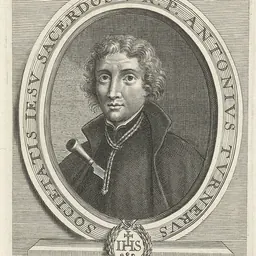
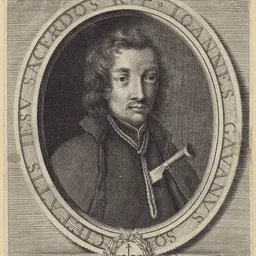
However, in the political climate of the time, it was unthinkable that so prominent a Jesuit should be allowed to escape with his life: accordingly, he was arraigned a second time at the Old Bailey on 13 June 1679, before all the High Court judges. He was tried together with four other Jesuit fathers (John Gavan, William Harcourt, Thomas Whitebread and Anthony Turner }. Oates and two other notorious informers, William Bedloe and Stephen Dugdale, were the main witnesses against them, and in accordance with the direction of Lord Chief Justice William Scroggs, the jury found the prisoners guilty, despite their spirited defence. At the end of the prosecution case Fenwick made a vigorous protest:
"I have had a thousand letters taken from me: not any of these letters had anything of treason in them. All the evidence comes but to this: there is but saying and swearing."
Execution The five Jesuits suffered death at Tyburn on 20 June 1679. As an act of clemency, the King, who was well aware that they were innocent, but realised that it would be politically unthinkable to grant a royal pardon or reprieve, ordered that they be allowed to hang until they were dead, and be spared the indignity of drawing and quartering. In a sign that public sympathy was turning against the plot, the large crowd heard their final speeches from the scaffold in respectful silence, as each maintained his innocence. Fenwick's remains were buried in the churchyard of St. Giles-in-the-Fields.
An account of the trial and condemnation of the five Jesuits for High Treason, in conspiring the Death of the King, the Subversion of the Government and Protestant Religion was published by authority at London, 1679.
Don’t just read it —
keep it.
Full-length biographies made to live with: read them, listen on the way to work, watch them tonight.
- E-book
- Audio
- Video
Instant download · yours to keep · every purchase keeps this site free
Important facts
People in John Fenwick's life
Named in this biography and alive at the same time


Related people
Same field, nearest in time


Contemporaries
People whose lives overlapped John Fenwick's





Frequently asked questions
Who was John Fenwick?
English Jesuit and Catholic martyr
When was John Fenwick born?
John Fenwick was born in 1628 in Durham.
When did John Fenwick die?
John Fenwick died on 20 June 1679 in Kingdom of England, London, Tyburn.
What was John Fenwick's occupation?
John Fenwick was a catholic priest.
Sources & further reading
· DBpedia: John Fenwick (Jesuit)
Cite this page
APA: Biography.guide. (2026). John Fenwick. https://biography.guide/john-fenwick-catholic-priest/
MLA: "John Fenwick." Biography.guide, https://biography.guide/john-fenwick-catholic-priest/.
Chicago: "John Fenwick." Biography.guide. https://biography.guide/john-fenwick-catholic-priest/.
Data last updated: 2026-09-26 · Spot an error? Report a correction.
Page generated 2026-09-27 05:13 UTC