
John F. Long
American home developer and philanthropist
About John F. Long
Lived 1920 – 2008 (aged 87–88).
John F. Long (17 May 192029 February 2008) was a real-estate developer, philanthropist, and late-date pioneer of the West Valley of the Phoenix metropolitan area. He is most often remembered for being the founder and primary developer of Maryvale, an urban village spanning Phoenix and Glendale. He is often considered the “Father of the West Valley.”
Early life John Frederick Pilger was born on May 17, 1920, in Phoenix, Arizona to German immigrant parents. His parents moved to Arizona in the early 1900s, under doctor's orders due to his father's tuberculosis, and because he already had an uncle living in Phoenix. His father would die when John was just 22 months old, leading him to never really know his father. He was the oldest of four children.
At age eight, Long began selling papers for the Phoenix Gazette to earn some money. With his parents often working on farms, he would also sometimes help out, milking cows, feeding chickens, and working in the fields. Long's parents working in agriculture resulted in the family moving frequently, leading them to live all around the state in places such as Globe and Flagstaff. This meant that Long attended six different grade schools. In Phoenix, Long remembers swimming in the CAP canals and playing baseball and running track in high school.
Maryvale After returning home from World War II, Long began building a house near 23rd Avenue and Glendale Avenue in Phoenix. Before he and his wife had moved into their new home, the couple had numerous offers to sell. Long and his wife decided to sell the home for $8,450, doubling their initial cost and using the profit to build their next home that they then sold, building 12 homes before finally buying a home for themselves. In 1949, Long built 32 more homes, starting his first subdivision, Glenwood Terrace, where homes sold for under $7000. Long would build 2 more subdivisions before planning his biggest project, Maryvale. Maryvale was designed with the community in mind, designating space for parks, schools, and the fulfillment of other community services. After building the first few hundred homes, the local school district, Cartwright School District began to worry about the increasing population since the district did not have the funding to build new schools as needed. As a result, Long Home Builders agreed to construct the schools and lease them to the district. Long realized that VA loans didn't cover such essentials as refrigerators and stoves, as a result he lobbied Congress to change the scope of such loans. Long Housing Co. was one of the first home builders to include appliances in their homes. The community also had amenities like a skating rink and community pools.
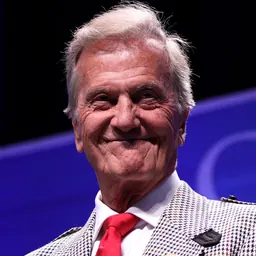
Marketing for the community was quite different for the time, using famous actors of that era including Pat Boone and future President Ronald Reagan. Long also for a time offered an acre of land in Northern Arizona for anyone who bought one of his homes.
Maryvale was also home to Maryvale Shopping City, which opened in 1959. Long saw it as a central hub for his community, an open-air mall which housed 19 stores in more than 110,000 square feet of retail space. Tenants included S.S. Kresge's, the predecessor to K-Mart, and Malcolm's, Long's very own department store. The mall also featured a Bowlero bowling alley and a Lantern Inn restaurant. After the opening of Desert Sky Mall in 1981, the mall began to decline, so Long sold part of the site to the Cartwright Elementary School District in the late 1990s. The land became home to Marc T. Atkinson Middle School, which opened in 2000 and Bret R. Tarver Elementary School, which opened in 2001. The initial master plan was drawn up by architect Victor Gruen. By 1956, Long was selling more than a hundred homes a week in Maryvale, making him the third-largest homebuilder in the world at one point.
Long put a focus on solar energy and water conservation in his communities. He searched for more conservative and efficient toilets to put in his homes that used substantially less water, and was the first home builder in the United States to put solar on the roofs of some homes.
Demographic changes came to the area by 1975, as residents began moving to the north Valley. Racially restrictive real estate ordinances were in place north of Van Buren Street up until the mid-1960s. When the Golden Gate Barrio was razed starting in the 1970s, many of the displaced residents moved to Maryvale. The discovery of a cancer cluster in the 1980s, originally linked to leaking chemicals from an industrial complex at 35th Avenue and Osborn Road, also saw many of the area's original residents move elsewhere.
Personal life
In September 1941, Long was drafted into the U.S. military. He served as field artillery before transferring to the Army Air Corps. where he was a part of the 456th Bomber Group. He was stationed in Stornara, Italy, where he was an aircraft mechanic.
John Long met his wife, Mary Tolmachoff, at a softball game where she was playing softball for Webster's Dairy. Long also served on the Phoenix city council from 1966 to 1970. Following the death of council member Jack Laney, Mayor Milton H. Graham, reached out to Long asking him to serve the rest of the term. Long recounts, “There wasn't any...council member from the West Valley and they thought I would be a good representative.” Despite some reluctance, Long felt that it was his civil responsibility to be a representative of the West Valley and his community. While on the council, Long oversaw the early planning of the Phoenix Convention Center.
In 1999, Long offered to donate to the city of Peoria the grazing rights for eight square miles of state lands located in the northern part of the city. This would allow the city to maintain some authority over the future preservation of their lands, which proved important to the city since much of the area was a part of Peoria's Desert Lands Conservation Master Plan. The plan's goal is to protect the sensitive habitats of the Sonoran Desert found in Peoria by controlling development of the desert.
Long offered to donate land for a sports stadium to be built in the West Valley twice. The first time he offered to donate sixty acres of land near 75th Avenue and McDowell Road in 1986 when Phoenix was considering building a stadium in order to attract a team to the area. He would offer land again in 2000 for the Arizona Cardinals to build a stadium, when they were looking to move out of Sun Devil Stadium. He offered forty acres at 99th Avenue and Thomas Road in Avondale, only about three miles from the Cardinals' current home, State Farm Stadium, in Glendale.
Long was also a big advocate for the development of the West Valley Recreation Corridor. The corridor would have run 42 miles from Lake Pleasant in Peoria to Tres Ríos in Avondale. It would have been a cooperation between numerous West Valley cities: Avondale, El Mirage, Surprise, Glendale, Youngtown, Phoenix, and Peoria.
Some of Long's philanthropic ventures included donating labor and material for filling potholes on more than five hundred miles of streets in West Phoenix in the 1980s, as well as put up money to help the state improve the Beeline Highway in the 1990s. Long is also responsible for building and donating twenty-one townhouses to be used by the city of Phoenix's Affordable Housing Program, built and donated an Alcoholism Rehabilitation Center, and for donating 60 acres of land and lending Phoenix $10 million for Maryvale Baseball Park. The Maryvale Samaritan Medical Center received a $1.5 million donation from Long for a childbirth center. He donated two-hundred forty acres of land to Glendale in order for the city to build Glendale Municipal Airport as part of his expansive effort to build the West Valley. Long was among the supporters and financial benefactors that helped establish ASU West; he has also given to the university's architectural and communications schools on its main campus.
Death and legacy On February 29, 2008, John F. Long died of congestive heart disease at age 87.
Don’t just read it —
keep it.
Full-length biographies made to live with: read them, listen on the way to work, watch them tonight.
- E-book
- Audio
- Video
Instant download · yours to keep · every purchase keeps this site free
Important facts
People in John F. Long's life
Named in this biography and alive at the same time




Contemporaries
People whose lives overlapped John F. Long's




Frequently asked questions
Who was John F. Long?
American home developer and philanthropist
When was John F. Long born?
John F. Long was born on 17 May 1920.
When did John F. Long die?
John F. Long died in 2008.
Sources & further reading
Cite this page
APA: Biography.guide. (2026). John F. Long. https://biography.guide/john-f-long/
MLA: "John F. Long." Biography.guide, https://biography.guide/john-f-long/.
Chicago: "John F. Long." Biography.guide. https://biography.guide/john-f-long/.
Data last updated: 2026-09-20 · Spot an error? Report a correction.
Page generated 2026-09-27 05:34 UTC