
John Evans
Cricketer who played for Oxford University, Hampshire, Kent and England
About John Evans
Lived 1889 – 1960 (aged 71). John Evans was a British cricketer and aircraft pilot.
Alfred John Evans (1 May 1889 – 18 September 1960) was an English amateur cricketer, soldier and aviator. As a cricketer, he played first-class cricket before the First World War as an all-rounder for Oxford University and Hampshire, and after the war for Kent County Cricket Club, whom he captained in 1927. Evans gained one Test cap in the 1921 Ashes series against Australia. In first-class cricket, he made 90 appearances, scoring nearly 3,500 runs and taking 110 wickets.
In his military service, Evans partook in both the First and the Second World War's. Beginning in the Intelligence Corps during the First World War, he later joined the Royal Flying Corps as a reconnaissance pilot, which earned him the Military Cross (MC). After crash landing behind enemy lines on the Western Front, Evans became a German prisoner of war. A persistent escape attemptee, he eventually managed to successfully escape to Switzerland and resumed his participation in the war as a bomber pilot in Palestine and the Levant. During a bombing raid, he again crash landed and was taken captive by the Ottoman Turks. After an unsuccessful escape attempt, Evans succeeded for the second time when he bribed an Ottoman doctor to declare him sick and eligible for a prisoner swap. Upon his liberation, he gained a bar to his MC in recognition of his persistent escapes from captivity. During the Second World War, he served in MI9, providing guidelines and advice for the escape of prisoners of war.
Later in life he was a noted fiction and non-fiction writer, and a proponent of the Derbyite theory of Shakespeare authorship.
Early life and education Evans was born at Highclere in Hampshire in May 1889; his father, Alfred, had been a master at Winchester College and had founded Horris Hill School in 1888. Evans began his education at Horris Hill, before moving on to Winchester. Whilst at Winchester he played for and captained the cricket eleven, and also represented the school at racquets and golf. As cricket captain in his final year, he missed out on playing against Eton College due to being afflicted with mumps. From Winchester, he matriculated to Oriel College, Oxford.
Cricket Hampshire and Oxford University Prior to his matriculation, he made his debut in first-class cricket for Hampshire against Derbyshire at Derby in the 1908 County Championship, with him scoring a half century in Hampshire's second innings. He played a further County Championship matches in that season. During his freshman year, Evans played first-class cricket on nine occasions for Oxford University Cricket Club, he took figures of 7 for 50 (match figures of 10 for 74) against H. D. G. Leveson Gower's personal eleven at Eastbourne and 5 for 32 against the touring Indians at Oxford. He also played one match each for Hampshire in the 1911 County Championship and for the combined Oxford and Cambridge Universities team in a repeat of the previous seasons fixture against the Army and Navy team. In thirty first-class matches for Oxford, he scored 1,173 runs at an average of 22.55, while with the ball he took 76 wickets at an average of 21.82, taking four five wicket hauls. Evans gained additional blues in racquets and golf. Batting twice in the match, he was dismissed for 4 runs in England's first innings by Ted McDonald, while in their second innings he was dismissed for 14 runs by the same bowler. Wisden remarked that the occasion of Test was "perhaps rather too big for him",
After playing for England, he appeared once more that season for Kent in the County Championship, before making three appearances in the 1922 County Championship. In what was to be his only full season of county cricket, Evans made 23 appearances and gained his cap, his 143 against Lancashire at Maidstone was his highest career score. Despite having led Kent a respectable fourth-place in the County Championship, he resigned the captaincy at the end of the season and was succeeded by Geoffrey Legge. Despite resigning the captaincy, he continued to play for Kent in 1928, making eight appearances in the County Championship. From 1921 to 1928, Evans played for Kent in 36 first-class matches. In these, he scored 1,303 runs at an average of 25.05, and by The Cricketer magazine as "a player of a classically orthodox style", he scored 3,499 runs at an average of 24.64 from ninety first-class matches, scoring six centuries and eighteen half centuries. As a bowler, he was described by Carlaw in Kent County Cricketers A to Z as "a more than useful fast-medium inswing bowler", with Evans taking 110 wickets at an average of 27.83 across his first-class career. During his imprisonment, the tactics and technology of aerial combat had significantly advanced, necessitating Evans to learn to fly again and to acquaint himself with the latest tactics of the day. Rules prevented POWs returning to active service in the same theatre of war they had been captured in, so Evans was transferred to Egypt and then to Palestine where he took command, in January 1918, of 142 Squadron, a bomber squadron. Evans had mixed feelings about his appointment, as he was pleased with the command, but did not like bombing as he knew little about it. The following month, he was made a squadron commander and given the temporary rank of major.
On 19 March 1918, Evans was tasked with bombing El Kutrani railway station on the Hejaz railway, a long-range mission that he had forced himself to take part in whilst suffering from bad nerves from his experiences as a captive in Germany. After attacking the station he encountered engine trouble on the return flight, near the ancient city of Al-Karak. He was forced to crash-land in a field, with his plane becoming stuck in a ditch. He was joined shortly after by the two-man Australian crew of an accompanying Bristol, who landed to render assistance. Having given up recovering Evans plane, the trio were setting about sabotaging it when they were ambushed by 30–40 Arab tribesmen. They surrendered to the Arabs without a shot being fired, hopeful they could lead them back to friendly lines. However, the Arabs handed them over to the Ottoman Turks, who presented them to the commandant and military governor of Al-Karak. Fearing his name would be known to the Ottomans following his earlier escape from the Germans, he took on the pseudonym "Everard".
Upon being transferred to Amman, Evans learnt that he was to be sent to the German Luftstreitkräfte airfield at El Afule, which would bring him to within of friendly lines during part of the journey. Escaping alone, he spent a week barefoot wandering the desert near the Dead Sea.
Second World War During the Second World War, Evans was called into service in MI9, the branch of the War Office responsible for coordinating resistance activities and assisting airmen shot down behind enemy lines and escaping POWs. He helped develop guidelines for the escape of POWs, drawing on his experiences during the First World War. Amongst the guidelines he helped to develop were those on interrogation techniques and methods of avoiding disclosure of information. He landed in Normandy attached to the headquarters of the 21st Army Group in July 1944, helping to secure POWs and evaders as Allied armies advanced across North West Europe. Having been commissioned into the Royal Air Force Volunteer Reserve in January 1940 as a pilot officer, he ended the war as a wing commander and was awarded the American Bronze Star Medal. Following the end of the war, he was involved with a group attempting to recover airmen who had been shot down during the war over what was now East Germany. He wrote the book Escape & Liberation 1939-1945 (1946), which was based on his experiences during the Second World War.
Later life In later life, Evans wrote a series of novels and crime fictions, whilst also writing on economics. He was a proponent of the Derbyite theory of Shakespeare authorship, writing the book Shakespeare’s Magic Circle which developed the theory. Evans was married in 1919 to Marie Galbraith, an Irish concert violinist. Evans died in Marylebone in September 1960, aged 71. His younger brother, Ralph, and a number of cousins, were also first-class cricketers.
Don’t just read it —
keep it.
Full-length biographies made to live with: read them, listen on the way to work, watch them tonight.
- E-book
- Audio
- Video
Instant download · yours to keep · every purchase keeps this site free
Important facts
People in John Evans's life
Named in this biography and alive at the same time




Related people
Same field, nearest in time
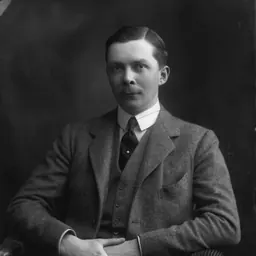

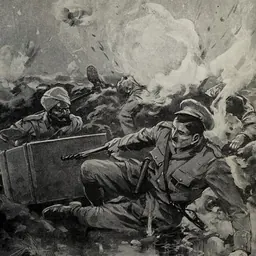


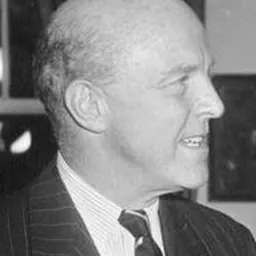
Contemporaries
People whose lives overlapped John Evans's
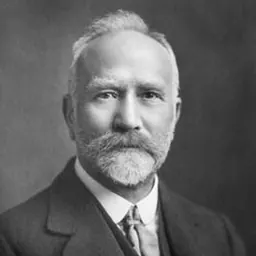



Frequently asked questions
Who was John Evans?
cricketer who played for Oxford University, Hampshire, Kent and England (1889-1960)
When was John Evans born?
John Evans was born on 1 May 1889 in Newtown.
When did John Evans die?
John Evans died on 18 September 1960 in Marylebone.
What was John Evans's occupation?
John Evans was a cricketer and aircraft pilot.
What nationality was John Evans?
John Evans was British.
Sources & further reading
· DBpedia: John Evans (cricketer, born 1889)
Cite this page
APA: Biography.guide. (2026). John Evans. https://biography.guide/john-evans-cricketer/
MLA: "John Evans." Biography.guide, https://biography.guide/john-evans-cricketer/.
Chicago: "John Evans." Biography.guide. https://biography.guide/john-evans-cricketer/.
Data last updated: 2026-09-20 · Spot an error? Report a correction.
Page generated 2026-09-27 05:07 UTC