
About John Epps
Lived 1805 – 1869 (aged 63). John Epps was a British physician and homeopath, known for Political activist.
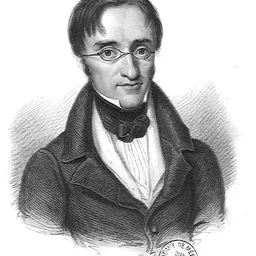
Dr John Epps (15 February 1805 – 12 February 1869) was an English physician, phrenologist and homeopath. He was also a political activist, known as a champion of radical causes on which he preached, lectured and wrote in periodicals.
Life Early years and education Epps, the eldest son of John Epps (see Epps family), family in Sevenoaks, Kent on 15 February 1805. George Napoleon Epps was his half-brother.
Epps became disillusioned with the religious atmosphere of his childhood.
Medical practitioner and lecturer After graduating Epps moved back to London where he began to practice, eventually settling in Great Russell Street. In 1831 he married. He became Medical Director of the Royal Jennerian and London Vaccine Institution, on the death of John Walker. Epps had a Scottish degree, but no license from the Royal College of Physicians.
Epps also lectured on chemistry, botany, and materia medica, in London locations. Initially this was at the Aldersgate Medical School, and Windmill Street; and later at Westminster at the Hunterian School of Medicine. There was briefly (1830–31) a medical school in Brewer Street, set up by William Birmingham Costello, Epps and Michael Ryan. Epps and Ryan then joined George Darby Dermott in giving lectures at the Western Dispensary in Gerrard Street; James Fernandez Clarke, in his memoirs, described Epps lecturing there as well-read and sympathetic but not deeply versed in practical chemistry, or botany. Epps lectured publicly and extensively for the rest of his life, particularly on phrenology and homoeopathy, in London and elsewhere. When his health failed he continued to lecture in his own home. For Epps, phrenology was integrated with his Baptist Calvinism. With John Elliotson, he supported applications of "phreno-mesmerism".
Epps was influenced not only by continental phrenologists. He took from Gustav Carus and Jean-Baptiste Lamarck. His views were an idiosyncratic mixture from different sources, permitting an optimistic outlook within Calvinist views.
In the later 1830s and early 1840s, the Anthropological Society of London (not to be confused with the Anthropological Society of London founded in 1863 by Richard Francis Burton and Dr. James Hunt) was a phrenological group holding meetings, associated with the Christian Physician and Anthropological Magazine edited by Epps. John Isaac Hawkins acted as president. Other members were Luke Burke and William Mattieu Williams. After 1842 it became part of the Christian Phrenological Society.
At odds with Frederic Quin, the earliest British physician who practised homoeopathy, Epps did not join the British Homoeopathic Society. He associated with Curie in the English Homoeopathic Association.
Radical politics Epps, like his father, became involved in radical politics, as a Liberal and abolitionist. He wrote in his diary "[I have] come to consider all creatures as being equally important in the scale of creation as myself; to regard the poor Indian slave as my brother". He opposed "Church Rates, war, despots, corn laws, and other old institutions", and enjoyed giving political addresses. His activism brought him into contact with Joseph Hume, Lady Byron, George Wilson (president of the Anti-Corn Law League), Giuseppe Mazzini, Thomas Slingsby Duncombe, James Stansfeld, Lajos Kossuth, and Robert Owen. and in 1847 he stood for parliament, in Northampton, with Chartist backing.
He was an active member of the Anti-Corn Law League and joined organizations in favor of the Polish, Italian, Hungarian, and American nationalities.
Medical reform Epps supported "Knowledge Chartism", and opposed medical jargon. He supported the proposal of Thomas Wakley for a London College of Medicine, speaking in support of it at a meeting in 1831, with his colleague George Dermott; he was on the steering committee for its formation, along with Joshua Brookes and David Daniel Davis.
Religious involvement Epps was brought up in a Calvinist family. The publication brought considerable opposition and, according to historian Alan Eyre,' a lecture given shortly afterward to the Tooting Institution at the Mitre Inn in ... London ... caused serious offence and led to widespread ostracism and hostility'. (1827, as "Medicus") and Horae Phrenologicae.
His work The Organon of the Healing Art, and his first essay on homoeopathy, appeared in 1838. Epps was a frequent contributor to The Lancet until he adopted homoeopathy. In 1843 The Lancet refused to publish reports of homoeopathic treatment; he took rejected articles and published them in a pamphlet entitled Rejected Cases, which also contained a vigorous letter to the editor of the Lancet, his friend Wakley).
Epps was also involved in a number of other journals: he was for some time co-editor of the London Medical and Surgical Journal, and for a long period conducted the Christian Physician and Anthropological Magazine (1836-9), and The Journal of Health and Disease. He established a journal, Notes of a New Truth, for the propagation to nonprofessionals of the "new school" of homoeopathy, to which he contributed up to the time of his death.
As with Notes of a New Truth, the majority of Epps' lectures were directed at lay readers; however, he also lectured to medical professionals and was lecturer on materia medica at the Homoeopathic Hospital, Hanover Square (c. 1861).
A New Way of Teaching English Grammar An Introduction to Botany Evidences of Christianity Deduced from Phrenology Horae Phrenologicae The Life of John Walker, M.D. (1831; available online). This was a biography of his predecessor at the London Vaccine Institute, written for the benefit of Walker's widow. What is Homoeopathy? Homoeopathy and its Principles Explained (1841; available online) The Devil: a Biblical exposition of the truth concerning that old serpent, the devil and Satan and a refutation of the beliefs obtaining in the world regarding sin and its source (1842; available online) Notes of a New Truth (journal; editor) Rejected Cases Homeopathic Domestic Physician (1852-5) Domestic homoeopathy, or Rules for the domestic treatment of the maladies of infants, children, and adults Constipation its Theory & Cure (1854)
Don’t just read it —
keep it.
Full-length biographies made to live with: read them, listen on the way to work, watch them tonight.
- E-book
- Audio
- Video
Instant download · yours to keep · every purchase keeps this site free
Important facts
People in John Epps's life
Named in this biography and alive at the same time


Related people
Same field, nearest in time



Contemporaries
People whose lives overlapped John Epps's






Frequently asked questions
Who was John Epps?
British homeopath
When was John Epps born?
John Epps was born on 15 February 1805 in Sevenoaks.
When did John Epps die?
John Epps died on 10 February 1869 in London.
What was John Epps's occupation?
John Epps was a physician and homeopath.
What was John Epps known for?
John Epps was known for Political activist.
What nationality was John Epps?
John Epps was British.
Sources & further reading
Cite this page
APA: Biography.guide. (2026). John Epps. https://biography.guide/john-epps/
MLA: "John Epps." Biography.guide, https://biography.guide/john-epps/.
Chicago: "John Epps." Biography.guide. https://biography.guide/john-epps/.
Data last updated: 2026-09-22 · Spot an error? Report a correction.
Page generated 2026-09-27 05:20 UTC