
About John E. Franz
Lived 1929 – 2026 (aged 96). John E. Franz was an American chemist, known for Roundup (herbicide).
John Edward Franz (December 21, 1929 – April 27, 2026) was an American organic chemist who discovered the herbicide glyphosate while working at Monsanto Company in 1970. The chemical became the active ingredient in Roundup, a broad-spectrum, post-emergence herbicide. Franz earned acclaim and rewards for this breakthrough. He also had over 840 patents to his name worldwide.
Career Franz spent his entire career at Monsanto in St. Louis, Missouri. After finishing his Ph.D., Franz was hired by Monsanto as a Resident Chemist in 1955. He focused on process research, new polymer synthesis, and the development of plasticizers and polymer flame retardants. Franz received two patents while working in the Organic Division, one for nitrates in 1960, and one for a fire retardant in 1967. He transferred to the Agricultural Division of Monsanto in 1967, motivated by the department's "emphasis on publishing, academic contacts, and the freedom to pursue ideas." Because his background was in organic chemistry, Franz familiarized himself with the new field by spending a year studying and learning about plant physiology and biochemistry before beginning research.
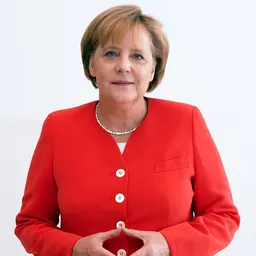
He discovered the herbicide glyphosate, and received five dollars for his first patent from Monsanto. Glyphosate works by absorption through leaves, and then moving rapidly to a plant's roots, rhizomes, and meristems. This breakthrough spurred Monsanto to design and produce plants genetically immune to glyphosates in order to make it easier for farmers to thoroughly spray down their fields for weeds without killing their own crops. However, the chemical’s use has come under attack in numerous countries, with bans or partial bans enacted, and thousands of lawsuits filed alleging the chemical is carcinogenic. German Chancellor Angela Merkel stated in June 2019 that “we will come to a point where glyphosate isn’t used anymore.” Bayer, which acquired Monsanto, stopped selling Roundup for residential use in 2023 "exclusively to manage litigation risk and not because of any safety concerns".
Other research Franz undertook research in many areas during his time at Monsanto. Some of his other chemistry research includes antiauxin chemistry (isothiazoles, isoxazoles, pyrazoles), plant chemistry, cell membrane chemistry (glyceride and phospholipid syntheses, liposomes), plant hormone chemistry (abscissic acid analogs, ethylene generators), and nitride sulfide chemistry. He also performed research pertaining to reaction mechanisms, coenzyme A antimetabolites, biorational design of herbicides, and periselective addition reactions of one- and threedipoles, as well as fundamental organic research.
Honors Franz received awards for his discovery. In 1977, he was awarded the IR-100 award by Industrial Research magazine. In 1981, he received the first J.F. Queeny Award from Monsanto to honor an invention that was also a commercial success. He was the recipient of the 1987 National Medal of Technology, one of the few agricultural technologies to ever receive the honor. Franz received the American Chemical Society’s Carothers Award in 1989 for "outstanding contributions and advances in industrial applications of chemistry". In 1990, he was awarded the Perkin Medal by the American Section of the Society of Chemical Industry, based on his contributions to the research and development of applied chemistry. Franz also won the Outstanding Achievement Award in 1988, the 1988 Missouri Award, and was named the St. Louis Metropolitan Bar Association Inventor of the Year in 1986. Roundup was named one of the "Top 10 Products That Changed the Face of Agriculture" by the magazine Farm Chemicals in 1994. Franz was inducted into the United States' Inventor's Hall of Fame on May 5, 2007.
Monsanto has also created two awards in his honor. On December 8, 1995, the agricultural company introduced the Franz Sustainability Award, which consists of an annual $100,000 prize given to the individual or team that submits the best environmental project for improvement in the areas of conservation, technology, and/or education. Soon after Franz's induction into the Inventors' Hall of Fame in 2007, Monsanto announced a new annual scholarship called the Franz Innovation Award Scholarship. This scholarship is awarded each year to a graduate student taking organic chemistry at the University of Minnesota.
Patents Franz had over 840 patents to his name concerning glyphosate and lesser known discoveries. Because of the nature of glyphosate, it requires many patents concerning identification, synthesis, and other processes required to produce the chemical.
His patents include:
Patent Number: 3799758, Phytotoxicant compositions Patent Number: 3977860, Herbicidal compositions and methods employing esters of Patent Number: 3954848, Process for producing N-phosphonomethy glycine Patent Number: 4735649, Gametocides Patent Number: 4634788, Herbicidal glyphosate oxime derivatives Patent Number: 4094661, Plant Growth Regulators
Don’t just read it —
keep it.
Full-length biographies made to live with: read them, listen on the way to work, watch them tonight.
- E-book
- Audio
- Video
Instant download · yours to keep · every purchase keeps this site free
Important facts
People in John E. Franz's life
Named in this biography and alive at the same time


Related people
Same field, nearest in time




Contemporaries
People whose lives overlapped John E. Franz's

Frequently asked questions
Who was John E. Franz?
American chemist
When was John E. Franz born?
John E. Franz was born on 21 December 1929 in Springfield.
When did John E. Franz die?
John E. Franz died on 27 April 2026.
What was John E. Franz's occupation?
John E. Franz was a chemist.
What was John E. Franz known for?
John E. Franz was known for Roundup (herbicide).
What nationality was John E. Franz?
John E. Franz was American.
Sources & further reading
Cite this page
APA: Biography.guide. (2026). John E. Franz. https://biography.guide/john-e-franz/
MLA: "John E. Franz." Biography.guide, https://biography.guide/john-e-franz/.
Chicago: "John E. Franz." Biography.guide. https://biography.guide/john-e-franz/.
Data last updated: 2026-09-20 · Spot an error? Report a correction.
Page generated 2026-09-27 05:20 UTC