
About John Dugmore of Swaffham
Lived 1793 – 1871 (aged 77–78). John Dugmore of Swaffham was a painter, drafter and grand Tour.
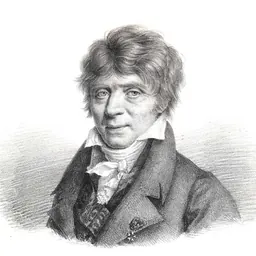
John Dugmore of Swaffham (1793–1871) was a British draughtsman and grand-tourist. He realized at least 130 drawings and watercolours, most of them in Germany, France and Italy.
Biography Born in a Norfolk noble family, he had a deep classical education. Renowned for his taste in arts, he moved to London to seek his fame and fortune at the Royal Court, where he met his ‘patron’, William Charles Keppel (1772-1849), 4th Earl of Albemarle. Dugmore was probably responsible for Keppel children's education.
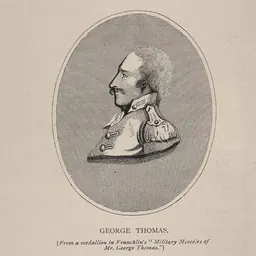
The Grand Tour In 1820, Dugmore accompanied in the Grand Tour a son of Charles Keppel, perhaps George Thomas (1799-1891), later 6th Earl of Albemarle, Viscount of Bury and Baron of Ashford, who made a brilliant military career (started at Waterloo) as well as was a memorialist, a distinguished collector and a member of the English Society of Antiquaries. They moved from Scotland to Western Bohemia, France, Switzerland and Italy. In around 20 months, Dugmore fixed on paper everything that surprised him, mostly mountains, lakes, rivers and other natural features. Sometimes he sketched interesting architecture or historical places, for instance the cell in the Great St. Bernard Hospice where Napoleon slept during his crossing of the Alps (1800) or the Clermont Castle, former residence of Blaise Pascal.
Works Lady Hutton, Dugmore's daughter-in-law, mentioned the existence of many albums filled by 130 c. drawings. 65 drawings are recorded in detail in Lady Hutton's last will. Among them, 47 were recently discovered by Guy Peppiat and offered on sale at an English auction house. Another one is filed in Sabin Galleries archives, London. These works are usually made on a slightly cream paper, 260x200 mm., by pencil, pen and black ink.
Value Dugmore's urban landscapes are visual witnesses of the shape of many main and minor European cities, among them Paris, Vichy, Clermont-Ferrand, Lyon, Schandau, Tivoli, Susa, Florence and Siena. Dugmore is considered relevant for his ability in feeling and amplifying the aesthetics which he was meeting. For instance, his ‘German’ drawings are very linear and pure; on the opposite side his ‘French’ drawings are ‘touched’ by pencil and brush in a way that seems largely to anticipate the impressionist idea of the light.
Museums Three works by Dugmore are included in the Progetto Linea, a large private project for increasing the paper cabinets in Italian public museums of art.
Don’t just read it —
keep it.
Full-length biographies made to live with: read them, listen on the way to work, watch them tonight.
- E-book
- Audio
- Video
Instant download · yours to keep · every purchase keeps this site free
Important facts
People in John Dugmore of Swaffham's life
Named in this biography and alive at the same time

Related people
Same field, nearest in time



Contemporaries
People whose lives overlapped John Dugmore of Swaffham's





Frequently asked questions
Who was John Dugmore of Swaffham?
painter
When was John Dugmore of Swaffham born?
John Dugmore of Swaffham was born in 1793.
When did John Dugmore of Swaffham die?
John Dugmore of Swaffham died in 1871.
What was John Dugmore of Swaffham's occupation?
John Dugmore of Swaffham was a painter, drafter and grand Tour.
Sources & further reading
· Wikipedia: John Dugmore of Swaffham
· DBpedia: John Dugmore of Swaffham
Cite this page
APA: Biography.guide. (2026). John Dugmore of Swaffham. https://biography.guide/john-dugmore-of-swaffham/
MLA: "John Dugmore of Swaffham." Biography.guide, https://biography.guide/john-dugmore-of-swaffham/.
Chicago: "John Dugmore of Swaffham." Biography.guide. https://biography.guide/john-dugmore-of-swaffham/.
Data last updated: 2026-09-22 · Spot an error? Report a correction.
Page generated 2026-09-27 05:24 UTC