
About John Dominici
Lived 1356 – 1420 (aged 63–64). John Dominici was a poet, catholic priest, theologian, writer, lecturer and catholic bishop.
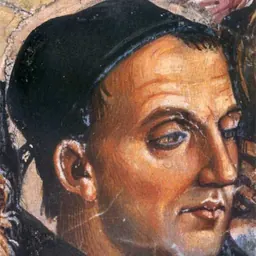
Giovanni Dominici, OP (English: John Dominic 1355 – 10 June 1419 ) was an Italian Catholic prelate and Dominican who became a cardinal. His ideas had a profound influence on the art of Fra Angelico, who entered the Dominicans through him.
Dominici originally encountered difficulties becoming a friar due to a speech impairment that his superiors believed would rule him ineligible for both profession and the priesthood. Despite this, Dominici became a noted theologian and preacher and was tireless in establishing monasteries and convents in cities such as Fiesole and Lucca.
He attempted to resign his cardinalate in 1415 during the Council of Constance after he succeeded in convincing the pope to abdicate in order to end the Western Schism. The council refused to accept his resignation, though he had resigned from the archbishopric that he held. He spent the remainder of his life as a papal legate for Pope Martin V until he died in Buda.
He had been first named as a Blessed since 1622 though he had not been recognized as such until he was beatified on 9 April 1832. He also corresponded with Chiara Gambacorti and advised her on how to restore discipline to Dominican nuns.
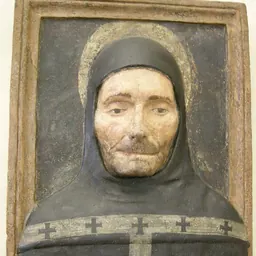
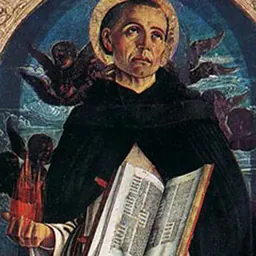
Dominici received into the order on 4 August 1405 four men which included the future Archbishop of Florence Antoninus after the latter heard him preach once. The two worked together in Fiesole. Vincent Ferrer was once preaching in Genoa when an invitation was extended for him to preach in Florence. But Ferrer said he would not since a saint (Dominici) was among their number and was preaching.
Dominici was sent as the Venetian representative to the papal conclave of 1406 in which Pope Gregory XII was elected. He soon became the counsellor and confessor for the pope who on 26 March 1408 appointed him as the Archbishop of Ragusa. In mid-1408 the pope named him as a cardinal and sent him as ambassador to the Hungarian kingdom to secure the adhesion of Sigismund to the pope. On 26 March 1408 he was sent with Giacopo del Torso to negotiate with Antipope Benedict XIII in an attempt to secure the latter's abdication though this was unsuccessful.
Dominici was present at the Council of Constance (which he convinced the pope to convoke) on 4 July 1415 when he read the resignation letter that the pope had written. Dominici had advised the pope to abdicate as the surest means of ending the Great Schism which had arisen to divide the Church. It was also at that point that he tried to resign his cardinalate to make clear to all that he had no desire to advance through his accomplishment. But the Council rejected that resignation and he remained as a cardinal. It had been before this that he tried to convince Antipope John XXIII to abdicate though that proved useless. Pope Martin V (who sometimes sought his counsel) appointed him as the papal legate to Bohemia on 19 July 1418 but he accomplished little with the followers of John Hus owing to the timid King Wenceslaus IV. But he had been present when Hus was burnt at the stake back in 1415.
On 23 July 1409 he was named as the abbot commendatario for the Santi Andrea e Saba convent while named provost commendatario for the Santa Maria dell'Isola Tremici convent. On 1 January 1411 he was appointed as a legate to both Genoa and Milan. He later was named as the abbot commendatario for the Benedictine convent of Santi Vito e Salvo on 13 January 1411.
Dominici died at Buda on 10 June 1419 from a fever and he was buried in the Saint Paul the Hermit church there. His tomb became a site of miracles and his remains were venerated until the destruction of the church during a Turkish invasion. Antoninus of Florence later wrote a memoir on Dominici.
Beatification Dominici's holiness had been renowned during his life and he was venerated soon after his death with miracles being reported at his tomb. Pope Gregory XVI beatified Dominici centuries later on 9 April 1832.
Published works Dominici was a prolific writer on spiritual subjects but he was also a graceful poet; his vernacular songs or Laudi show his tact as a poet. His Regola del governo di cura familiare, written between 1400 and 1405 is a pedagogical work which treats (in four books) of the faculties of the soul as well as the powers and senses of people. He also touched on the uses of material goods and the education of children.
His Lucula Noctis (which he addressed to the Chancellor of the Florentine Republic Coluccio Salutati) is the most important treatise of that time on the studies of the pagan authors. Dominici did not condemn classical studies outright though did express strong criticism of some humanist tendencies such as the use of rhetoric in politics and the rise of the professional politician.
There is now an Open Access revised edition of Hunt's 1940 critical edition of the Lucula provided on The Manipulus/Lucula noctis Project website.
Don’t just read it —
keep it.
Full-length biographies made to live with: read them, listen on the way to work, watch them tonight.
- E-book
- Audio
- Video
Instant download · yours to keep · every purchase keeps this site free
Important facts
People in John Dominici's life
Named in this biography and alive at the same time


Related people
Same field, nearest in time




Contemporaries
People whose lives overlapped John Dominici's

Frequently asked questions
Who was John Dominici?
Dominican friar, cardinal, writer and poet
When was John Dominici born?
John Dominici was born in 1356 in Florence.
When did John Dominici die?
John Dominici died on 10 June 1420 in Buda.
What was John Dominici's occupation?
John Dominici was a poet, catholic priest, theologian, writer, lecturer and catholic bishop.
Sources & further reading
Cite this page
APA: Biography.guide. (2026). John Dominici. https://biography.guide/john-dominici/
MLA: "John Dominici." Biography.guide, https://biography.guide/john-dominici/.
Chicago: "John Dominici." Biography.guide. https://biography.guide/john-dominici/.
Data last updated: 2026-09-20 · Spot an error? Report a correction.
Page generated 2026-09-27 05:24 UTC