
About John Denny
Born 1952. John Denny is an American baseball player.
John Allen Denny (born November 8, 1952) is an American former professional baseball right-handed pitcher who played in Major League Baseball (MLB) for the St. Louis Cardinals, Cleveland Indians, Philadelphia Phillies, and Cincinnati Reds, from to . Denny won the National League (NL) Cy Young Award, in .
Early life Denny was born on November 8, 1952, in Prescott, Arizona. His father abandoned the family when Denny was five, which led to a bitterness in Denny for many years. He attended Prescott High School, where he excelled in football and basketball, as well as baseball. He also attended Yavapai Junior College (now Yavapai College) in Prescott, where one report states he pitched on its baseball team; though it is also reported he only took classes at Yavapai.
Career
St. Louis Cardinals
Minor leagues In the 1970 amateur draft, he was selected by the Cardinals in the 29th round. In 1971, he was assigned to the Single-A St. Petersburg Cardinals of the Florida State League, where he had an 8–13 win–loss record, but a 3.04 earned run average (ERA) in 23 starting appearances. In 1972, he played for the Modesto Reds of the California League, where he was 7–5 with a 4.40 ERA, but suffered with arm and shoulder problems that put him out mid-season. In late May 1973, he pitched a no-hitter for the Travelers. Denny pitched for the Triple-A Tulsa Oilers in 1974 and went 9–8 with a 3.75 ERA. After the 1974 season, the Cardinals concluded that Denny had better command of his fastball, curveball, slider and change up than any of their other Major League or minor league pitchers.
Cardinals Denny made his major league debut on September 12, 1974. He faced two batters, giving up one base hit, with the other batter reaching base on an error. He only pitched in one other game for the Cardinals that season.
Denny began the 1975 season with the Cardinals, and after being assigned to Tulsa for a month, returned to finish the season with the Cardinals. Denny started seven games for the Cardinals from April 10 to May 12. In his first three games, Denny was 2–1 with a 1.40 ERA in 19.1 innings pitched. Over his next four starts from April 26 to May 12, he was 0–1 in only 7.2 innings pitched during those four games (not getting out of the first inning in two of those games). His ERA rose to 4.33 before being sent to Tulsa.
In 1976, Denny was healthy and had a breakout season. He led the National League in ERA at 2.52, and was the only starter on the team with an over .500 winning percentage. In between innings of a close game that season, Denny and his future Hall of Fame catcher Ted Simmons got into an argument over why Denny attempted to make a play in the field that Simmons had told him not to attempt. They were soon in a fistfight, but then returned to the field together to play the next inning.
In 1977, he was 8–8. He began the season with a 5–0 record (best in the National League) and 2.91 ERA. He was pitching a 4-hitter, having allowed only one run into the seventh inning of a May 2 game against the Cincinnati Reds, when he suffered a hamstring strain that ultimately derailed his season; later suffering a torn hamstring against the Dodgers. Denny was healthy in 1978, and improved his record to 14–11, with a 2.96 ERA. and was traded with Jerry Mumphrey from the Cardinals to the Cleveland Indians for Bobby Bonds on December 7, 1979.
During his years with the Cardinals, Hall of Fame teammate Lou Brock had taken Denny under his wing, to teach him the proper way to approach playing baseball. He had his best year with them in 1981, when he was 10–6, with a 3.15 ERA. In the final eight weeks of the 1981 season, Denny was 7–2, with a 2.31 ERA. Between August 28 and September 6 he pitched three straight shutouts.
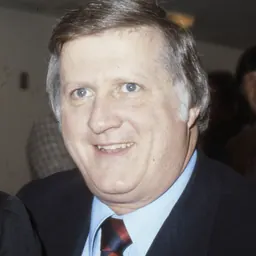
Denny was a free agent after that season, and chose to sign with Cleveland rather than the New York Yankees; receiving a three-year contract for $1.5 million. or a little less than $2 million. Denny loved the idea of playing for the Yankees, but did not believe he could play for Yankees' owner George Steinbrenner, who had a reputation of overinvolvement with the team. came out of the dugout and rushed the mound. Cleveland believed Carew triggered the ensuing brawl, rather than Denny's pitch (though the Angels believed Denny hit Ford because of Ford's superb batting during the series between the teams). Denny wound up on the ground being punched by Angels' players during a 25-minute brawl that involved a number of different fights. Only the Angels' Don Baylor was ejected, and Denny went on to pitch seven innings, in a 6–3 Cleveland win.
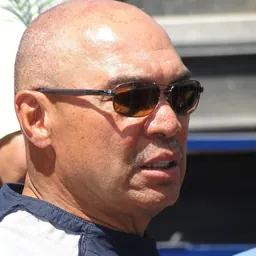
Reggie Jackson incident Denny was involved in another on-field altercation in late September 1981, this time with future Hall of Fame New York Yankees' outfielder Reggie Jackson. Early in a September 23 game, Denny threw a high and tight fastball toward Jackson, causing Jackson to hit the ground. Cleveland manager Dave Garcia did not believe the pitch was actually close to hitting Jackson. Jackson struck out in that at bat, and took a few steps toward the mound yelling at Denny as Denny left the field. In his next at bat, Jackson hit a home run against Denny. He stood at home plate for an extra moment to watch the home run before beginning to round the bases. As he was coming into home plate he tipped his helmet to the Yankees fans. After Jackson crossed home plate, there was an interchange with Denny and he charged Denny who was half-way to home plate. A fight ensued between them, which led to a 15-minute bench clearing brawl. Denny and Jackson were ejected from the game.
In 1982, Denny missed 33 consecutive days and eight starts with Cleveland because of arm problems. On September 12, 1982, he was 6–11 with a 5.01 ERA with Cleveland, when he was traded to the Philadelphia Phillies for Wil Culmer, Jerry Reed and Roy Smith.
Philadelphia Phillies At the time Denny was traded to the Phillies, they were only ½ game out of first place in the National League's East Division. Despite his difficulties in Cleveland, Denny had pitched well in his last two starts before the trade, and Phillies general manager Paul Owens saw Denny as a viable replacement for the struggling Marty Bystrom during the Phillies' pennant drive. Phillies scout Hugh Alexander gave Owens a positive review of Denny's arm. Denny started four games for the Phillies in 1982, pitching 22.1 innings, with an 0–2 record and 4.03 ERA. The Phillies finished three games behind the Cardinals in the East Division.
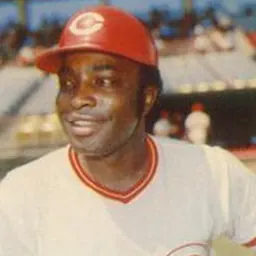
After having a long history of injuries and going on the disabled list in St. Louis and Cleveland, he had a healthy season in 1983. He attributed his success in considerable part to following the workout program of his teammate Steve Carlton, a future Hall of Fame pitcher, and using the services of Carlton's flexibility coach, Gus Hoefling. He also felt being around seasoned and successful players with a winning attitude, like the 1983 Phillies' Mike Schmidt, Pete Rose, Joe Morgan, Tony Perez and Carlton (with whom he developed a close friendship), among others, made him more successful; as did the excellent pitch calling of Phillies catchers Tim McCarver and Bob Boone. The Phillies "Wheeze Kids" team lost the 1983 World Series in five games to the Baltimore Orioles. Denny won the first game of the Series, 2–1, giving up only one run in 7.2 innings pitched. He was the losing pitcher in Game 4, giving up four runs in 5.1 innings.
Claude Osteen, who had been Denny's pitching coach for four years in St. Louis, and coached him for the 1983 Phillies, said that Denny had earned the right to start Game 1 of the World Series. He said Denny was always a skilled pitcher, but had improved both his curveball and fastball that season. Moreover, Osteen observed the significant change in Denny's attitude from the player with a "short fuse" to one "who doesn't fight the umpires, himself or the manager anymore".
Denny's injury issues returned during the last three years of his career, such as elbow and nerve problems. After starting 36 games in 1983, he started only 22 games in 1984, going 7–7 with a 2.45 ERA. In 1985, he started 33 games, going 11–14, with a 3.82 ERA.
Cincinnati Reds He was traded along with Jeff Gray from the Phillies to the Reds for Tom Hume and Gary Redus on December 11, 1985. He started 27 games for the Reds in 1986, going 11–10, with a 4.20 ERA. It was his final season.
Denny finished his 13-year injury plagued career with a 123–108 record, 3.59 ERA in 322 starts, and a career 31.1 WAR. He had 1,146 strikeouts and 778 bases on balls in 2,148.2 innings pitched. He saw his goal as a rehabilitation coach to keep the players upbeat. After retiring, he spent a year involved with building a sports camp in St. Louis for the Fellowship of Christian Athletes.
Denny move to Tucson, Arizona in 1990, and Memphis, Tennessee in 2005, where he began a business, the JAD Baseball Experience, giving private pitching lessons.
Don’t just read it —
keep it.
Full-length biographies made to live with: read them, listen on the way to work, watch them tonight.
- E-book
- Audio
- Video
Instant download · yours to keep · every purchase keeps this site free
Important facts
People in John Denny's life
Named in this biography and alive at the same time




Related people
Same field, nearest in time

Contemporaries
People whose lives overlapped John Denny's

Frequently asked questions
Who is John Denny?
American baseball player
When was John Denny born?
John Denny was born on 8 November 1952 in Prescott.
What is John Denny's occupation?
John Denny is a baseball player.
What nationality is John Denny?
John Denny is American.
Sources & further reading
Cite this page
APA: Biography.guide. (2026). John Denny. https://biography.guide/john-denny/
MLA: "John Denny." Biography.guide, https://biography.guide/john-denny/.
Chicago: "John Denny." Biography.guide. https://biography.guide/john-denny/.
Data last updated: 2026-09-25 · Spot an error? Report a correction.
Page generated 2026-09-27 05:10 UTC