
About John Deakin
Lived 1912 – 1972 (aged 60). John Deakin was a British photographer.
John Deakin (8 May 1912 – 25 May 1972) was an English photographer, best known for his work centred on members of Francis Bacon's Soho inner circle. Bacon based a number of famous paintings on photographs he commissioned from Deakin, including Portrait of Henrietta Moraes, and Three Studies of Lucian Freud.
Deakin also spent many years in Paris and Rome, photographing street scenes, but his only stable period of employment as a photographer were two stints of working for Vogue between 1947 and 1954. Deakin initially aspired to be a painter, and as his photographic career waned, Deakin devoted his time to painting in the 1960s, questioning the validity and status of photography as an art form. He showed little interest in curating and publicising his own work, so many of his photographs were lost, destroyed or damaged over time.
A chronic alcoholic, Deakin died in obscurity and poverty, but since the 1980s his reputation has grown through monographs, exhibitions and catalogues.
Life and career
Early life and work for Vogue One of Deakin's mid-1960s portraits of George Dyer. The picture contains pathos for the doomed Dyer, and was retouched and spattered with paint by Bacon.
Deakin was born in New Ferry on the Wirral, son of John Henry Deakin, a factory checker and machine minder for Lever Brothers at nearby Port Sunlight, and Elsie Mary, née Bond. He attended Calday Grange Grammar School. He left school at sixteen, and travelled around Ireland and Spain. He returned to London in the early 1930s where he met and started dating Arthur Jeffress. They spent much of the 1930s together travelling between London, Paris and Venice. During this time Deakin started as a painter but switched to photography. While in Paris in 1939 fashion illustrator Christian Bérard introduced Deakin to Michel de Brunhoff, editor of French Vogue. From 1940 until 1945, Deakin served in the British Army Film Unit as a photographer, where he photographed the Second Battle of El Alamein. He excelled at portraits of leading figures in literature, theatre and film. His subjects included Dylan Thomas, John Huston, Luchino Visconti and many other artistic celebrities. Deakin recognised this work was his true vocation when he wrote: Being fatally drawn to the human race, what I want to do when I take a photograph is make a revelation about it. So my sitters turn into my victims. But I would like to add that it is only those with a daemon, however small and of whatever kind, whose faces lend themselves to being victimised at all. And the only complaints I have ever had from my victims have been from the bad ones, the vainies, the meanies.
Notorious for "his blistering personality, bad behaviour and total disregard for others", Deakin was fired from Vogue for a second time in 1954, on account of his drinking and "an accumulation of minor incidents involving lateness, a series of crashing tripods, and inevitable arguments with fashion editors." Vogue editor Withers ensured he was paid off handsomely.
Archer's bookshop, also in 1956, exhibited a second show, John Deakin's Rome. These were the only photography exhibitions Deakin achieved in his lifetime, and they attracted some critical acclaim. In The Times, Colin MacInnes reviewed the Paris photos: "Mr Deakin sees one side of Alice's looking glass and the infinite mysteries that lie behind it. Art critic David Sylvester wrote: "The pictures of Paris by John Deakin present a vision that is profoundly personal and profoundly strange, a vision which confounds and undermines all notions of where inanimate ends and animate takes over."
Deakin, nevertheless, continued to photograph many of the major figures in the Soho art scene during the 1950s and 1960s, including Francis Bacon, Lucian Freud, Frank Auerbach and Eduardo Paolozzi. Though the two had a difficult personal relationship, Bacon held Deakin's work in high regard. After Deakin's death, Bacon described him as "the best portrait photographer since Nadar and Julia Margaret Cameron." Because Bacon "famously preferred photographic reference over live models for his painting",
In February 2012, Bacon's 1963 Portrait of Henrietta Moraes, based on Deakin's photo, sold for £21.3 million. Deakin's photo of Lucian Freud supplied one of the sources for Bacon's 1969 painting Three Studies of Lucian Freud. making it one of the most expensive paintings ever sold. Deakin's photos of Freud also inspired a series of paintings by Jasper Johns, Jasper Johns: Regrets, which were exhibited at the Museum of Modern Art in 2014.
Robin Muir has summed up his legacy: "His portraits still look starkly modern, half a century on. His street photographs are haunting documents too, a singular vision of three great cities. After two major retrospectives in London institutions, the Victoria & Albert Museum (1984) and the National Portrait Gallery (1996), and an entry in the Oxford Dictionary of National Biography, his place in the pantheon of twentieth century British photographers might be secured." Bruce Bernard wrote, at Deakin's first retrospective, that he was proud "to have had a part in doing our dear, witty and wayward friend some of the justice he so strenuously denied himself." Deakin was played by actor Karl Johnson in John Maybury's biographical film about Francis Bacon, Love Is the Devil: Study for a Portrait of Francis Bacon.
Don’t just read it —
keep it.
Full-length biographies made to live with: read them, listen on the way to work, watch them tonight.
- E-book
- Audio
- Video
Instant download · yours to keep · every purchase keeps this site free
Important facts
People in John Deakin's life
Named in this biography and alive at the same time


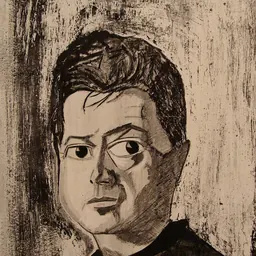



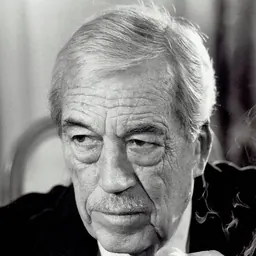
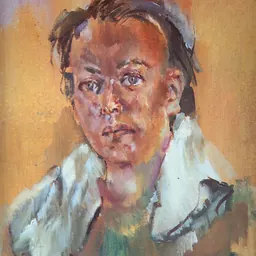
Related people
Same field, nearest in time



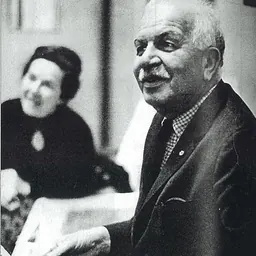
Contemporaries
People whose lives overlapped John Deakin's





Frequently asked questions
Who was John Deakin?
English photographer (1912–1972)
When was John Deakin born?
John Deakin was born on 8 May 1912 in Bebington.
When did John Deakin die?
John Deakin died on 25 May 1972 in Brighton.
What was John Deakin's occupation?
John Deakin was a photographer.
What nationality was John Deakin?
John Deakin was British.
Sources & further reading
Cite this page
APA: Biography.guide. (2026). John Deakin. https://biography.guide/john-deakin-photographer/
MLA: "John Deakin." Biography.guide, https://biography.guide/john-deakin-photographer/.
Chicago: "John Deakin." Biography.guide. https://biography.guide/john-deakin-photographer/.
Data last updated: 2026-09-20 · Spot an error? Report a correction.
Page generated 2026-09-27 05:15 UTC