
John Dartnell
Commandant of the Natal Mounted Police
About John Dartnell
Lived 1838 – 1913 (aged 74–75).
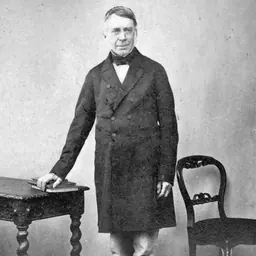
Major-General Sir John George Dartnell KCB, CMG (2 April 1838 – 7 August 1913) was a British soldier and police officer who was the founder and first Commandant of the Natal Mounted Police. A veteran of the Indian Mutiny, he saw action in every campaign in South Africa from 1879 including the Zulu War and the First and Second Boer Wars.
Early life 'Hell Fire Jack' Dartnell was born in Ontario in Canada in 1838, one of seven children of Anna Maria née Bennett (1813–1894) and George Russell Dartnell (1800–1878), a Limerick-born Staff Surgeon in the British Army. By 1851 the family were living in Rochester in Kent.
Indian Mutiny 1857–59
Dartnell joined the 86th (Royal County Down) Regiment of Foot as an Ensign in 1855 and was promoted to Lieutenant in 1856. During the Indian Mutiny (1857–59) he served with his regiment during the storming of Chanderi in March 1858 and at the storming of Jhansi Fort on 3 April 1858 when he was disabled by wounds received while climbing the ladders to scale the fort's wall. The first man to ascend the ladder, Dartnell was set upon by the mutineers who slashed him with their sabres and shot him. He was recommended for the Victoria Cross but was not awarded it. For his gallantry he was promoted to company commander and was invalided to Britain to recover from his wounds. He was promoted to Captain in 1859 and transferred to the 16th (Bedfordshire) Regiment of Foot.
Move to Natal In 1865 in India he married Clara Alicia née Steer (1843–1931) and with her had six children: Alice Gertrude Dartnell (1867–1928); Georgina Jane Dartnell (1871–1940); Isabel Mary Dartnell (1872–1957); Lilian Clara Dartnell (1874–1876); George Bruce Dartnell (1876–1936); and Helen Seymore Dartnell (1883–1885). He retired from the Army in 1869 by sale of his commission
Natal Mounted Police When in 1874 the Governor of Natal decided to raise a mounted police force following a rebellion by Chief Langalibalele Dartnell decided to apply for the position, despite having absolutely no experience of police work. However, as an experienced army officer he was offered and accepted the position of Commandant. Promoted to Major and wanting to learn how to organise and lead a police force, Dartnell went to Cape Colony to study the Frontier Armed and Mounted Police. On his return to Natal he set about raising the Natal Mounted Police. Originally he intended to recruit men from Great Britain but he was ordered to recruit local men, with the first enrolled being trooper Edward Babington of Londonderry in 1874. Dartnell would later claim his recruits were the:
...flotsam and jetsam of the colony, and a very rough lot they proved to be, being principally old soldiers and sailors, transport riders, and social failures from home, etc. They were, however, a very fine, hardy lot of men, ready to go anywhere and do anything, and very willing and cheerful if a little troublesome in town; but in the country, away from temptation, they were excellent men who grumbled occasionally, of course, but were more inclined to laugh at and make like of discomfort and hardship. and at dawn he led a large force consisting of the 2nd Battalion the 24th Regiment of Foot, the Mounted Infantry and four artillery guns. When Chelmsford reached Dartnell he found the Zulus had gone and immediately began a search of the surrounding hills. However, the Zulus had simply bypassed the British force and were heading for Isandlwana.
The second detachment of 34 men of the Natal Mounted Police Dartnell had left behind fought in the Battle of Isandlwana on 22 January 1879. Of this second detachment 25 were killed in the battle with 21 killed fighting alongside 19 Natal Carbineers in a 'last stand' defending Lieutenant-Colonel Anthony Durnford. Three men of the NMP escaped from Isandlwana and made their way to Rorke's Drift where they fought in the Battle of Rorke's Drift, where one of them, Sidney Hunter, was killed in action. The first detachment of the NMP under Dartnell returned to Isandlwana on the evening of the battle where they spent the night among the ruins of the camp and the bodies of their colleagues before accompanying Lord Chelmsford's relief column on its advance to Rorke's Drift early the next morning.
Rebellions Under Dartnell the Natal Mounted Police served in the Basuto Gun War (1880–81), where they defended the passes of the Drakensberg against attack from the Basuto, and the Transvaal Rebellion (also known as the First Anglo-Boer War) (1880–81) when the NMP was used to form a mounted military force on the border with the Transvaal. When after these Rebellions normal policing duties were resumed men of the NMP provided an escort for the Empress Eugénie in 1880 when she came to Natal to see where her son, Napoléon the Prince Imperial, had been killed the previous year during the Zulu War.
Dartnell was in command of the Volunteer Forces in Natal and was promoted to Colonel in 1885. He was appointed a member of the Defence Committee in 1887. He served under General Sir Redvers Buller VC in 1900, and commanded the Imperial Light Horse Brigade in Orange River Colony from August 1901 and which fought in various actions.
In his official despatches of April 1901 Lord Roberts VC, commanding HM Forces in South Africa recorded of Dartnell: Col. Dartnell, as G.O.C. Natal Colonists, has maintained the best traditions of the regular forces. His name stands very high in the estimation of the colonists, and he possesses the greatest influence over the natives. His advice was of much assistance in the earliest actions of the war, afterwards during the siege of Ladysmith, and finally in the general advance through the Biggarsberg to Laing's Nek, when Natal was cleared of the enemies of the Queen. Col. Dartnell was awarded the "K.C.B.". Aged 63, Brigadier-General Dartnell resigned command of the Imperial Light Horse Brigade on 23 of December 1901. His QSA Medal had bars for Transvaal, Talana, Defence of Ladysmith, and Laing's Nek. In his will he left an estate valued at £1,113 14s 1d.
Medal entitlement Major General John Dartnell was entitled to the following medals:
Don’t just read it —
keep it.
Full-length biographies made to live with: read them, listen on the way to work, watch them tonight.
- E-book
- Audio
- Video
Instant download · yours to keep · every purchase keeps this site free
Important facts
People in John Dartnell's life
Named in this biography and alive at the same time

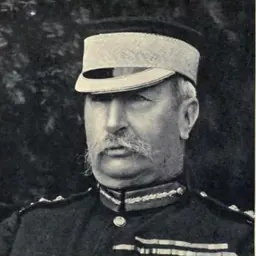

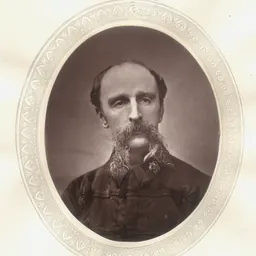


Contemporaries
People whose lives overlapped John Dartnell's

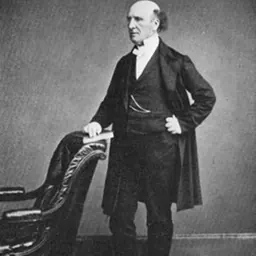
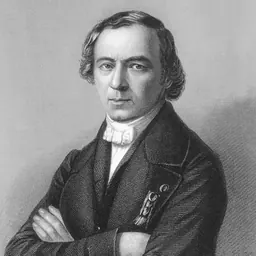

Frequently asked questions
Who was John Dartnell?
Commandant of the Natal Mounted Police
When was John Dartnell born?
John Dartnell was born in 1838.
When did John Dartnell die?
John Dartnell died in 1913.
Sources & further reading
Cite this page
APA: Biography.guide. (2026). John Dartnell. https://biography.guide/john-dartnell/
MLA: "John Dartnell." Biography.guide, https://biography.guide/john-dartnell/.
Chicago: "John Dartnell." Biography.guide. https://biography.guide/john-dartnell/.
Data last updated: 2026-09-20 · Spot an error? Report a correction.
Page generated 2026-09-27 05:32 UTC