John Crewe, 2nd Baron Crewe
British Army general, art collector/dealer
About John Crewe, 2nd Baron Crewe
Lived 1772 – 1835 (aged 62–63). John Crewe, 2nd Baron Crewe was a British military personnel and art collector.
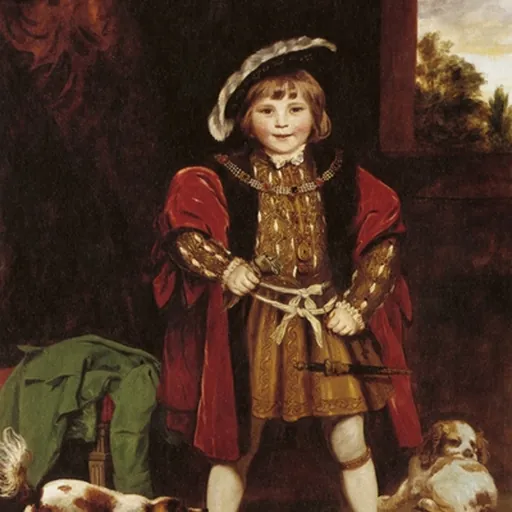
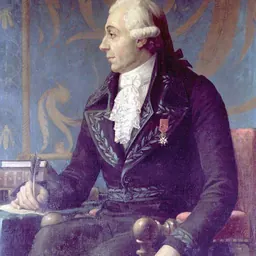
John Crewe, 2nd Baron Crewe (bap. 1772 – 4 December 1835) was an English soldier and a peer. He formed part of the first British embassy to China, and rose to the rank of General. Becoming estranged from the majority of his family, he spent much of his life in self-imposed exile on the Continent. He is perhaps best known for a painting of him as a child by Sir Joshua Reynolds.
Early life Crewe was the son of John Crewe (1742–1829) of Crewe Hall, a wealthy Whig politician who was created the first Baron Crewe in 1806. His mother, Frances Anne Crewe, the daughter of Fulke Greville, was a political hostess known for her great beauty and wit. His younger sister, Elizabeth Emma (1780–1850), married Foster Cunliffe-Offley; two other siblings, Richard and Frances, did not survive infancy. The portrait is considered among the artist's finest portrayals of children, and has been described as "one of Reynolds' freshest attempts at comedy painting". Horace Walpole commented: "Is not there humour and satire in Sir Joshua's reducing Holbein's swaggering and colossal haughtiness of Henry VIII to the boyish jollity of Master Crewe?"
Frances Burney described him in the early 1790s as "a silent and reserved, but, I think, sensible young man". Local historian Ray Gladden describes him at the time of his entrance into the army as "high spirited", accruing gambling debts that his father had to pay off by selling land. One of his daughters later remembered that he claimed his total debts were never above £80,000, then a huge sum. Crewe rose to the rank of Major-General in 1808, Lieutenant-General in 1813 and full General in 1830, before retiring in 1831. He lost the sight in one eye during active service.
Marriage and children
On 5 May 1807, he married Henrietta Maria Anna Walker-Hungerford, daughter of George Walker and Henrietta Maria Keate Walker. She was the heiress to a substantial fortune derived from her father's family's Barbados sugar plantations. She was a first cousin of James Smithson, the founding benefactor of the Smithsonian Institution (her mother was Smithson's aunt). The couple had four children: three daughters, Henrietta Mary (1808–79), Maria Hungerford (who died in infancy) and Annabella Hungerford (1814–1874), and a son, Hungerford (1812–94).
According to Gladden, the marriage was not a happy one. On 15 September 1813, in Byford, Herefordshire, an illegitimate son was born to Crewe. Discreet arrangements were made with a childless local couple, John and Ann Griffiths, to claim that this child, named John (later to become Rev. John Griffiths), was their biological son. This relationship was well known and acknowledged by both family (including his half-sister Annabella Hungerford in particular) and local villages alike. In recognition of this relationship John's first issue male descendants, to this day, have the names Houghton, Monckton and/or Milnes included in their names. Also, Gladden states that Crewe contracted a second bigamous marriage in 1820, which was carried out at the chapel at the family seat of Crewe Hall and officiated over by a billiard-maker. This second marriage resulted in an illegitimate daughter.
Life abroad Crewe lived abroad for many years while he was in the army and after his retirement.
On his father's death in 1829, he became the second Baron Crewe. Small bequests were left to John Crewe's daughters. His older daughter, Henrietta, moved to Belgium to live with her father, and subsequently converted to Roman Catholicism. She returned to England after her father's death and never married, maintaining an establishment for many years in the grounds of Prior Park, Bath. Hungerford Crewe inherited Crewe Hall and the Crewe family estates two years later.
Don’t just read it —
keep it.
Full-length biographies made to live with: read them, listen on the way to work, watch them tonight.
- E-book
- Audio
- Video
Instant download · yours to keep · every purchase keeps this site free
Important facts
People in John Crewe, 2nd Baron Crewe's life
Named in this biography and alive at the same time



Related people
Same field, nearest in time


Contemporaries
People whose lives overlapped John Crewe, 2nd Baron Crewe's



Frequently asked questions
Who was John Crewe, 2nd Baron Crewe?
British Army general, art collector/dealer (1772-1835)
When was John Crewe, 2nd Baron Crewe born?
John Crewe, 2nd Baron Crewe was born in 1772.
When did John Crewe, 2nd Baron Crewe die?
John Crewe, 2nd Baron Crewe died on 4 December 1835.
What was John Crewe, 2nd Baron Crewe's occupation?
John Crewe, 2nd Baron Crewe was a military personnel and art collector.
What nationality was John Crewe, 2nd Baron Crewe?
John Crewe, 2nd Baron Crewe was British.
Sources & further reading
· Wikipedia: John Crewe, 2nd Baron Crewe
· DBpedia: John Crewe, 2nd Baron Crewe
Cite this page
APA: Biography.guide. (2026). John Crewe, 2nd Baron Crewe. https://biography.guide/john-crewe-2nd-baron-crewe/
MLA: "John Crewe, 2nd Baron Crewe." Biography.guide, https://biography.guide/john-crewe-2nd-baron-crewe/.
Chicago: "John Crewe, 2nd Baron Crewe." Biography.guide. https://biography.guide/john-crewe-2nd-baron-crewe/.
Data last updated: 2026-09-20 · Spot an error? Report a correction.
Page generated 2026-09-27 05:09 UTC