
About John Cooke Bourne
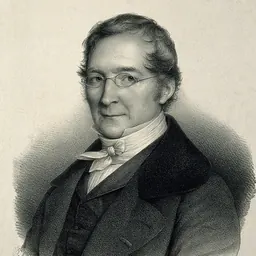
Lived 1814 – 1896 (aged 81). John Cooke Bourne was a British lithographer, photographer and draftsperson.
Sonning Cutting, close to the scene of an accident in 1842 caused by a slip in the bank. Workmen are repairing bank-slips on the southern side of the cutting at left. Print by JC Bourne published in 1846. John Cooke Bourne (1 September 1814 – February 1896) was a British artist, engraver and photographer, best known for his lithographs showing the construction of the London and Birmingham Railway and the Great Western Railway.
His set of prints were each published as separate book, and became classic representations of the construction of the early railways. Prints were often hand coloured for a vivid picture of events.
Biography John Cooke Bourne was born in London, where his father worked as hat-maker in Covent Garden. and became befriended with his son Edward William Cooke, whose uncle, William Bernard Cooke (1778–1855), was also a line engraver of note. After general education, Bourne became a pupil of the landscape engraver John Pye, who had specialised in illustrations for popular annuals and pocket-books. Bourne was further influenced by the work of Thomas Girtin and John Sell Cotman.
When in the early 1830s near his home the construction started for the London and Birmingham Railway, the first main-line railway to enter London, this became Bourne's major source of inspiration. In 1836 Bourne started making drawings of the construction sides as subjects of professional study. These drawings were published in 1838/39 in a book in four volumes, with an accompanying text by John Britton. Late 1840 he lithographed some drawings for Robert Hay's publication, entitled Illustration of Cairo. Bourne continued to draw railway scenes, and in the 1840s became associate with Charles Cheffins In 1846
At the end of the 1840s, Bourne started working for Charles Blacker Vignoles, who was employed to construct the Nicholas Chain Bridge in Kiev over the Dnieper River. He travelled to Russia, drew and later photographed its construction until its completion in 1853. In that year, he made some pictures for the new 4th edition of Bennet Woodcroft's A Sketch of the Origin and Progress of Steam Navigation.
Bourne kept working in Russia as artist in residence for another decade. In the year 1852 he travelled together with Roger Fenton to Moscow and St Petersburg, which resulted in his painting of the Moscow Kremlin (see image). He stayed in Russia in total for a period of twelve years as illustrator and photographer, before returning to England.
Bourne exhibited his work in the Royal Photographic Society in 1854, the Royal Academy of Arts in 1863 and the Royal Society of British Artists in 1865. For this work Bourne had translated his original watercolours into lithographs. which had appeared in multiple volumes since 1807. Britton (1838; p. 14) wrote about Bourne's work: It represent, not only some of the most striking scenery upon the line, but the peculiar manual and mechanical operations connected with the execution of the principal works. Amongst them the process of tunnelling, the formation of embankments and cuttings, the gear and machinery used in sinking shafts, and the subterraneous works of the stationary engine-house at Camden Town, are at once remarkable and interesting.
About the origin of this work Britton in his 1849 autobiography would recalled, that "some beautiful drawings of this Railway were made in the year 1838, by Mr. John C. Bourne, as studies from nature. They were submitted to Mr. Britton, who suggested the expediency of their being published. The great cuttings, embankments, and tunnels, on the London and Birmingham Railway, were, at the time referred to, matters of great novelty and absorbing interest to the inhabitants of the metropolis; and it appeared therefore certain that the beauty of Mr. Bourne's drawings, and the popularity of the subject, would ensure success in their publication."
Britton (1849) further stated about the used techniques: "On considering the best mode of multiplying the drawings, that of tinted lithography was adopted, as best calculated to preserve the spirit and character of the originals, without reducing them in size. Although Mr. Bourne had not previously made any drawings on stone, he was eminently successful even in his first efforts; and the whole of the series (thirty-seven in number) were thus executed by himself. The prints were published in four periodical parts, at one guinea each (super-royal folio). On the completion of the work, a general Historical and Descriptive Account of the Railway, occupying twenty-six printed pages, was written by Mr. Britton."
The lithographs which will be contained in the whole work are the following: The Herapath's Railway Journal, Vol. 6 (1839) further explains: "We have received the second part of this beautiful work, and are happy to perceive that it exhibits, if possible, an improvement upon the first. The subjects are equally well-chosen, and delineated with the same fidelity and exquisite effect. Mr. Bourne seems to have adopted the method of all others best calculated for the illustration of his subject, and his drawings may fearlessly challenge a comparison with those of the first landscape painters of the day. The Watford embankment, the viaduct over the Colne, and that at Wolverton, and the two interior views of the Kilsby tunnel (which, with a beautiful map of the line, and four other drawings, constitute the present number), will fully bear out our remarks. The views in the Kilsby tunnel present a most striking and singular effect, which could not have been produced by any other mode of execution, so well as by the new style of lithography. - The drawing of the excavation near Park-street, with its myriads of workmen and implements, is, we think, as excellent an illustration of the vastness of this great commercial speculation, as can be conceived, nor is the scene at all deficient in pictorial effect. Upon the whole, this work seems likely to prove a worthy illustration of the great undertaking to which it is devoted."
1840s review
An 1840 review in The Gentleman's Magazine describes that the volume contains "a series of thirty-seven views of portions of the line of the Birmingham Railway, from the entrance in Euston Grove to its termination. They are executed in lithography, and tinted; and it is but justice to say, that they do great credit to the pencil of the artist. There is perhaps, no object less picturesque, or to all appearance, more incapable of producing effect, than the dull strait level of a rail-road; but in the hands of Mr. Bourne, the subject seems to have lost much of its untractable character, and by the skilful use of accessories, has turned out to be far more agreeable than at first sight it promised to have been." The various stages of the undertaking are represented from the excavation and embankment, to the complete work. In some of the early views, the scene is varied by the bustle and life displayed by the hundreds of workmen engaged in their different avocations.
Another of his famous prints shows a large landslip on the London and Birmingham Railway just north of Wolverton railway works, which occurred during the construction of the Wolverton viaduct over the River Ouse.
History of the Great Western Railway, 1846
In 1846, Bourne published his second book with a series of drawings of the Great Western Railway that linked London with the south-west and west of England and most of Wales. The full title of this work, as advertised in a volume of the 1846 Appleton's Literary Bulletin, was: The History and Description of the Great Western Railway; including its Geology and the Antiquities of the District through which it passes, accompanied by a Plan and Section of the Railway, a Geological Map, and by numerous Views of its principal Viaducts, Tunnels, Stations, and of the Scenery and Antiquities in its Vicinity, from Drawings taken expressly for this work, and executed in lithography by John C. Bourne. Folio, pp. 76, 34 plates.
The idea for this work came from the publisher and was due to the popularity of this subject. The style of the drawings were significantly different from his 1838 work on the London and Birmingham Railway. It was more impressionistic and composed in "a far more painterly way." Freeman & Aldcroft (1991) stipulated, that in this volume "the emphasis on engineering feats is reduced (presumably because the line was by then some years old), and the focus shifts more to views from the carriage window and the facilities provided by stations: the wonders of construction have given way to the pleasures and conveniences of railway travel."
The accompanied text was written by the engineer George Thomas Clark, and in those days was discussed in multiple sources The volume of Bourne's work was reproduced in 1969.
1846 review An 1846 review in The Gentleman's Magazine on the History of the Great Western Railway starts explaining in general, that "he history and illustration of the great railways of the present day is a fertile theme, and one which cannot fail to excite interest, not merely amongst the individuals immediately connected with them, but with the public generally, and men of science and philosophers particularly. What were only a few years back matters of speculation and mystery are now familiarly recognized by the great mass of the reading public. In the Great Western Line many railway novelties and improvements have been effected, at once astonishing and confusing those who predicted their utter failure. It cannot but be deeply interesting to trace the origin, Uic progress, and effects of this stupendous undertaking, now that it has been for sonic years in successful operation."
Specific about the work the review states that: This volume furnishes that information, with much other interesting; matter of a collateral nature. Mr. Bourne's lithographic drawings are already favourably known, and it is sufficient to say that he has displayed the same spirit, taste, and accuracy of delineation in this work as in his former subjects. The present views embrace thirty-six different points upon the Great Western, from the Paddington Station and the Hanwell Viaduct, to the Slough and Swindon Stations; and particularly the Great Box Tunnel, also the interesting scenery and works in the vicinity of Bath and Bristol. There are also fourteen architectural drawings as an Appendix, being views and details of the most remarkable ancient churches upon the line of the railway, their fonts, doorways, sepulchral effigies, &c. Bourne made the following sketch, which was presented to the Tsar in 1847. The construction of the bridge started in 1848 and was completed in 1855. Bourne made drawings and later weekly photographs of every stage of its construction.
The dramatic engineering works for these main lines were, as with canals, largely dependent on hand labour aided by pick and wheelbarrow. Their scale, and the human effort in creating them. is wonderfully conveyed in the drawings of John Cook Bourne, recording Camden Bank and Tring Cutting on the London & Birmingham Railway (Bourne, 1839) and Maidenhead Bridge and Box Tunnel on the Great Western main line from Paddington to Bristol (Bourne, 1846).
More in general Russell (2001) summarizes: Bourne's work shows the line and associated structures under construction and provides an invaluable record of early-Victorian railway engineering. From his prints we obtain a visual impression of the magnitude of the project and of the disruption to town and countryside that it caused. It is fascinating to see the vast number of men - the navvies - employed in the building of the retaining wall at Camden Town and to appreciate what was involved in a great undertaking such as excavating the cutting at Tring. While contemporary painters liked to populate their pictures, in the words of Francis Klingender, 'with noble, unhurried peasants, pursuing their simple tasks in idyllic surroundings', the only peasants that Bourne includes are running away from the noise and smoke of the rock-blasting at Linslade. In his Art and the Industrial Revolution, Klingender (1968) had enthused added: "Bourne's Great Western pictures echo the sweep and swagger of Isambard Kingdom Brunel's great broad-gauge railway..."
In his own days, however, Bourne's work had little market value, because "the art patrons of the day wished for anything rather than to be reminded of the social and technological revolution going on all round them." Also the exclusive "pictures like those of J. C. Bourne were understandably seen by a very limited stratum of society, whereas Dickens described what met the eyes of all classes..."
Lithography The early work of Bourne has been identified as one of the first excellent examples of the application of lithography, which was invented late 18th century. A chapter on the history of lithography described that after an initiation period early 19th century, commercial exploration of lithography started since 1818: Since its inception, the use of lithography has been primarily commercial—for maps, music, books, picture reproduction and jobbing printing. Naturalists recorded species: the Frenchman Charles-Alexandre Lesueur (1778–1846) made some of America's earliest lithographs in 1821–2 when he depicted fish in the "Journal of the Academy of Natural Sciences"; Edward Lear's plates for an important study of parrots date from a decade later. Topography dominated during the 1820s, when newly explored lands and the European ‘Grand Tour’ were recorded. Baron Taylor's "Voyages pittoresques et romantiques dans l’ancienne France" (Paris, 1820–78), in some 20 volumes, was the most ambitious project. J. D. Harding, who produced several lithographic drawing manuals, pioneered may of Hullmandel's discoveries, notably lithotint in "The Park and the Forest" (London, 1841). John Cooke Bourne brought poetry to his lithographic record of Britain's railways. Intaglio dominated art reproduction, but some French artists lithographed their own paintings or had them professionally reproduced. The process was ideal for facsimiles of drawings...
Wakefield (1973, p. 37) more specifically adds, that "by the end of the 1830s it was in common use, being employed in some very attractive books like John Britton's Drawings of the London and Birmingham Railway, 1839, with illustrations by John Cooke Bourne. It depends for its effect upon the antipathy between grease and water: a greasy image on a surface of smooth limestone is first moistened and then inked; the image repels the water but accepts the ink, while the stone accepts the water and consequently repels the ink. The image can then be printed on paper by passing stone and paper through a scraper press, which gives a picture in black on a white background. By 1837 it was becoming common practice to add the impression of another stone, printed in a straw colour to give a tinted background, and this produced what are known as tinted lithographs. In England they were developed by C.J. Hullmandel, who was the most important lithographer working in England in the earlier part of the century."
Photography In 1855 Bourne, with home address Holmes Terrace, Kentish Town in the County of Middlesex, was granted a patent for a new camera design, This design "allowed the lens to move in a curved slot the radius of which was the same as the focal length of the lens."
Publications John C. Bourne and John Britton. Drawings of the London and Birmingham Railway, 1839. Robert Hay, John C. Bourne. Illustration of Cairo. By R. H. Drawn on Stone by J. C. Bourne, 1840 John C. Bourne. History and Description of the Great Western Railway, 1846.
About John C. Bourne Edward Pett Thompson, Life in Russia, Smith, Elder and Co, 1848 Francis D. Klingender, Art and the Industrial Revolution, Adams & Mackay, 1968 Hannavy, John, "John Cooke Bourne, Charles Blacker Vignoles and the Dnieper Suspension Bridge", History of Photography, vol. 28, (2004) Winter. pp. 334–347
Don’t just read it —
keep it.
Full-length biographies made to live with: read them, listen on the way to work, watch them tonight.
- E-book
- Audio
- Video
Instant download · yours to keep · every purchase keeps this site free
Important facts
People in John Cooke Bourne's life
Named in this biography and alive at the same time


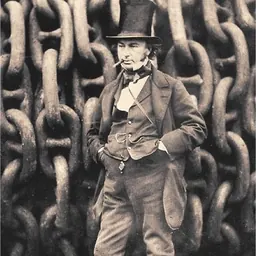

Related people
Same field, nearest in time


Contemporaries
People whose lives overlapped John Cooke Bourne's



Frequently asked questions
Who was John Cooke Bourne?
British engraver (1814–1896)
When was John Cooke Bourne born?
John Cooke Bourne was born on 1 September 1814 in London.
When did John Cooke Bourne die?
John Cooke Bourne died on 1 February 1896 in Brentford.
What was John Cooke Bourne's occupation?
John Cooke Bourne was a lithographer, photographer and draftsperson.
What nationality was John Cooke Bourne?
John Cooke Bourne was British.
Sources & further reading
· Wikipedia: John Cooke Bourne
Cite this page
APA: Biography.guide. (2026). John Cooke Bourne. https://biography.guide/john-cooke-bourne/
MLA: "John Cooke Bourne." Biography.guide, https://biography.guide/john-cooke-bourne/.
Chicago: "John Cooke Bourne." Biography.guide. https://biography.guide/john-cooke-bourne/.
Data last updated: 2026-09-26 · Spot an error? Report a correction.
Page generated 2026-09-27 05:15 UTC