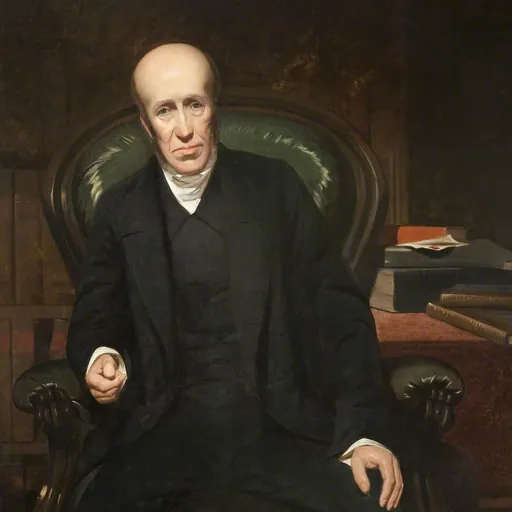
About John Clay
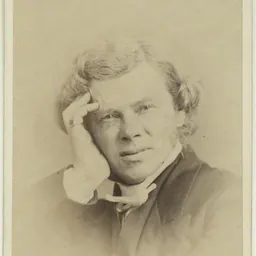
Lived 1796 – 1858 (aged 61–62). John Clay was a British cleric and prison chaplain.
John Clay (1796–1858) was an English cleric and prison chaplain. His reporting on inmates of the prison at Preston, Lancashire made him a national figure.
Early life John Clay was born in Liverpool on 10 May 1796, the fifth son of Thomas Clay, a ship and anchor smith who died in 1821, and his wife Mary, daughter of Ralph Lowe of Williamson Square, Liverpool, tanner. His father was in the electoral list of 1806 as an ironmonger, resident in Moor Street. His sister Mary married Anthony Swainson, brother of Charles Swainson of Preston, in 1811, and her sister Jane then married Charles Inman in 1817.
Clay received a commercial education and his son's memoir states that he attended just one school, with Mr Wylie. This was the Roscoe Street "commercial and classical academy" run by the minister David Stewart Wylie on the corner of Leece Street, where his "rudiments of Latin" mentioned in the memoir could have been obtained. He had training on bookkeeping. Clay then entered a merchant's office. The failure of his master left him at the age of 21 without employment.
After his father's death in 1821, Clay was offered a position as assistant chaplain at the Preston House of Correction. On 22 September 1822 Clay was ordained a priest, and soon after was entered as a prospective "ten-years man" at Emmanuel College, Cambridge. He kept the three terms required in 1834–35, when he took his Bachelor of Divinity degree. Under the Gaols Act 1823, prisons were permitted to employ a full-time chaplain. Clay became chaplain of the Preston gaol that year and held the post for 36 years. He worked for the reformation and reclamation of prisoners and advocated for the separate system and silence. He spent time with inmates and communicated with their friends. In Clay's early years the treadmill was introduced, which he concluded was useless. He clashed with Liddell, and for about two years there was a stand-off. Liddell in the end left, after he was criticised in public for using a scold's bridle. He may have lost the magistrates' confidence by leniency to poachers.
Under Clay's influence, the Lancashire magistrates permitted the introduction of the separate system at Preston and Kirkdale Gaol, Liverpool, from 1847. Architectural constraints limited the extent of the changes. On the spectrum of prison philanthropists, Clay's support for the separate system (if modified) placed him with the severe, evangelical group including the prison inspector William Crawford (1788–1847), the Rev. John Field of Reading Gaol, the Rev. George Heaton of Gloucester County Jail, and Whitworth Russell of Millbank Penitentiary, rather than the more moderate Thomas Fowell Buxton and Elizabeth Fry.
Clay was a figure of the Preston strike of 1853–1854. His opinion of the general behaviour of the strikers was high, as expressed to Henry Ashworth; on the other hand he considered that the months of idleness had had a bad effect on the morals of the young women. In a letter of January 1854 to Lord Stanley he reasoned from pawnshop evidence that "reading is becoming necessary to the working-man." He backed the vicar of Preston, John Owen Parr, in suggesting the operatives should compromise with the Preston Masters' Association. His estimates of the numbers of strikers (11,800 female, with more adults than adolescents, 6,200 male with two-thirds adults, few children) are considered credible.
Lord Harrowby, as Chancellor of the Duchy of Lancaster, offered Clay, when he was in financial difficulty, the rectory of Castleford. With conscientious ideas about keeping curates there, he declined the preferment.
Penologist and criminologist Clay has also been classed, with Joseph Kingsmill of Pentonville prison, among prison chaplains who "established a body of empirical criminological knowledge". From 1824 Clay began issuing annual reports, to the local magistrates. The details of prison management in time yielded an octavo volume and made him an authority on criminal reform.
Clay published On the Effect of Good or Bad Times on Committals to Prison in 1857. The topic is one on which Clay contributed to the British Association in 1854. His thesis, read in the terms of correlation of the business cycle and sectors of criminality, is concerned with countercyclical variables. In that formulation, Vic Gatrell and Tom Hadden found some support for it, for Lancashire at that period, with crime against the person and crime against property. His overall theory of criminality was multi-factorial, and very largely discounted poverty as a factor. Intemperance in alcohol drinking was seen as attributable to increased wages, and a contributory factor. Thomas Hodgskin wrote articles against Clay's views linking drink and criminality in The Economist, in 1855–6.
Works Clay was the author of: A Plain Address to Candidates for Confirmation, 1866.
Family Clay married, 11 March 1828, Henrietta, third daughter of Henry Fielding of Myerscough and sister of Henry Borron Fielding; she died at Preston on 28 June 1858. Their children included:
Alfred Borron Clay (1831–1868), second son, artist. Walter Lowe Clay, (c.1833–1875), cleric. He published Memoirs of the Rev. John Clay (1861), and Our Convict System (1864). A review of the Memoirs concluded "Next to Robertson of Brighton, Mr Clay of Preston impresses us most with the feeling that he lived a life not of appearance only but of reality."
In literature In Hard Times (1854) by Charles Dickens, the "experienced chaplain" of the Coketown jail is characterised as having "more tabular statements, outdoing all the previous tabular statements" on how people would "resort to low haunts". This is considered a probable reference to Clay. Clay, who had written to Dickens in March 1853, himself thought it was.
Don’t just read it —
keep it.
Full-length biographies made to live with: read them, listen on the way to work, watch them tonight.
- E-book
- Audio
- Video
Instant download · yours to keep · every purchase keeps this site free
Important facts
People in John Clay's life
Named in this biography and alive at the same time



Related people
Same field, nearest in time


Contemporaries
People whose lives overlapped John Clay's





Frequently asked questions
Who was John Clay?
British priest (1796–1858)
When was John Clay born?
John Clay was born in 1796 in Liverpool.
When did John Clay die?
John Clay died in 1858.
What was John Clay's occupation?
John Clay was a cleric and prison chaplain.
What nationality was John Clay?
John Clay was British.
Sources & further reading
· DBpedia: John Clay (chaplain)
Cite this page
APA: Biography.guide. (2026). John Clay. https://biography.guide/john-clay/
MLA: "John Clay." Biography.guide, https://biography.guide/john-clay/.
Chicago: "John Clay." Biography.guide. https://biography.guide/john-clay/.
Data last updated: 2026-09-22 · Spot an error? Report a correction.
Portrait: Wikimedia Commons · author & licence
Page generated 2026-09-27 05:02 UTC