
About John Cary
Lived 1649 – 1720 (aged 70–71). John Cary was an English and British merchant and writer.
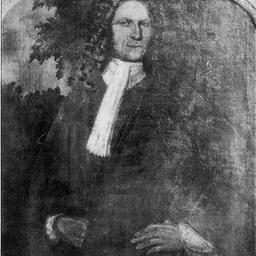
John Cary (1649–1722?) was a prominent Bristol merchant and writer on matters regarding trade during the eighteenth century. Cary has been heralded as a pioneer in establishing economics as a separate field of "scientific" inquiry, a proponent of a "favorable balance of trade", and an objector to the idea that low wages were desirable.
Life and background
Early life
John Cary was born in Bristol, England. He was estimated to be born in March 1649 and is believed to have died sometime between 1717 and 1722, with the exact dates of his birth and death unknown. Cary was the eldest son of Mary Cary and Shershaw Cary.
Workhouses for the poor
Cary also promoted the establishment of workhouses for the poor. Described as the "philanthropic Bristol merchant", after recognizing the dire situation in Bristol in that there were over a thousand paupers who inhabited the city, he was inspired to build a workhouse where these individuals could "be compelled to maintain themselves". In 1697, he was the main organizer of the Bristol Corporation of the Poor which provided relief after the 1696 Poor Act in Bristol.
Cary described his vision for the workhouses as being:
"That a spacious workhouse be erected in some vacant place, within the city, on a general charge, large enough for the Poor, who are to be employed therein; and also with room for such, who, being unable to work, are to be relieved by charity."
At these workhouses, the poor would be provided with room, board, wages, and free education for poor women. In Cary's view, this establishment "won them into Civility, and a love to their Labour."
In Cary's opinion:
"Spaniards are stately People, not much given to Trade or Manufactures themselves ... other trading Nations, such as the English, French, Dutch and Genoese, take advantage of them."
The context for his work was the Nine Years' War which occurred from 1688 to 1697. A Discourse Concerning the East-India Trade: Shewing it to be Unprofitable to the Kingdom of England: Being Taken Out of an Essay on Trade, 1695 An Essay Towards the Settlement of a National Credit in the Kingdom of England: Humbly Presented to the Two Honourable Houses of Parliament, 1696 A Discourse Concerning the Trade of Ireland and Scotland, as They Stand in Competition with the Trade of England, 1696 An Essay on the Coin and Credit of England as They Stand with Respect to Its Trade, 1696 A Vindication of the Parliament of England: In Answer to a Book, Written by William Molyneux of Dublin, Esq. Intituled, The Case of Irelands Being Bound by Acts of Parliament in England, Stated, 1698 Essay on the Registry for the Tithes of Land, 1698 On the Linen Trade in Ireland, 1698 An Account of the Proceedings of the Corporation of Bristol, in execution of the Act of Parliament for the better employing the poor of that City, 1700 Some Considerations relating to the linen manufacture in the Kingdom of Ireland, 1704 A Proposal Offered to the Committee of the Honourable House of Commons Appointed to Consider of Ways for the Better Providing for the Poor and Setting Them on Work, 1700 An account of the proceedings of the Corporation of Bristol in execution of the act of Parliament for the better employing and maintaining the poor of that city, 1700 A Discourse of the Advantage of the African Trade to this Nation, 1712 An Essay Towards Regulating the Trade, and Employing the Poor of this Kingdom, 1717 The rights of the commons in Parliament assembled asserted and the liberties of the people vindicated, 1718 A proposal for paying off the publick debts by erecting a national credit, 1719 A Discourse on Trade, and Other Matters Relative to it, 1745
Relationship with John Locke During the end of the seventeen century, particularly after Cary published An Essay on the State of England, he began to develop a friendship with fellow Englishman John Locke via the correspondence of letters.
Locke is shown to express sincere approbation for Cary's writings, stating that "I think you have hit the mark ... 'Tis the balance of our trade with foreign countries, not altering the standard of our coin, which increases or lessens our bullion at home...".
In another exchange, also regarding Cary's Essay, Locke wrote a profound commendation:
"It is the best discourse I ever read on that subject.
Not only for the clearness of all that you deliver, and the undoubted evidence of most of it, but for a reason that weighs with me more than both those, and that is that sincere aim of the public good and that disinterested reasoning that appears to me in all your proposals; a thing that I have not been able to find in those authors on the same argument which I have looked into. The country gentleman, who is most concerned in a right ordering of trade, both in duty and interest, is of all others the most remote from any true notions of it or sense in his stake in it.
'Tis high time somebody should awaken and inform him, that he may in his place look a little after it.".
Cary's 1695 A Discourse on Trade is cited as having one of the "earliest explicit discussions of machinery". In Reinert's publication, he traced the economic translations between 1500 and 1849 to understand England's nationalistic policies during the eighteenth century and to ultimately explain the dynamics of political economy during this time period. Cary's 1695 work on Essay on the State of England has been described as "the forgotten book that helped shape the modern economy."
Don’t just read it —
keep it.
Full-length biographies made to live with: read them, listen on the way to work, watch them tonight.
- E-book
- Audio
- Video
Instant download · yours to keep · every purchase keeps this site free
Important facts
People in John Cary's life
Named in this biography and alive at the same time


Related people
Same field, nearest in time




Contemporaries
People whose lives overlapped John Cary's





Frequently asked questions
Who was John Cary?
English merchant and writer
When was John Cary born?
John Cary was born in 1649.
When did John Cary die?
John Cary died in 1720.
What was John Cary's occupation?
John Cary was a merchant and writer.
What nationality was John Cary?
John Cary was English and British.
Sources & further reading
· DBpedia: John Cary (businessman)
Cite this page
APA: Biography.guide. (2026). John Cary. https://biography.guide/john-cary-merchant/
MLA: "John Cary." Biography.guide, https://biography.guide/john-cary-merchant/.
Chicago: "John Cary." Biography.guide. https://biography.guide/john-cary-merchant/.
Data last updated: 2026-09-20 · Spot an error? Report a correction.
Page generated 2026-09-27 05:23 UTC