
John Calvin Fiser
Confederate Army general
About John Calvin Fiser
Lived 1838 – 1876 (aged 38). John Calvin Fiser was an American.
John Calvin Fiser (May 4, 1838 – June 4, 14, or 15, 1876) was an American merchant and soldier. He served as an officer in the Confederate Army during the American Civil War, fighting in both the Eastern as well as the Western theaters. Fiser was seriously wounded five times in the conflict, losing an arm in 1863's Battle of Fort Sanders, and he was appointed a general officer late in the war; however, the appointment was never confirmed by the Confederate Senate. Afterward he returned to his business interests and was active in Confederate veterans organizations.
Early life and career John Fiser was born in 1838 in the city of Dyersburg located in Dyer County, Tennessee. His father was Matthew Day Fiser (died 1852) and his mother's identity (died 1849) is not known. In 1848 Fiser's family moved to Batesville in Panola County, Mississippi. After his father died Fiser was raised by his uncle, John B. Fiser, a politician and merchant also living in Panola County. In 1853 he began working in Lafayette County, clerking in a country store near the shore of the Tallahatchie River. In 1855 Fiser moved to Memphis, Tennessee, and found work as a cotton merchant and later in the mercantile business.
Civil War service When the American Civil War began in 1861 Fiser returned to Mississippi to follow the Confederate cause. On May 27 he was elected a first lieutenant in the 17th Mississippi Infantry, assigned to Company H (styled the "Panola Vindicators") in the regiment he had helped create in Panola County. On June 4 he was made the regiment's adjutant, and he participated with the 17th Mississippi in the First Battle of Bull Run on July 21. That autumn he fought with distinction during the Battle of Ball's Bluff, where he was praised for his "most important and effective service." and during the reorganization of the Army of Northern Virginia early the following year he was elected lieutenant colonel of the 17th Mississippi as of April 26, 1862. He fought during the Peninsula Campaign, replacing the regiment's colonel when that officer became a casualty in the Battle of Malvern Hill. The 17th's attack that day has been described as:
Fiser continued to command the regiment during the Maryland Campaign in the fall of 1862, leading it in the Battle of Antietam on September 17. He fought during the Fredericksburg Campaign that winter, part of Brig. Gen. William Barksdale's brigade that defended the Rappahannock River crossing at the town on December 11. Fiser was wounded during the main battle two days later. He then fought during the 1863 Gettysburg campaign, and was wounded during the Battle of Gettysburg that July. Fiser was first shot in the cheek and then hit in the same leg twice.
Fort Sanders Defenses of Knoxville; Fiser lost an arm in an attack on them in November 1863. In the fall of 1863 Fiser and his regiment were sent west with Lt. Gen. James Longstreet's First Corps units. He participated in the Battle of Chickamauga and then fought during the Knoxville Campaign. On November 29 Fiser was hit in his right arm as he reached the top of the Union defensive position during the Battle of Fort Sanders, a wound requiring the amputation of the limb. An account of his actions in the attack follows:
Fiser has a hatchet buckled onto his sword belt, and he vowed to cut down the tall flagstaff on top of the enemy fort. He climbed to the top of the parapet during the heat of battle, and was making for the flagstaff when a ball shattered his arm, and rolling him back into the ditch.
Postbellum When the Civil War ended in 1865 he returned to Memphis, Tennessee, where he resumed his pre-war business affairs. In 1866 he married Hayes Dunn, with whom he had three daughters, and shortly thereafter changed the spelling of his name to Fizer, reasoning that was the way it had sounded all his life. Three streets in Memphis were later named after him, all using this spelling. He also became a partner in a large and successful cotton brokerage firms and actively participated in local Democratic politics.
In 1871 Fiser was elected president of the Confederate Historical and Relief Association based in Memphis, and at the time of his death he was serving as president of the Office Security Building and Loan Association. Fiser died of dysentery in 1876, and his remains were buried in the Chapel Hill section of the Elmwood Cemetery located in Memphis.
Don’t just read it —
keep it.
Full-length biographies made to live with: read them, listen on the way to work, watch them tonight.
- E-book
- Audio
- Video
Instant download · yours to keep · every purchase keeps this site free
Important facts
People in John Calvin Fiser's life
Named in this biography and alive at the same time

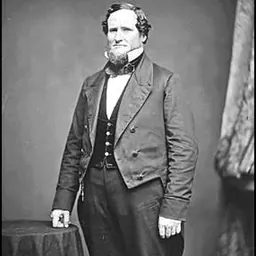
Contemporaries
People whose lives overlapped John Calvin Fiser's

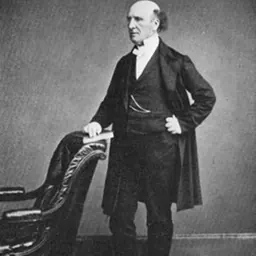
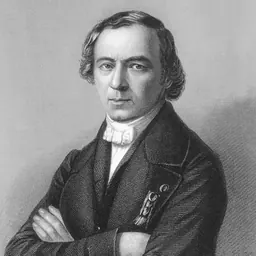

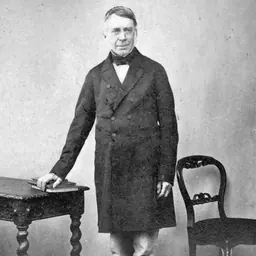
Frequently asked questions
Who was John Calvin Fiser?
Confederate Army general (1838-1876)
When was John Calvin Fiser born?
John Calvin Fiser was born on 4 May 1838 in Dyersburg.
When did John Calvin Fiser die?
John Calvin Fiser died on 15 June 1876 in Memphis.
What nationality was John Calvin Fiser?
John Calvin Fiser was American.
Sources & further reading
· Wikipedia: John Calvin Fiser
Cite this page
APA: Biography.guide. (2026). John Calvin Fiser. https://biography.guide/john-calvin-fiser/
MLA: "John Calvin Fiser." Biography.guide, https://biography.guide/john-calvin-fiser/.
Chicago: "John Calvin Fiser." Biography.guide. https://biography.guide/john-calvin-fiser/.
Data last updated: 2026-09-27 · Spot an error? Report a correction.
Page generated 2026-09-27 05:16 UTC