
John C. Robinson
United States Army Medal of Honor recipient
About John C. Robinson
Lived 1817 – 1897 (aged 79). John C. Robinson was an American military officer, politician, lieutenant governor and major general.
John Cleveland Robinson (April 10, 1817 – February 18, 1897) was an American soldier in the United States Army. Robinson had a long and distinguished military career, fighting in many wars and culminating his career as a brigadier general and brevet major general in the Union Army during the American Civil War.
In 1866, President Andrew Johnson made Robinson a brevet grade of major general in the regular army, which was approved by the U.S. Senate. He received the Medal of Honor for valor in action in 1864 near Spotsylvania Courthouse, Virginia, where he lost a leg.
He retired from the U.S. Army on May 6, 1869, and was placed on the retired list as a full rank major general. After his army service, he served as Lieutenant Governor of the state of New York from 1873 to 1874, and served two terms as the president of the Grand Army of the Republic.
Early life and career Robinson was born on April 10, 1817, in Binghamton, New York. He was appointed to the United States Military Academy at West Point, New York, on July 1, 1835.
Robinson traveled to Corpus Christi, Texas, in September 1845 to join General Winfield Scott and the Army of Occupation as a regimental and brigade quartermaster. He was wounded at Broad Run, Virginia on August 27, 1862. He missed the Maryland Campaign as his brigade was not present. He next fought at the Battle of Fredericksburg. He was transferred to command of second division I Corps in time to participate in Chancellorsville in 1863.
During the Battle of Gettysburg in July 1863, Robinson commanded a division in the I Corps north of the borough of Gettysburg. He and his men fought well on July 1, but eventually had to retire through the streets of the town under the pressure of overwhelming numbers. For his valor and meritorious performance at Gettysburg, he was brevetted as a lieutenant colonel in the regular army. He was again brevetted, this time to colonel in the regular army, for his efforts during the Mine Run Campaign and the 1864 Battle of the Wilderness. In the latter battle, Robinson commanded the 2nd Division in the reorganized V Corps, which was composed of his old division plus a brigade of Maryland troops.
Robinson presided over the court-martial of Brig. Gen. Thomas A. Rowley for his conduct at Gettysburg.
After the war he received a Medal of Honor for his actions during a preliminary action to the Battle of Spotsylvania Court House, the fight at Alsop's farm at Laurel Hill, Virginia, on May 8, 1864. According to the official citation, Robinson "placed himself at the head of the leading brigade in a charge upon the enemy's breastworks; was severely wounded". On December 12, 1864, President Lincoln nominated Robinson for appointment to the brevet grade of major general of volunteers to rank from June 27, 1864, and the U.S. Senate confirmed the appointment on February 14, 1865. However, having been shot through the left knee and permanently disabled following its amputation at the thigh, Robinson never returned to field duty after Alsop's Farm. He performed administrative duty as a district commander in the Department of the East for the rest of the war.
A Maine Soldier once called him "The hairiest General he ever saw." Which lead to his more famous nickname: "The hairiest man in the army."
Postbellum Robinson remained in the army following the cessation of hostilities and was assigned command of the Freedmen's Bureau in Federally occupied North Carolina. On April 10, 1866, President Andrew Johnson nominated Robinson for appointment to the brevet grade of brigadier general in the regular army, to rank from March 13, 1865, and the U.S. Senate confirmed the nomination on May 4, 1866. In July 1866, he was promoted to full colonel in the regular army. On July 17, 1866, President Andrew Johnson nominated Robinson for appointment to the brevet grade of major general in the regular army, to rank from March 13, 1865, and the U.S. Senate confirmed the appointment on July 23, 1866. Robinson was mustered out of the volunteer army on September 1, 1866. In 1867, Robinson was assigned to command of the Military Department of the South. The following year, he was again reassigned, this time to lead the Department of the Lakes. Robinson retired from the U.S. Army on May 6, 1869, receiving a commission to the full grade of major general in the regular army on the date of his retirement.
Robinson, as with many leading political and social figures of his day, was a Freemason, becoming a member of Binghamton Lodge #177 and rising through its ranks.
Robinson, long a popular figure in New York, was elected the lieutenant governor of New York in 1872, serving under Republican governor John A. Dix. Robinson was active in veterans affairs, and became the commander-in-chief of the Grand Army of the Republic from 1877 to 1879. A decade later, he was elected as president of the Society of the Army of the Potomac. He was also a member of the New York Commandery of the Military Order of the Loyal Legion of the United States.
In his elder years, Robinson lost his eyesight and became totally blind.
He died at home on February 18, 1897, at the age of 79 and was buried at Spring Forest Cemetery in Binghamton, Broome County, New York.
A bronze statue of Robinson stands in Gettysburg National Military Park near Oak Ridge.
Medal of Honor citation
Rank and Organization: Brigadier General, U.S. Volunteers. Place and date: At Laurel Hill, Virginia, May 8, 1864. Entered service at: Binghamton, N.Y. Birth: Binghamton, N.Y. Date of issue: March 28, 1894.
Citation: Placed himself at the head of the leading brigade in a charge upon the enemy's breastworks; was severely wounded.
Don’t just read it —
keep it.
Full-length biographies made to live with: read them, listen on the way to work, watch them tonight.
- E-book
- Audio
- Video
Instant download · yours to keep · every purchase keeps this site free
Important facts
People in John C. Robinson's life
Named in this biography and alive at the same time



Related people
Same field, nearest in time

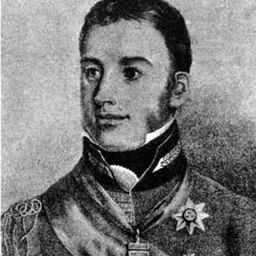
Contemporaries
People whose lives overlapped John C. Robinson's




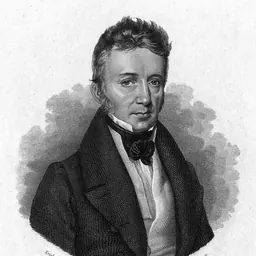
Frequently asked questions
Who was John C. Robinson?
United States Army Medal of Honor recipient (1817-1897)
When was John C. Robinson born?
John C. Robinson was born on 10 April 1817 in Binghamton.
When did John C. Robinson die?
John C. Robinson died on 18 February 1897 in Binghamton.
What was John C. Robinson's occupation?
John C. Robinson was a military officer, politician, lieutenant governor and major general.
What nationality was John C. Robinson?
John C. Robinson was American.
Sources & further reading
Cite this page
APA: Biography.guide. (2026). John C. Robinson. https://biography.guide/john-c-robinson/
MLA: "John C. Robinson." Biography.guide, https://biography.guide/john-c-robinson/.
Chicago: "John C. Robinson." Biography.guide. https://biography.guide/john-c-robinson/.
Data last updated: 2026-09-20 · Spot an error? Report a correction.
Page generated 2026-09-27 05:18 UTC