
John Byng, 1st Earl of Strafford
British Army officer & politician
About John Byng, 1st Earl of Strafford
Lived 1772 – 1860 (aged 87–88). John Byng, 1st Earl of Strafford was a British politician, military personnel, military officer and general field marshal.
Field Marshal John Byng, 1st Earl of Strafford (1772 – 3 June 1860) was a British Army officer and politician. After serving as a junior officer during the French Revolutionary Wars and Irish Rebellion of 1798, he became Commanding Officer of the Grenadier Battalion of the 3rd Regiment of Foot Guards during the disastrous Walcheren Campaign. He served as a brigade commander at the Battle of Vitoria and then at the Battle of Roncesvalles on 25 July 1813 when his brigade took the brunt of the French assault and held its position for three hours in the early morning before finally being forced back.
During the Hundred Days, he commanded the 2nd Guards Brigade at the Battle of Quatre Bras in June 1815 and again at the Battle of Waterloo later that month when light companies from his brigade played an important role in the defence of Château d'Hougoumont. He went on to be Commander-in-Chief, Ireland and, after leaving Ireland in 1831, he was elected as Whig Member of Parliament for Poole in Dorset and was one of the few military men who supported the Reform Bill, for which he was rewarded with a peerage.
Origins He was the third son of George Byng (1735–1789) of Wrotham Park in Middlesex (now in Hertfordshire) (eldest son of Robert Byng (1703–1740), Governor of Barbados) by his wife Anne Conolly, whose mother was a daughter of Thomas Wentworth, 1st Earl of Strafford (1672–1739), (of the second creation of that title). His great-grandfather was Admiral George Byng, 1st Viscount Torrington (1663–1733) of Southill Park in Bedfordshire.
Career Early promotions He was educated at Westminster School. He was commissioned as an ensign in the 33rd Regiment of Foot ("Duke of Wellington's Regiment") on 30 September 1793 and was promoted to lieutenant on 1 December 1793 and to captain on 27 December 1794. He was sent to the Netherlands later that year where he was wounded during a skirmish at Geldermalsen in January 1795 during the Flanders Campaign.
In 1796, Byng became aide-de-camp to General Richard Vyse in the Southern District of Ireland and was wounded during the Irish Rebellion of 1798. and a lieutenant-colonel in the 29th Regiment of Foot on 18 March 1800. He transferred to the 3rd Regiment of Foot Guards on 11 August 1804 and took part in the expedition to Hanover in 1805, in the Battle of Copenhagen in August 1807 and, having taken command of the Grenadier Battalion of his Regiment, in the disastrous Walcheren Campaign in Autumn 1809. Byng went to Spain in September 1811 to become Commander of a brigade serving under General Rowland Hill. Byng's stubborn resistance at Roncesvalles allowed the Marquess of Wellington (later the Duke) to consolidate enough troops to defeat the French at the Battle of the Pyrenees over the next few days.
Waterloo Byng went on to fight at the Battle of Orthez in February 1814 and at the Battle of Toulouse in April 1814. He was appointed a Knight Commander of the Order of the Bath on 2 January 1815 and a Knight of the Austrian Military Order of Maria Theresa on 8 October 1815.
Ireland and politics Wellington at Sorauren by Thomas Jones Barker. The Battle of the Pyrenees: Byng's stubborn resistance at Roncesvalles allowed the Viscount Wellington (shown on horseback in the painting) to consolidate enough troops to defeat the French at the Battle of the Pyrenees Byng became General Officer Commanding the Eastern District in England in October 1815 before transferring to be General Officer Commanding the Northern District in England in June 1816. At the Peterloo Massacre of 1819, he was absent because he had two horses entered at York races that day, and delegated command to his deputy, who failed to peacefully disperse the large crowd, resulting in 18 deaths and hundreds of injuries. Promoted to lieutenant general on 27 May 1825, he was advanced to Knight Grand Cross of the Order of the Bath in 1828. and was one of the few military men who supported the Reform Bill of 1832. In recognition of Byng's support for the Reform Bill, the Prime Minister, Lord Melbourne, raised him to the peerage as Baron Strafford of Harmondsworth on 8 May 1835, which territorial designation recognised the Earldom borne by his maternal ancestors which had become extinct in 1799. He was promoted to full general on 23 November 1841, and on 28 August 1847 he was raised further in the peerage as Viscount Enfield and Earl of Strafford. Also in 1847, following the death of his eldest brother the Whig MP George Byng (1764–1847), he inherited Wrotham Park.
Byng also served as honorary colonel of the 4th West India Regiment, as honorary colonel of the 2nd West India Regiment and as honorary colonel of the 29th Regiment of Foot; in his final years he was also honorary colonel of the Coldstream Guards. and died at his home in Grosvenor Square in London on 3 June 1860.
Don’t just read it —
keep it.
Full-length biographies made to live with: read them, listen on the way to work, watch them tonight.
- E-book
- Audio
- Video
Instant download · yours to keep · every purchase keeps this site free
Important facts
People in John Byng, 1st Earl of Strafford's life
Named in this biography and alive at the same time

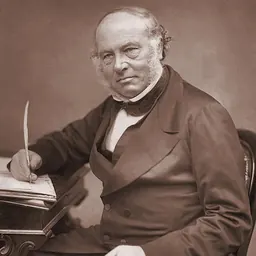
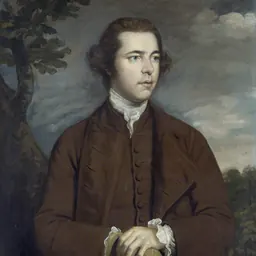
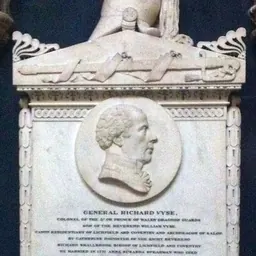
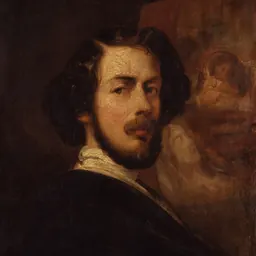
Related people
Same field, nearest in time



Contemporaries
People whose lives overlapped John Byng, 1st Earl of Strafford's




Frequently asked questions
Who was John Byng, 1st Earl of Strafford?
British Army officer & politician (1772–1860)
When was John Byng, 1st Earl of Strafford born?
John Byng, 1st Earl of Strafford was born in 1772 in Leicester.
When did John Byng, 1st Earl of Strafford die?
John Byng, 1st Earl of Strafford died on 3 June 1860 in Cork.
What was John Byng, 1st Earl of Strafford's occupation?
John Byng, 1st Earl of Strafford was a politician, military personnel, military officer and general field marshal.
What nationality was John Byng, 1st Earl of Strafford?
John Byng, 1st Earl of Strafford was British.
Sources & further reading
· Wikipedia: John Byng, 1st Earl of Strafford
· DBpedia: John Byng, 1st Earl of Strafford
Cite this page
APA: Biography.guide. (2026). John Byng, 1st Earl of Strafford. https://biography.guide/john-byng-1st-earl-of-strafford/
MLA: "John Byng, 1st Earl of Strafford." Biography.guide, https://biography.guide/john-byng-1st-earl-of-strafford/.
Chicago: "John Byng, 1st Earl of Strafford." Biography.guide. https://biography.guide/john-byng-1st-earl-of-strafford/.
Data last updated: 2026-09-20 · Spot an error? Report a correction.
Page generated 2026-09-27 05:31 UTC