
About John Boit
Lived 1774 – 1829 (aged 54). John Boit was a businessperson, world traveler, explorer and maritime fur trade, known for Columbia Rediviva and Union (sloop).
John Boit Jr. (15 October 1774 – 8 March 1829) was one of the first Americans involved in the maritime fur trade. He sailed as fifth mate under Captain Robert Gray on the second voyage of the Columbia Rediviva, 1790–1793. During the voyage he wrote a short but important journal in which he described the first time the Columbia River was located by Europeans or European Americans. From 1794 to 1796 he captained the Union on another maritime fur trading circumnavigation voyage from New England to the Pacific Northwest and China. Later he captained other vessels including the George and the slave ship Mac.
Early life and family John Boit Jr. was born on 15 October 1774 to John Boit Sr. and Sarah Brown Boit, both of Boston.
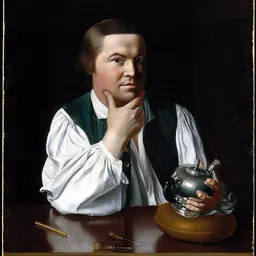
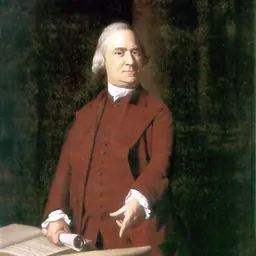
John Boit Sr. was a "West India merchant" who came to Boston from England. The West Indies were at the time an integral part of the transatlantic slave trade and the French, British, Spanish, Danish, and Dutch all operated plantations in the region to produce goods, such as sugar, for export. Boit Sr. is documented as having been at a March 23, 1772 Boston Caucus meeting along with John Adams, Samuel Adams, and Paul Revere. He is also on record at a November 3, 1773 Boston Caucus meeting discussing how to respond to the imposition of tea taxes by the British that preceded the Boston Tea Party. Boit Sr. is mentioned in a May 2, 1775 letter to Paul Revere from his wife Rachel, when he was prevented from returning home from his "midnight ride" due to the siege of Boston in the aftermath of the Battles of Lexington and Concord. He is accused of not paying his fair share of taxes by a group of Boston residents in an August 18, 1777 meeting of the Boston Board of Selectmen, saying:
Robert A. Boit, Boit's grandson, concludes that Boit's grandfather was Jacque Boit, a Huguenot of Normandy who fled to England as part of a wave of Huguenot emigration from France following the 1685 revocation of the Edict of Nantes. His log of the expedition is the only complete account of the second voyage of Columbia, and only one of two written accounts of the first European Americans to locate what they would call the Columbia River on May 12, 1792, the other being the official log of Robert Gray. These accounts are the first written descriptions of Chinookan peoples and their first documented contact with Europeans or European Americans.
Destruction of Opitsaht Boit's Columbia logbook describes the events leading to the destruction of the Tla-o-qui-aht village of Opitsaht in Clayoquot Sound, on what is today known as Meares Island along the western coast of Vancouver Island. In September 1791, Columbia established its winter quarters at a location they called Adventure Cove, near present-day Columbia Islet. Here, they assembled the sloop Adventure using materials they brought from Boston and timbers harvested from the island, making it the first American ship ever built in the Pacific. During this period, they interacted with the Tla-o-qui-aht and Wickaninnish, who resided at Opitsaht. Many of their interactions were friendly, although Boit's logbook conveys a general attitude of distrust and a belief that they would all be murdered by the Tla-o-qui-aht if the tribe got the chance.
On March 25, 1792, Boit relates finding the village of Opitsaht deserted, with the tribe having gone to what is now called Wickaninnish Island. On the 27th, he writes:
This is the only account of this incident, and no instigating factors immediately preceding the destruction of the village are mentioned by Boit. He was 17 years old at the time.
In 2005, William Twombly, a descendant of Robert Gray, apologized to the Tla-o-qui-aht people in a reconciliation ceremony.
Voyage of the Union, 1794–1796 Shortly after the Columbia returned to Boston John Boit was given command of the sloop Union for another maritime fur trading voyage to the Pacific Northwest and China. The sloop was owned by three investors including Boit's brother-in-law Crowell Hatch, who had also been an investor in the two voyages of Columbia Rediviva, under Robert Gray and John Kendrick.
Boit sailed Union from Newport, Rhode Island, on 1 August 1794. He passed the Cape Verde Islands without stopping in October. The Falkland Islands were reached near the end of the year. Boit remained in the Falklands for about three weeks before leaving on 23 January 1795. Rounding Cape Horn the Union reached its southernmost latitude on 4 February 1795.
On 16 May 1795 he arrived at Columbia Cove, Nasparti Inlet, on the west coast of Vancouver Island near Brooks Peninsula. He had been there three years before with Captain Gray on Columbia. After acquiring all the sea otter he could, he sailed south to Nootka Sound. Langara Island, and villages such as Dadens and Kiusta. However, there is no reference to Chow in Boit's Union logbooks, casting doubt on this claim. Indeed, another source identifies Mauritius as the location where Boit and Chow met. He is believed to be the first person of Chinese descent to have lived, died, and been buried in the United States, and he is still honored and celebrated by the Chinese-American community in Boston.
Marriage and slave voyage of the Mac, 1798-1799 In November 1798, two months after Chow's death, Boit set sail from Boston as captain of the Mac. He told his crew that they were headed toward Cape Verde, but in fact he was heading for the African continent, where he obtained 270 enslaved Africans. They arrived in Havana, Cuba on May 31, 1799, and sold all but 50 people who died on the voyage.
The original Lancaster Intelligencer article describing the trial against John Boit on charges of violating federal laws against the slave trade. Not long after arriving back in the United States, Boit married Eleanor Jones on August 20, 1799, in Newport, Rhode Island. Two weeks later, he was tried for violating federal laws against the slave trade. On September 9, 1799, the Lancaster Intelligencer published the following:
A reprint of the Lancaster Intelligencer article in the October 7, 1799 Delaware and Eastern-Shore Advertiser. This article was reprinted in the October 7, 1799 edition of the Delaware & Eastern-Shore Advertiser, which added, "The astonishment (tho' not the indignation) of the humane will subside, when they are told, that this ship was owned, loaded, and sent upon this execrable voyage, by an 'exclusive patriot,' a bawler for liberty, equality, and the rights of man ! ! !"
Other sources claim that the voyage transported 244 enslaved Africans at the only 206 survived. This voyage is Voyage ID 13807 on the Slave Voyages database. Notably, this record names the ship's captain as "John Best," but other details of the record closely match descriptions of the Mac in the press at the time.
On February 28, 2020, food blogger Richard Auffrey detailed the story of Chou and the occurrence of Boit's slave voyage with the Mac in a blog post about the history of Boston's earliest Chinese residents.
Later life After the voyage of the Mac John Boit captained various other ships, such as the 600-ton Mount Hope. When he was 40 years old he gave up being a ship captain and became a Boston merchant with a focus on shipping interests. He lived in Boston for the rest of his life, dying on 8 March 1829. He was buried at King's Chapel Burying Ground, Boston.
Legacy Boit Rock, in front of Columbia Cove at the entrance to Nasparti Inlet, Checleset Bay, northwest of Kyuquot Sound, on the west coast of Vancouver Island, was named for John Boit.
John Boit is the grandfather of Edward Darley Boit Jr., whose four daughters were depicted in their Paris apartment in John Singer Sargent's well-known work The Daughters of Edward Darley Boit. This piece is displayed at the Museum of Fine Arts, Boston.
Boit's logbooks are archived by the Massachusetts Historical Society in Boston.
Don’t just read it —
keep it.
Full-length biographies made to live with: read them, listen on the way to work, watch them tonight.
- E-book
- Audio
- Video
Instant download · yours to keep · every purchase keeps this site free
Important facts
People in John Boit's life
Named in this biography and alive at the same time

Related people
Same field, nearest in time



Contemporaries
People whose lives overlapped John Boit's


Frequently asked questions
Who was John Boit?
15 Oct 1774 - certain 8 Mar 1829
When was John Boit born?
John Boit was born on 15 October 1774 in Boston.
When did John Boit die?
John Boit died on 8 March 1829 in Boston.
What was John Boit's occupation?
John Boit was a businessperson, world traveler, explorer and maritime fur trade.
What was John Boit known for?
John Boit was known for Columbia Rediviva and Union (sloop).
Sources & further reading
Cite this page
APA: Biography.guide. (2026). John Boit. https://biography.guide/john-boit/
MLA: "John Boit." Biography.guide, https://biography.guide/john-boit/.
Chicago: "John Boit." Biography.guide. https://biography.guide/john-boit/.
Data last updated: 2026-09-22 · Spot an error? Report a correction.
Page generated 2026-09-27 05:29 UTC