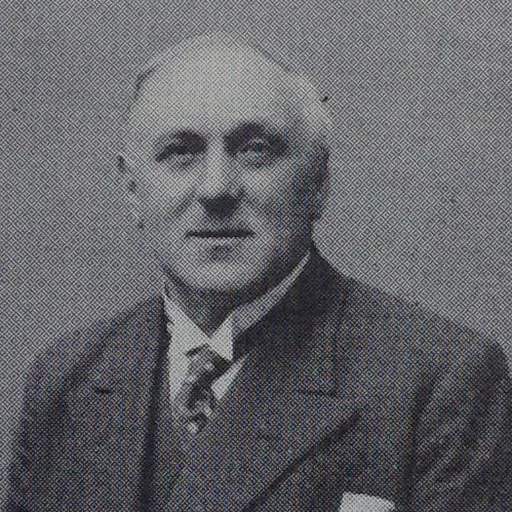
About John Banfield
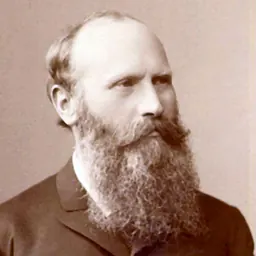
Lived 1875 – 1945 (aged 69). John Banfield was a British politician, trade unionist and confectioner.
John William Banfield (29 August 1875 – 25 May 1945) was a British trade unionist and Labour Party politician, who served as Member of Parliament (MP) for Wednesbury from 1932 until his death in 1945.
Early life
Banfield was born in Burton-upon-Trent on 29 August 1875, the eldest of 9 children of Frederick Charles Banfield (b. 4 May 1853, d. 16 Jan 1898), a blacksmith, brewer's labourer and upholsterer's assistant, and Mary Ann Simnett. He worked as a confectioner and baker, and was General Secretary of the Amalgamated Union of Operative Bakers, Confectioners and Allied Workers from 1915 until he retired in 1940.
Political career Banfield unsuccessfully contested the 1918 general election in Birmingham Aston. When the Labour Party unexpectedly gained control of Fulham Borough Council in 1919 they added Banfield to the Aldermanic bench to add political and trade union expertise.
Banfield was a government delegate representing the work people at Geneva from 1924 to 1925. He was unsuccessful in Fulham West at a by-election in 1930 and at the 1931 general election.
In 1932, the Conservative MP for Wednesbury, Viscount Ednam succeeded to the peerage as Earl of Dudley, triggering a by-election in July 1932. Banfield was selected as Labour's candidate, hoping to regain a seat which had been held by Labour from 1918 to 1931.
After a campaign focusing on the means test for unemployment benefit (in a constituency with 12,000 unemployed), Banfield won the Wednesbury 1932 by-election, defeating Conservative Rex Davis. He was re-elected at the 1935 general election.
In December 1936, he delivered an address, 'Sunday: An M.P.'s Convictions' at the Alliance Birthday Celebrations of the Imperial Alliance for the Defence of Sunday, arguing that Sunday should be a day of rest and worship. In June 1937, he made a speech in Parliament, proposing the addition of a clause to the Factories Bill: Prohibition of night work in bakehouses. His campaigning led to him being known as "The Bakers' MP".
Banfield died aged 69, in Hammersmith, London of a heart attack shortly before the 1945 general election.
Personal life and legacy On 5 September 1897, he married Annie Elizabeth Newman, daughter of baker John Newman, in Birmingham.
A block of council flats, William Banfield House in Munster Road, Fulham was named after him. His son, Frank Banfield, also became a prominent politician in Hammersmith and Fulham.
He is buried in North Sheen Cemetery, Richmond, with his wife Annie Elizabeth and his daughter Annie.
Don’t just read it —
keep it.
Full-length biographies made to live with: read them, listen on the way to work, watch them tonight.
- E-book
- Audio
- Video
Instant download · yours to keep · every purchase keeps this site free
Important facts
Family & relationships
People in John Banfield's life
Named in this biography and alive at the same time



Related people
Same field, nearest in time





Contemporaries
People whose lives overlapped John Banfield's


Frequently asked questions
Who was John Banfield?
British politician (1875-1945)
When was John Banfield born?
John Banfield was born on 29 August 1875 in Burton upon Trent.
When did John Banfield die?
John Banfield died on 25 May 1945 in Hammersmith.
What was John Banfield's occupation?
John Banfield was a politician, trade unionist and confectioner.
What nationality was John Banfield?
John Banfield was British.
Sources & further reading
Cite this page
APA: Biography.guide. (2026). John Banfield. https://biography.guide/john-banfield/
MLA: "John Banfield." Biography.guide, https://biography.guide/john-banfield/.
Chicago: "John Banfield." Biography.guide. https://biography.guide/john-banfield/.
Data last updated: 2026-09-22 · Spot an error? Report a correction.
Portrait: Wikimedia Commons · author & licence
Page generated 2026-09-27 05:02 UTC