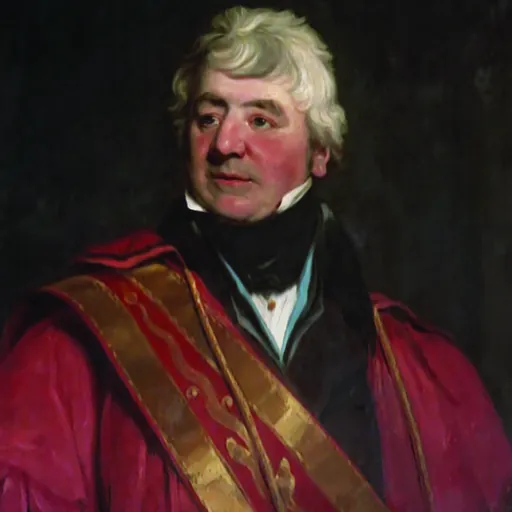
About John Bacon Sawrey Morritt
Lived 1772 – 1843 (aged 70–71). John Bacon Sawrey Morritt was a British politician, classical scholar, traveler and high sheriff of Yorkshire, known for Travellers' Club.
John Bacon Sawrey Morritt (1772? – 1843) was an English traveller, politician and classical scholar.
Early life Born about 1772, he was son and heir of John Sawrey Morritt, who died at Rokeby Park in Yorkshire on 3 August 1791, by his wife Anne (died 1809), daughter of Henry Peirse of Bedale., M.P. for Northallerton. Both parents were buried in a vault in Rokeby Church, where their son erected to their memory a monument with a poetic inscription.
Morritt had been in Paris during 1789, and was educated at St John's College, Cambridge, where he was admitted later that year. He graduated B.A. 1794 and M.A. 1798. He inherited a large fortune, including the estate of Rokeby, which his father had purchased from Sir Thomas Robinson, 1st Baronet in 1769.
On tour Early in 1794, Morritt set off east, and spent two years in travelling, mainly in Greece and Asia Minor. The use of Balkan Peninsula for south-east Europe came a little later, with August Zeune (1808).
Morritt travelled from Vienna to Istanbul, where the embarrassed Robert Liston found the British embassy was in no state to lodge him. On a quest for Troy, he arrived, with James Dallaway and other Englishmen, from Lesbos on 6 November 1794, landing about twenty miles below Cape Lectum, in the Sinus Adramyttenus. There he made a survey of the supposed scene of the Iliad. He was defeated at the dissolution in 1802. He was also acquainted with Stewart Rose, Richard Payne Knight, Sir Humphry Davy, and Robert Southey who visited Rokeby in 1812 and 1829. He was elected a member of the Dilettanti Society on 2 June 1799, and his portrait as "arch-master" of its ceremonies, in the long crimson taffety-tasselled robe of office, was painted by Sir Martin Archer Shee for the society in 1831–2.
An essay by Morritt on the History and Principles of Antient Sculpture formed the introduction to the second volume of Specimens of Antient Sculpture preserved in Great Britain issued by the Dilettanti Society in 1835. A volume of Miscellaneous Translations and Imitations of the Minor Greek Poets was published by him in 1802. He composed the inscription on the monument in York Minster to William Burgh. His widow left him a miniature of John Thurloe (but then thought to be of John Milton), painted by Samuel Cooper.
Don’t just read it —
keep it.
Full-length biographies made to live with: read them, listen on the way to work, watch them tonight.
- E-book
- Audio
- Video
Instant download · yours to keep · every purchase keeps this site free
Important facts
People in John Bacon Sawrey Morritt's life
Named in this biography and alive at the same time
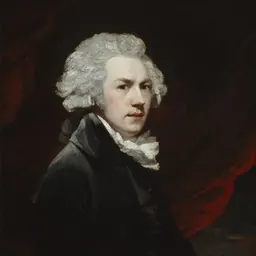
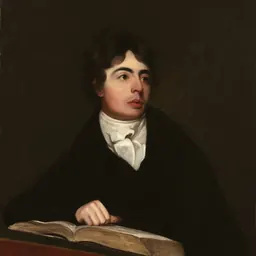
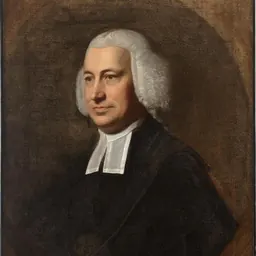
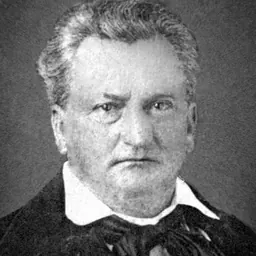
Related people
Same field, nearest in time

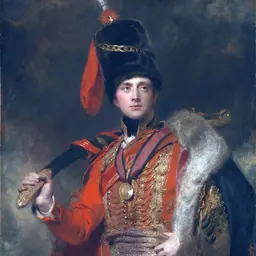


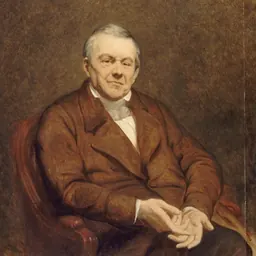
Contemporaries
People whose lives overlapped John Bacon Sawrey Morritt's




Frequently asked questions
Who was John Bacon Sawrey Morritt?
British politician
When was John Bacon Sawrey Morritt born?
John Bacon Sawrey Morritt was born in 1772.
When did John Bacon Sawrey Morritt die?
John Bacon Sawrey Morritt died on 12 July 1843 in Rokeby Park.
What was John Bacon Sawrey Morritt's occupation?
John Bacon Sawrey Morritt was a politician, classical scholar, traveler and high sheriff of Yorkshire.
What was John Bacon Sawrey Morritt known for?
John Bacon Sawrey Morritt was known for Travellers' Club.
What nationality was John Bacon Sawrey Morritt?
John Bacon Sawrey Morritt was British.
Sources & further reading
· Wikipedia: John Bacon Sawrey Morritt
· DBpedia: John Bacon Sawrey Morritt
Cite this page
APA: Biography.guide. (2026). John Bacon Sawrey Morritt. https://biography.guide/john-bacon-sawrey-morritt/
MLA: "John Bacon Sawrey Morritt." Biography.guide, https://biography.guide/john-bacon-sawrey-morritt/.
Chicago: "John Bacon Sawrey Morritt." Biography.guide. https://biography.guide/john-bacon-sawrey-morritt/.
Data last updated: 2026-09-22 · Spot an error? Report a correction.
Portrait: Wikimedia Commons · author & licence
Page generated 2026-09-27 05:04 UTC