
About John B. Jackson
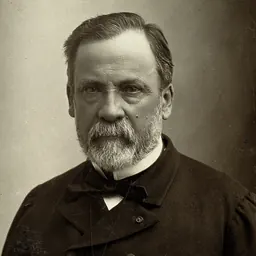
Lived 1862 – 1920 (aged 58). John B. Jackson was an American diplomat.
John Brinckerhoff Jackson (August 19, 1862 – December 20, 1920) was an American lawyer and diplomat who spent most of his career in Europe and the Middle East.
Early life Jackson was born in Newark, New Jersey on August 19, 1862, to one of the most widely known families in New Jersey. He was a son of Nannie (née Nye) Jackson (1835–1905) and Frederick Wolcott Jackson (1833–1904). Among his siblings was Philip Nye Jackson, Esq., William Fessenden Jackson, the Rev. Frederick Wolcott Jackson Jr., Charles Huntington Jackson, Esq., Elizabeth Wolcott Jackson, Nina Fessenden (née Jackson) Abeel, Olivia Wolcott Jackson, and Martha Nye Jackson (wife of Beaux-Arts architect Lewis Stewart). His father was one of the directors of the Pennsylvania Railroad and was president of the United New Jersey Railroad and Canal Company, before it was taken over by the Pennsylvania. His maternal grandparents were Capt. Ezra Nye and Nancy Jane (née Fessenden) Nye of Sandwich, Massachusetts. He graduated from the United States Naval Academy in Annapolis, Maryland in 1883. In 1896, Princeton University bestowed on him an honorary M.A. degree. In 1898, he traveled from Berlin to The Hague to be present at the ceremonies in connection with the accession of Wilhelmina of the Netherlands. In March 1902, Jackson wrote to Secretary of State John Hay regarding Prince Henry of Prussia's successful visit to the U.S., speculating that it will "foster improved relations between the United States and Germany." While secretary of the legation, he frequently served, for a cumulative total of twenty months, as chargé d'affaires ad interim in charge of the embassy. His tenure included the last month of the Spanish–American War, the Hague Convention of 1899 and during the height of the Boxer Rebellion in China. Romania and Serbia on October 13, 1902, during a recess of the U.S. Senate. He was recommissioned on December 8, 1902, after confirmation. Also on October 13, 1902, he was appointed Minister to Chile, but declined appointment. He presented his credentials in Greece on December 24, 1902, in Romania on April 7, 1903, and in Serbia on May 9, 1904. On December 21, 1909, he was appointed Minister to Cuba, presenting his credentials on March 22, 1910, and serving until he presented his recall on October 27, 1911, and returning to the Balkans. On August 12, 1911, shortly before his recall from Havana, he was again appointed Minister to Romania, Serbia and Bulgaria, however this time he was a resident at Bucharest. In February 1912, he was the special representative of the president with rank of ambassador at Sofia for the coming of age of the Crown Prince Boris of Bulgaria. After the Democratic president Woodrow Wilson became president in 1913, Jackson submitted his resignation, as was customary, and it was accepted in August 1913, leaving Bucharest in the end of October 1913.
Later career After World War I broke out in 1914, Jackson volunteered his services to the American embassy in Berlin. On January 16, 1915, he was made a special agent of the Department of State to assist James W. Gerard, the American Ambassador, in matters relating to the war. He served on the embassy staff until diplomatic relations were broken off in February 1917, at which point he went to Switzerland.
Personal life On April 26, 1886, Jackson was married to heiress Florence A. Baird by the Rev. Dr. John S. MacIntosh at the Second Presbyterian Church in Philadelphia. the locomotive builder and early partners in the Baldwin Locomotive Works.
He was a member of the New York Bar Association, the Union League Club, the University Club of New York, the Rittenhouse Club in Philadelphia and the Imperial Yacht Club in Kiel, Germany. a Swiss town on the shoreline of Lake Geneva at the foot of the Alps. His brother, the Rev. Frederick W. Jackson, brought his body from Switzerland and he was buried at Laurel Hill Cemetery in Philadelphia.
Don’t just read it —
keep it.
Full-length biographies made to live with: read them, listen on the way to work, watch them tonight.
- E-book
- Audio
- Video
Instant download · yours to keep · every purchase keeps this site free
Important facts
People in John B. Jackson's life
Named in this biography and alive at the same time



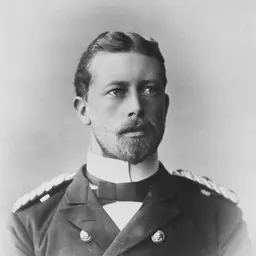
Related people
Same field, nearest in time
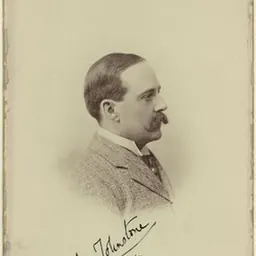

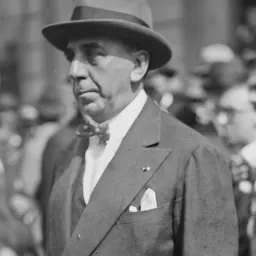
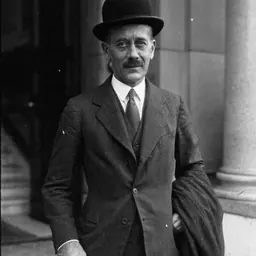
Contemporaries
People whose lives overlapped John B. Jackson's




Frequently asked questions
Who was John B. Jackson?
American lawyer and diplomat (1862-1920)
When was John B. Jackson born?
John B. Jackson was born on 19 August 1862 in Newark.
When did John B. Jackson die?
John B. Jackson died on 20 December 1920 in Montreux, Switzerland.
What was John B. Jackson's occupation?
John B. Jackson was a diplomat.
What nationality was John B. Jackson?
John B. Jackson was American.
Sources & further reading
Cite this page
APA: Biography.guide. (2026). John B. Jackson. https://biography.guide/john-b-jackson/
MLA: "John B. Jackson." Biography.guide, https://biography.guide/john-b-jackson/.
Chicago: "John B. Jackson." Biography.guide. https://biography.guide/john-b-jackson/.
Data last updated: 2026-09-20 · Spot an error? Report a correction.
Page generated 2026-09-27 05:17 UTC