
About John Anthony Quitman
Lived 1798 – 1858 (aged 59). John Anthony Quitman was an American politician, judge and lawyer.
John Anthony Quitman (September 1, 1798 – July 17, 1858) was an American lawyer, politician, and soldier. As president of the Mississippi Senate, he was the acting governor of Mississippi for one month (from December 3, 1835 to January 7, 1836) as a Whig. He was elected governor in 1849 as a Democrat, and served from January 10, 1850, until his resignation on February 3, 1851, shortly after his arrest for violating U.S. neutrality laws. He was strongly pro-slavery and a leading Fire-Eater.
According to Quitman's first biographer, John F. H. Claiborne, writing in 1860, "A more ambitious man never lived. ...He was greedy for military fame." "For Quitman, military glory and political ambition had priority over management of his three plantations and numerous slaves."
He was admitted to the bar in 1820 and moved to Chillicothe, Ohio. He moved south to Natchez, Mississippi, the following year. He purchased Monmouth in 1826, and it would remain in his family for the next 100 years. It was an archaeological dig site investigated by Dr. Montroville Dickeson during his 10-year study of the Natchez Indians of the Mississippi River Valley.
Mississippi and Louisiana Quitman owned four plantations: Springfield, which he purchased in 1834, on the Mississippi River near Natchez, a cotton plantation and dairy farm; Palmyra (Warren County, Mississippi), which he acquired through marriage (cotton); Live Oaks (Terrebonne Parish, Louisiana, sugar and molasses); and Belen (Holmes County, Mississippi, cotton).
He did not personally manage the plantations, a task entrusted to overseers. Not counting house servants, at Palmyra, there were 311 people under sixty years of age in 1848; at Live Oaks, 85 in 1850; at Springfield, 39 in 1842; and at Belen, 32 in 1858.
Politics In 1823 Quitman was the brigade inspector for the local militia and in the next year organized a volunteer militia company called the Natchez Fencibles. Quitman practiced law in Natchez until 1826 when he was elected to the Mississippi House of Representatives. He became Chancellor of the state in 1828 and served on the state's Constitutional Convention in 1832. He was the protégé of John C. Calhoun during the Nullification Crisis.
In 1835, he was elected to the Mississippi Senate, then elected president of the Mississippi State Senate. He was an acting governor of Mississippi. In 1838, he became a judge on the High Court of Errors and Appeal. Quitman was the grand master of the Grand Lodge of Mississippi from 1826 to 1838, in 1840, and 1845 to 1846. A masonic lodge and council were named after Quitman.
He was initiated to the Scottish Rite Masonry till his elevation to the 33rd and highest degree.
Mexican–American War
The Natchez Fencibles were not selected to fight in the Mexican War due to a handful of men who failed to muster at Vicksburg, Mississippi, at the proper time.
Quitman led his division to the Valley of Mexico, where he was posted to guard the supply depot, hospital, and horse teams. Frustrated at his supporting role, Quitman was nevertheless ordered to send reinforcements to the front. At the battles of Contreras and Churubusco, Shields' brigade was actively engaged, though Quitman was not personally involved.
He commanded the southern assault during the battle of Chapultepec. U.S. Marines of Quitman's division spearheaded the attack, and their involvement in this battle is remembered in the opening line of the Marines' Hymn. Quitman received the surrender of the citadel in Mexico City.
After the fall of Mexico City, General Scott named Quitman as the military governor of Mexico City for the remainder of the occupation. He was the only American to rule from within the National Palace of Mexico. Quitman was a founding member of the Aztec Club of 1847. He was discharged on July 20, 1848, and served as governor of Mississippi in 1850 and 1851.
Filibustering
It was in his capacity as governor of Mississippi that Quitman was approached by Narciso López, the Venezuelan-born filibuster, to lead his expedition of 1850 to liberate Cuba from Spanish rule. He turned down the offer because of his desire to complete his term as governor but did provide assistance to López in the form of supplies of M1841 Mississippi rifles for the expedition. López departed for Cuba and captured Cárdenas, but a Spanish counterattack caused López to leave for Key West. The repercussion of the expedition led to Quitman being indicted by a federal grand jury in New Orleans for violations of the Neutrality Act of 1818. Quitman resigned as governor so that he could defend himself. The charges were dropped after three hung juries allowed him to avoid conviction.
With the encouragement of President Franklin Pierce, Quitman, with assistance from later Confederate General Mansfield Lovell, began preparations in July 1853 for a filibuster expedition of his own. The preparations to invade Cuba were nearly complete, with several thousand men prepared to go, when in May 1854, the administration reversed course and undertook steps to stop what it had almost put into motion, presumably because it felt that in the wake of the furor over the passage of the Kansas–Nebraska Act, the action to add slave territory such as Cuba would cause irreparable damage to the Democratic Party in the North.
Return to politics During the 1852 United States presidential election, Quitman was the running mate for George Troup on the Southern Rights Party.
On March 4, 1855, Quitman was elected to the 34th United States Congress as a representative from Mississippi's 5th congressional district and served until his death during the 35th Congress. On April 29, 1856, Quitman gave a speech mentioning a bill he introduced to repeal the first through the eleventh section of the Neutrality Act of 1818, and his desire for the United States to take possession of Cuba. In Congress, he was Chairman of the United States House Committee on Military Affairs.
Death
John A. Quitman died at his home, "Monmouth," near Natchez, Mississippi, on July 17, 1858, aged 59, apparently from the effects of National Hotel disease, which he contracted during the inauguration of President James Buchanan. He was buried in the Natchez City Cemetery in Natchez, Mississippi.
Legacy Towns Quitman, Texas Quitman, Mississippi Quitman, Georgia Quitman, Missouri Quitman, Arkansas
Counties Quitman County, Georgia Quitman County, Mississippi
Other The United States Army military installation Fort Quitman in Texas was named in his honor.
A Confederate steamboat which was provided by the State of Louisiana for the defense of New Orleans and armed with two rifled 32 pounders was named in his honor.
Don’t just read it —
keep it.
Full-length biographies made to live with: read them, listen on the way to work, watch them tonight.
- E-book
- Audio
- Video
Instant download · yours to keep · every purchase keeps this site free
Important facts
People in John Anthony Quitman's life
Named in this biography and alive at the same time
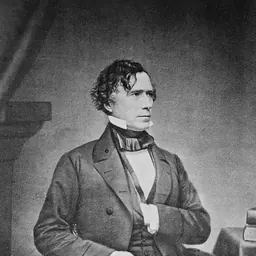
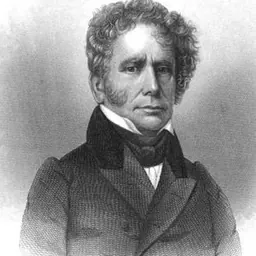
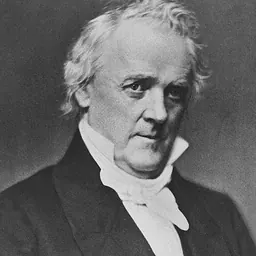

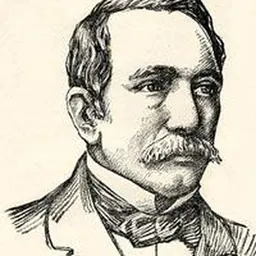
Related people
Same field, nearest in time



Contemporaries
People whose lives overlapped John Anthony Quitman's






Frequently asked questions
Who was John Anthony Quitman?
American politician (1798-1858)
When was John Anthony Quitman born?
John Anthony Quitman was born on 1 September 1798 in Rhinebeck.
When did John Anthony Quitman die?
John Anthony Quitman died on 17 July 1858 in Natchez.
What was John Anthony Quitman's occupation?
John Anthony Quitman was a politician, judge and lawyer.
What nationality was John Anthony Quitman?
John Anthony Quitman was American.
Sources & further reading
· Wikipedia: John Anthony Quitman
Cite this page
APA: Biography.guide. (2026). John Anthony Quitman. https://biography.guide/john-anthony-quitman/
MLA: "John Anthony Quitman." Biography.guide, https://biography.guide/john-anthony-quitman/.
Chicago: "John Anthony Quitman." Biography.guide. https://biography.guide/john-anthony-quitman/.
Data last updated: 2026-09-20 · Spot an error? Report a correction.
Page generated 2026-09-27 05:26 UTC